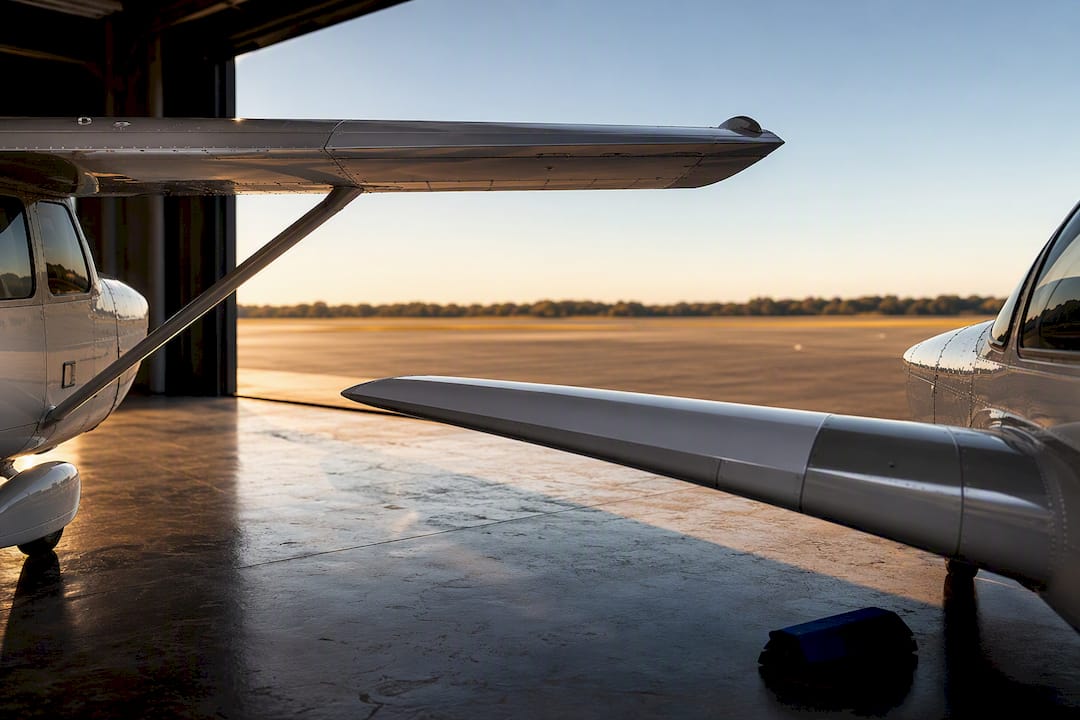
High wings sit above the fuselage and give you a clear view straight down, gravity-fed fuel, and more ground clearance for rough strips. Low wings mount below the cabin, put fuel filler caps within easy reach, and tend to feel more locked-in during crosswind landings. For bush flying, aerial photography, or grass-strip training, a high wing is often preferred; for cross-country cruising and airline-track familiarity, a low wing typically suits better. Most student pilots do fine on either one, since instructor quality and aircraft condition matter more than wing placement.
TL;DR:
The core difference is simple: a high-wing airplane has its wing mounted above the cabin, roughly at or near eye level when you look up. A low-wing airplane mounts the wing below the cabin floor, so you're sitting on top of it. That single design choice ripples into visibility, fuel systems, ground clearance, and how you preflight the airplane every single time you fly.
Visibility is the trade-off pilots notice first. In a high wing like a Cessna 172, you get an unobstructed view straight down, which is why survey pilots, photographers, and bush operators lean toward this configuration. The catch comes in turns: banking toward the high wing puts that wing directly in your sightline, blocking traffic you'd otherwise see. Low-wing airplanes flip that problem. You get a clearer view during turns and better visibility above and to the sides, but the wing blocks your downward view, which matters if you're trying to spot a landmark, a runway, or another airplane below you. Pilot commentary on this trade-off consistently comes back to the same point: neither view is complete, and both demand deliberate clearing turns before you change heading.
Fuel systems split along similar lines. Most high-wing trainers rely on gravity to move fuel from the tanks to the engine, which means fewer mechanical parts between the tank and the carburetor. It's a simpler system, and it's part of why high-wing aircraft show up so often in entry-level training fleets. Low-wing airplanes generally need fuel pumps to push fuel upward to the engine, adding a component that needs monitoring but also putting the fuel caps at a convenient height for refueling. You won't need a stepladder to gas up a low-wing Piper the way you might for a high-wing Cessna sitting on tall gear.
Ground clearance decides a lot about where you can safely operate. A high wing keeps the propeller and engine higher off the ground, which protects them from gravel, mud, and tall grass on unimproved strips. That clearance advantage, documented in comparisons of the two configurations, is a major reason bush pilots and backcountry operators favor high-wing designs almost universally.
Preflight and maintenance routines differ too, and it's worth knowing before you commit to a trainer:
None of these differences are dealbreakers on their own. They add up over hundreds of flight hours, though, which is why they matter more to working pilots and flight schools than to someone taking a single sightseeing flight.
Wing position affects more than what you see. It changes how the airplane behaves in turbulence, how it feels during landing, and even how it warns you before a stall.
None of this makes one configuration objectively safer. It changes what you're watching for, and a good instructor will drill the specific habits each type demands, whether that's extra lookout technique in a high wing or more deliberate flare timing in a low wing.
Mission profile decides this argument faster than any handling debate. Match the airplane to the job, and the "better" wing configuration becomes obvious.
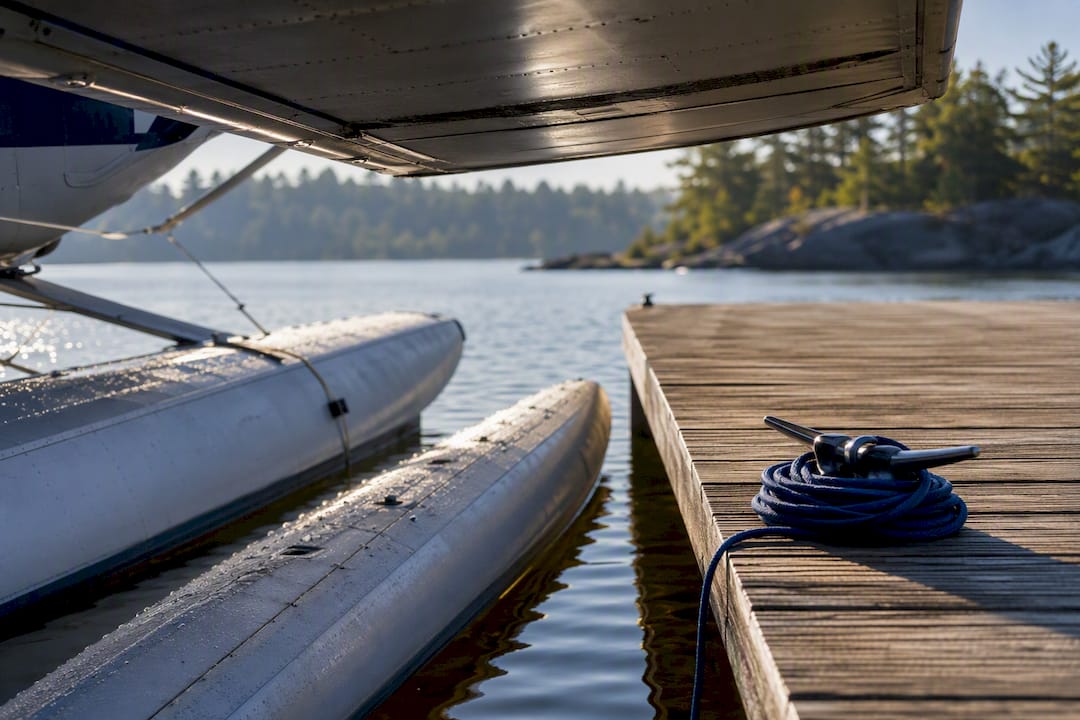
High wings dominate bush flying and float plane operations for practical reasons. The extra ground clearance protects the prop on rough gravel bars, and seaplane designs favor high wings because the wing sits clear of docks, floats, and water spray during taxi. Aerial photographers, wildlife surveyors, and pipeline patrol pilots also gravitate toward high wings for the same downward visibility that makes preflight inspections a minor hassle in exchange for a better view on the job.
Low wings earn their keep in different roles. Cross-country cruisers and many complex singles benefit from the cleaner aerodynamics and, in some designs, the lower drag that contributes to cruise efficiency. Refueling at a busy FBO ramp is faster when the fuel caps sit at shoulder height instead of requiring a ladder. Pilots headed toward airline careers also tend to prefer low-wing trainers early on, since many regional and airline aircraft are low-wing designs, and the sight picture during landing carries over more directly.
Ground-support logistics matter too, and they're easy to overlook until you're the one dealing with them:
Pro Tip: If you're weighing a bush-flying or floatplane path, ask your instructor how many hours they'd budget for a high-wing to seaplane transition specifically. The wing placement is familiar, but the water-handling skills are a separate skill set entirely.
The honest answer, backed by flight-training experts and AOPA, is that neither configuration makes you a better pilot. Instructor quality, aircraft maintenance records, and how often the airplane is actually available for your lessons matter far more than whether the wing sits above or below you.
That said, a few practical rules help narrow the choice:
A short discovery flight, paired with a solid first-lesson expectation set by your school, tells you more about fit than any spec sheet. You'll know within an hour whether the sight picture, cockpit feel, and handling suit how you want to fly.
High wing advantages:
High wing disadvantages:
Low wing advantages:
Low wing disadvantages:
Flight training curricula build around the mission, not the airframe. Whether a student starts on a high wing or a low wing, ground school covers the same fuel-system logic, clearing-turn habits, and stall-recognition cues, adjusted for whichever airplane is on the schedule that day.
Students typically need only a handful of dedicated hours to feel comfortable switching from one configuration to the other, and instructors schedule a short checkout flight before solo approval in a new type. Instructor drills include deliberate wing-clearing turns for high-wing students and extended flare practice for students moving into a low wing for the first time, as added ground effect often surprises new low-wing pilots on landings.
Neither wing placement eliminates the need for a disciplined lookout. Pilots learn to bank the wing briefly out of the way before turning, regardless of which type they're flying.
That habit, more than any spec sheet debate, is what separates a confident transition from a rough one.
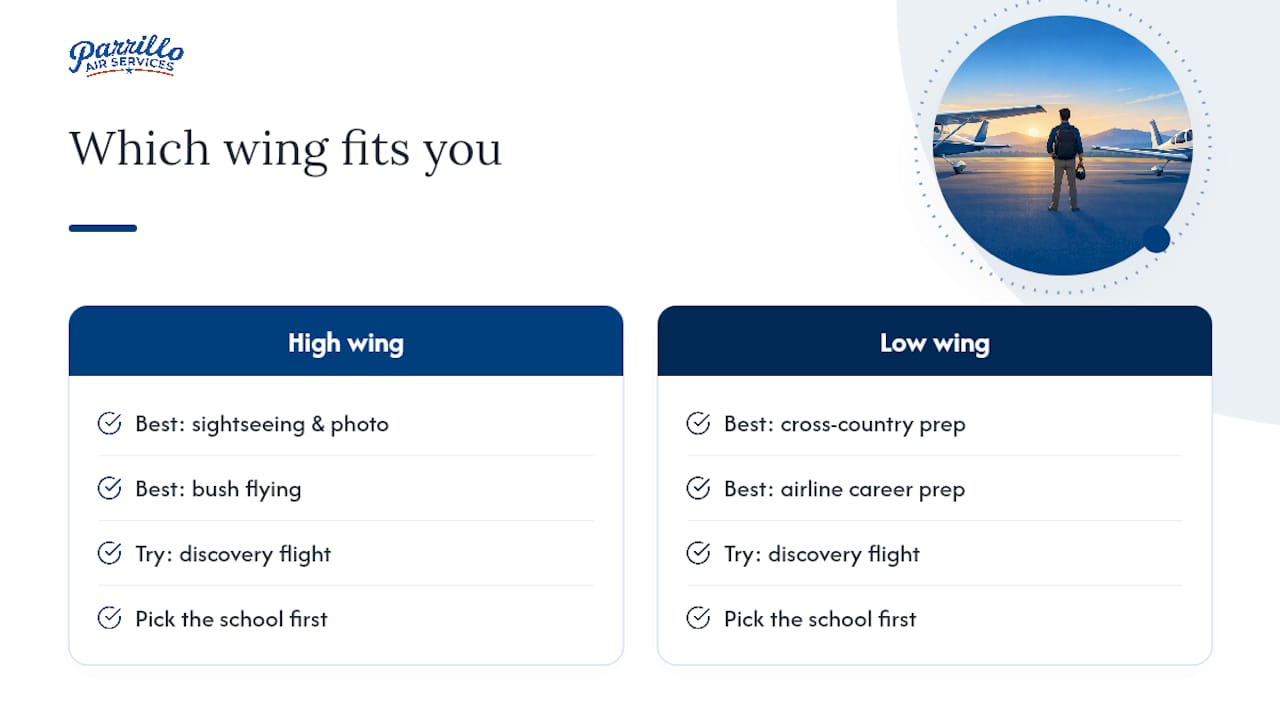
If you're chasing sightseeing flights, aerial photography, or a future in bush flying, a high wing will make your life easier from day one. If you're building toward cross-country trips or an airline career, spend real time in a low wing early so the sight picture and handling feel familiar later. Either way, try both on a discovery flight before you commit to a fleet.
The instructor sitting next to you and the maintenance log behind the airplane will shape your progress far more than which wing you flew. Pick the school first, and let the airplane follow.
— Gm
Reading about wing placement only gets you so far. The fastest way to know whether you want a high wing or a low wing is to sit in the left seat and fly one. Parrillo Air Services runs its Discovery Flight program for exactly this reason: a hands-on, instructor-led introduction that lets you feel the sight picture, the fuel system, and the handling before you commit to a full training plan.

Parrillo Air Services keeps its programs personal by design, with flexible scheduling and limited enrollment so you get real instructor time instead of a crowded classroom. If cost is on your mind, the aircraft rental and instruction fees are listed here so you know exactly what to budget before you book. And if you're still weighing your first steps into aviation, this rundown of how to start flight training as a beginner walks through what to expect before your first lesson. Both high-wing and low-wing trainers can turn out excellent pilots when the school and the instructor are strong. Schedule your discovery flight and find out which one feels right under your hands.
Student pilot guide to 5 at-altitude drills for crosswind landings — wings-low sideslip vs crab, control drills, approach/flare/rollout technique, crosswind limits, and how Parrillo Air Services structures a crosswind lesson.
A guide for student pilots on mastering ground reference maneuvers — turns around a point, S-turns, rectangular course, eights, timing drills, troubleshooting, and aircraft-type differences.
A guide to aeronautical decision making (ADM) — PAVE, 3P, 5P, and DECIDE models, risk assessment and go/no-go rules, ADM by phase of flight, hazardous attitudes, cognitive biases, and practical training with Parrillo Air Services.
A pilot's guide to training aircraft types — high-wing vs low-wing, top models like the Cessna 172 and Piper Cherokee, glass cockpits, rental costs, and how to match an aircraft to your training stage.