
Ground school is the academic foundation of pilot training, covering every subject a pilot must understand before safely commanding an aircraft. The FAA mandates ground training and passing the FAA Knowledge Test before any student pilot sits for a practical flight examination. That requirement exists for good reason. Pilots who skip or rush ground school arrive in the cockpit without the context to make sound decisions. Understanding why ground school matters for pilots goes far beyond checking a regulatory box. It shapes how quickly you progress, how much you spend, and how safely you fly for the rest of your career.
Ground school is the structured academic portion of pilot training. It covers the theory behind everything that happens in the aircraft. Flight training teaches physical control of the aircraft, while ground school explains the contextual "why" behind every maneuver. That distinction matters because a pilot who only knows how to perform a procedure without knowing why it works is unprepared when conditions change.
The importance of ground school shows up immediately in the cockpit. Students who arrive at their first lesson already understanding lift, drag, and angle of attack absorb instructor feedback faster. They ask better questions. They connect what they feel in the aircraft to what they studied on the ground. That connection is what turns a student into a pilot.
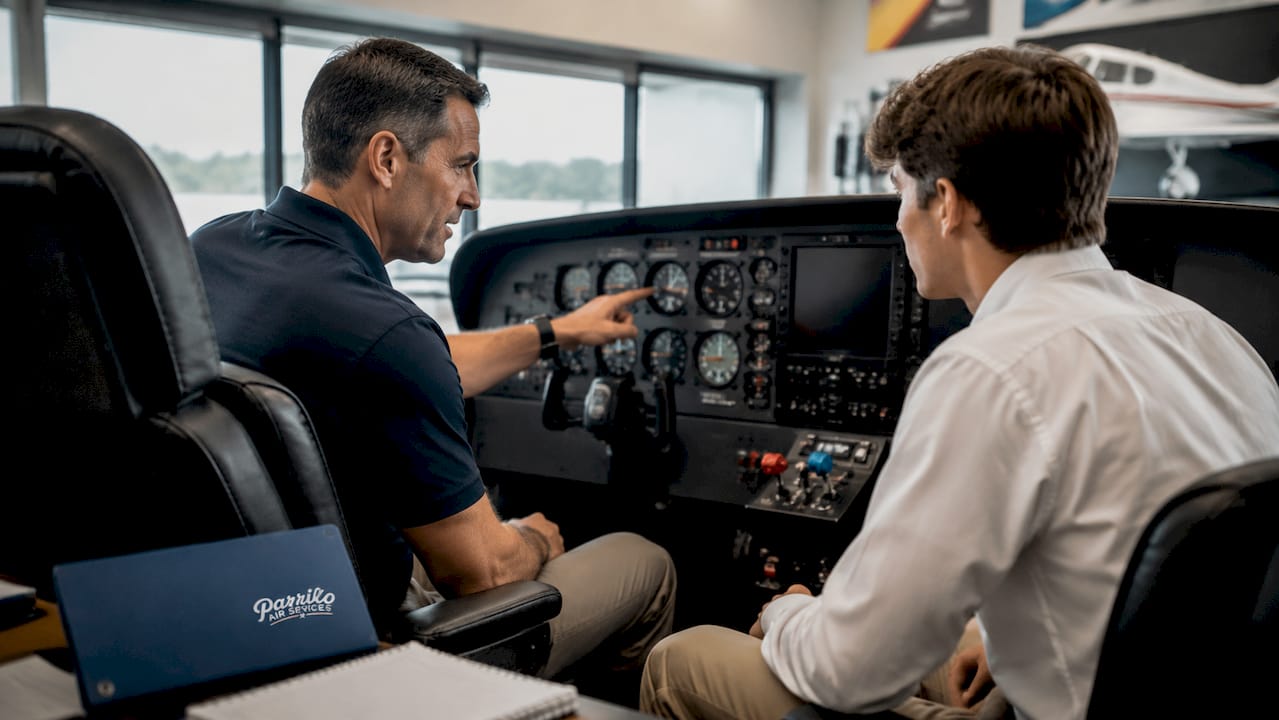
Ground school covers aerodynamics, weather, navigation, weight and balance, flight planning, and FAA regulations as its core curriculum. Each subject directly supports a pilot's ability to make safe, informed decisions.
Pro Tip: Study human factors and aeronautical decision-making early. Most student pilots focus on aerodynamics and weather, but cockpit judgment errors cause more accidents than mechanical failures.
Every hour of dual flight instruction costs $150–$250 or more. That rate makes every minute of flight time expensive. Ground school reduces the total hours you need by front-loading the theory before you ever leave the ground.
The math is straightforward. When your instructor does not have to stop mid-flight to explain what a stall is or why you need to check weather minimums, you spend that time actually flying. Students with a strong ground school background solo earlier and stay closer to the FAA minimum flight hour requirements for certification. A student who invests in ground school can save over $1,000 in flight time costs compared to one who skips it. That is a significant return on a relatively small upfront investment.
Here is how ground school training significance translates into direct savings:
Pro Tip: Treat ground school as a pre-investment, not an add-on. Spending $300 on a structured ground school course before your first flight lesson is one of the highest-return decisions you can make in pilot training. For a detailed cost breakdown, see this flight training cost guide.
The FAA Knowledge Test is a written examination that every pilot candidate must pass before taking the practical checkride. It covers all the subjects taught in ground school, including regulations, weather, navigation, and aerodynamics. Passing it is not optional. The FAA requires this test as a prerequisite for the practical examination, and a passing score is valid for 24 months.
Passing the FAA knowledge test early in your training removes a significant mental burden. When the written exam is behind you, your full attention goes to building flight skills. Students who delay the test until late in training often find themselves juggling checkride preparation with knowledge review at the same time. That divided focus slows progress and increases stress.
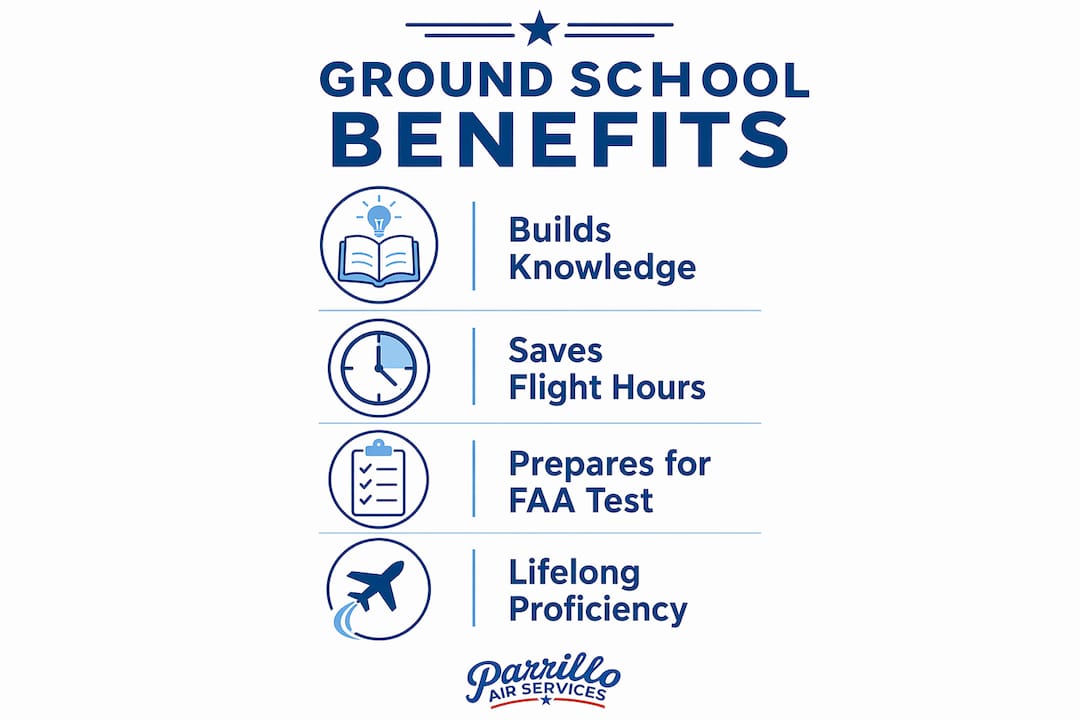
Structured ground school prepares you for the knowledge test in four specific ways:
Structured ground school study using FAA materials and reputable courses improves both knowledge retention and test readiness. Pilots who understand the material deeply, rather than memorizing answers, perform better on both the written test and the oral portion of the practical checkride. You can learn more about the full certification pathway in this overview of private pilot license requirements.
Ground school benefits pilots well beyond the initial certificate. The habits it builds, specifically the habit of understanding theory before acting, define how a pilot approaches every new challenge throughout a career.
Lifelong learning through refresher courses, FAA safety seminars, and aviation publications starts with the foundation ground school builds. Pilots who internalize theory during initial training adapt more easily to advanced avionics, new aircraft types, and evolving regulations. A pilot who learned why a VOR works will adapt to GPS and ADS-B faster than one who only memorized button sequences.
The ground school training significance extends into these ongoing areas:
The pilots who remain sharp and current throughout long careers are almost always the ones who took ground school seriously from the start.
Ground school is the single most cost-effective investment in pilot training, reducing flight hours needed, building test confidence, and establishing the judgment that defines safe pilots throughout their careers.
| Point | Details |
|---|---|
| FAA requirement | Passing the FAA Knowledge Test is mandatory before the practical checkride. |
| Cost savings | Strong ground school preparation can save over $1,000 in flight training costs. |
| Faster progression | Students with solid theory knowledge solo earlier and stay closer to minimum flight hours. |
| Test strategy | Passing the knowledge test early removes pressure and sharpens focus on flight skills. |
| Lifelong value | Ground school builds the judgment and learning habits that sustain pilot proficiency for a career. |
Every student I have worked with who struggled in the aircraft had one thing in common: they treated ground school as a formality. They skimmed the material, passed the knowledge test with a minimum score, and expected the cockpit to teach them everything else. It does not work that way.
The students who progressed fastest were the ones who arrived at their first lesson already curious about weather patterns, already able to sketch out a weight and balance calculation, already asking questions about airspace. Their flight time was spent flying, not catching up on theory. I watched students with that foundation reach solo readiness in noticeably fewer hours than peers who skipped the prep work.
Ground school is not a bureaucratic hurdle. It is the difference between a student who freezes when ATC gives an unexpected instruction and one who responds calmly because they already understand the system. The cockpit is a high-workload environment. Every concept you own before you get in that seat is one less thing competing for your attention when it matters. If you are serious about becoming a pilot, treat ground school as the most important phase of your training, not the least.
— Gm
Parrillo Air Services builds ground school into every stage of its FAA Part 61 flight training programs, so pilots develop real knowledge alongside real flight skills. Based in Lynchburg, VA, Parrillo Air Services offers personalized instruction, flexible scheduling, and a clear pathway from first flight to professional certification.

Experienced instructors at Parrillo Air Services integrate theory and practical training from day one, helping students reach checkride readiness efficiently and with genuine confidence. Whether you are working toward a private pilot certificate or aiming for a commercial rating, the ground school foundation built here follows you through every stage of your aviation career. Visit the flight training programs page to learn what the right training structure looks like for your goals.
Get in Touch Today