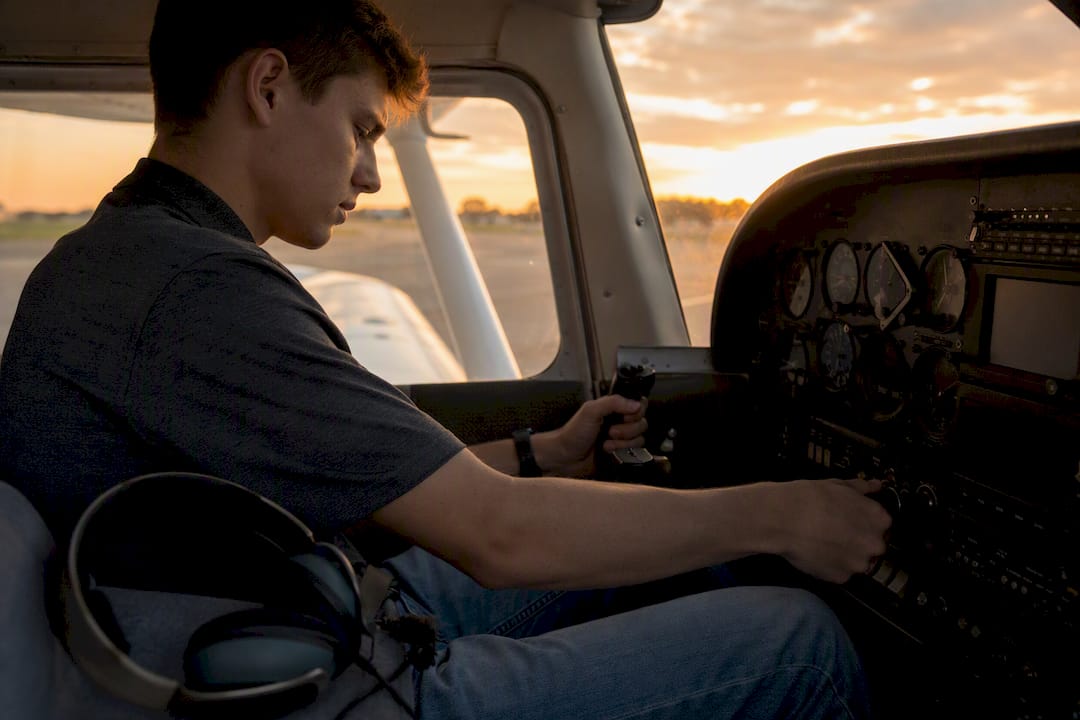
Advanced flight training is the career-focused instruction that takes you past a private pilot certificate into instrument, commercial, and instructor ratings, plus the multi-engine skills airlines and charter operators actually pay for. The FAA sets the hour minimums under Part 61 and Part 141, the Airman Certification Standards define what you'll be tested on, and schools like Parrillo Air Services build the actual syllabus around both.
Your next move is simple: check your current certificate and medical class, then decide whether a flexible Part 61 path or a structured Part 141 course fits your timeline better.
Pro Tip: Commercial privileges require a second-class medical certificate, not the third-class that gets you through private and instrument training. Get that upgraded exam scheduled early so it never delays your commercial checkride.
Advanced flight training success depends on choosing the right regulatory path, sequencing ratings correctly, and training with a structured, instructor-led program built around measurable stage checks.
| Point | Details |
|---|---|
| Know your hour requirement | Part 61 requires 250 total hours for commercial; approved Part 141 courses can reduce that to 190 hours. |
| Sequence ratings deliberately | Instrument, then commercial, then CFI/CFII/MEI builds marketability and hours in the right order. |
| Verify your medical class early | A second-class medical is required before you can exercise commercial flying privileges for pay. |
| Budget beyond the minimum | Few students finish at the exact FAA hour floor, so plan for extra hours and fees. |
| Consider Parrillo Air Services | Their Part 61 programs offer flexible scheduling, multi-engine training, and Liberty University credit transfer options. |
Advanced training stacks four core credentials on top of your private certificate: the Instrument Rating (IR), Commercial Pilot Certificate (CPL), Certified Flight Instructor (CFI) certification, and its extensions, CFII and MEI. Many career pilots keep climbing toward an Airline Transport Pilot (ATP) certificate once they've logged enough hours.
The skills matter more than the paperwork, though. Commercial-level training shifts you from basic stick-and-rudder flying into systems knowledge, precise performance planning, complex-airplane handling, and the disciplined decision-making the FAA expects from pilots flying for compensation. You're not just flying anymore. You're managing risk for passengers or cargo that depend on your judgment.
Most programs use a single-engine trainer like the Piper Archer TX for instrument and commercial work, then move students into a Piper Seminole for the multi-engine add-on. That's where crew coordination and single-engine emergency procedures get real.
Career outcomes branch from here. Some graduates instruct immediately to build hours. Others aim for regional airline hiring pools, and some move into corporate flight departments flying turbine aircraft for private companies.
Under FAA Part 61 regulations, earning a commercial pilot certificate requires 250 total flight hours. An FAA-approved Part 141 commercial course can bring that down to 190 total hours, a significant difference that translates into real time and money saved.
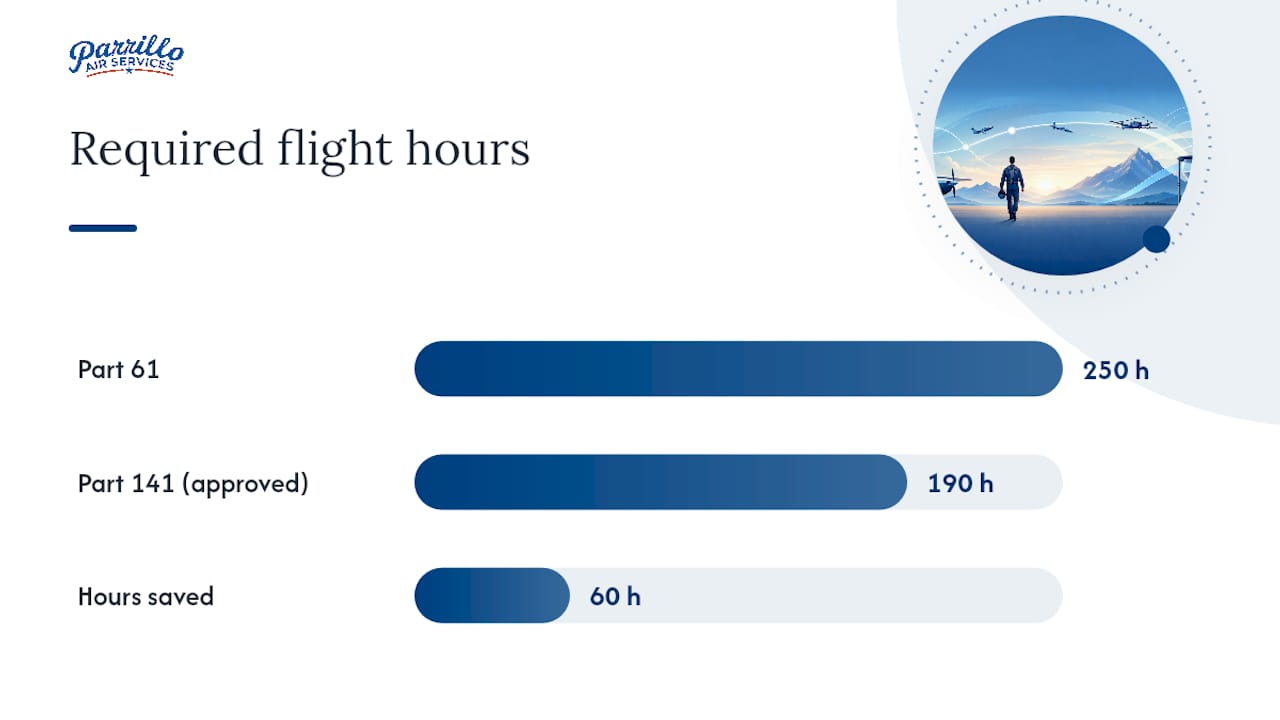
That gap exists because Appendix D to Part 141 prescribes a specific curriculum, minimum solo requirements, and staged checks throughout the course. The FAA trusts that structure enough to reduce the hour floor. Part 61 gives you more freedom to train at your own pace and mix instructors, but you make up for that flexibility with more required hours.
Here's what that means day to day. Part 141 programs often nest instrument training directly into the commercial course sequence, so you can't skip ahead to commercial maneuvers without finishing instrument work first. Part 61 lets you sequence things more loosely, though most schools still recommend instrument before commercial for good reason.
Simulator time can offset some flight hours in either path, but caps apply depending on your training center's approval level. Ask your school exactly how many simulator hours count toward your total before you assume the discount applies.
Career pilots don't earn ratings randomly. There's a sequence that makes both regulatory sense and financial sense, and skipping steps usually costs you time later.
Rough timelines: instrument rating runs a few months full-time, commercial adds several months more, and the CFI/CFII/MEI stack typically takes a couple of months if you push through it consecutively.
Pro Tip: Ask your school about bundled rating packages. Combining CFI, CFII, and MEI training into one continuous block usually costs less per flight hour than spacing them out over separate enrollments.
One caution: some approved Part 141 programs won't let you defer instrument training while working through commercial maneuvers. Confirm your school's exact course sequence before you assume you can rearrange the order.
A structured training day follows a predictable rhythm: ground briefing, flight or simulator session, then debrief. That pattern repeats through instrument, commercial, and instructor phases, with stage checks inserted at key milestones under Part 141 programs.
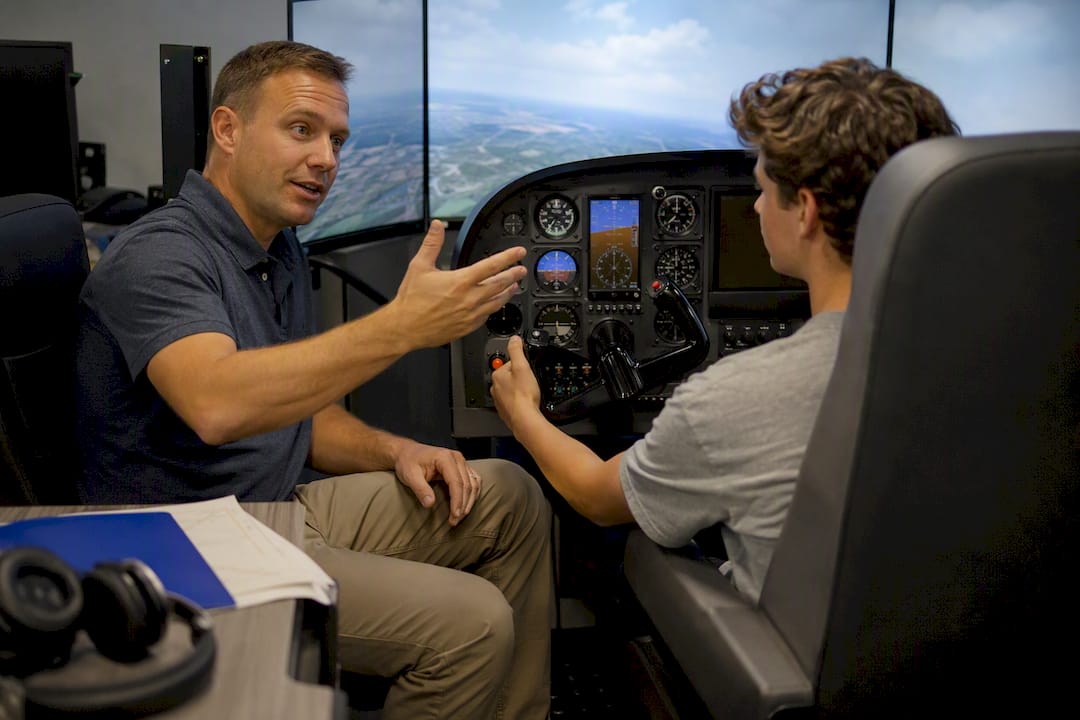
Aircraft assignment depends on the phase. Single-engine work happens in trainers like the Piper Archer TX, while multi-engine add-ons move you into a Piper Seminole for twin-engine handling and single-engine emergency procedures. Full flight simulators or flight training devices supplement real aircraft time, though hour credit toward your total is capped depending on the device's FAA approval level.
Instrument training benchmarks are specific: AOPA outlines at least 50 hours of cross-country PIC time, 40 hours of actual or simulated instrument time, and 15 hours of instrument flight training from an authorized instructor.
Log every simulator session immediately and get instructor sign-off before test day. Missing endorsements are one of the most common reasons students get bounced from a scheduled checkride.
Not every school delivers on career-track promises. The difference between a program that gets you hired and one that leaves you stalled usually comes down to structure, instructor quality, and honesty about costs.
Start with these criteria:
When you visit or call a school, ask direct questions:
Red flags are just as telling. Walk away from vague curriculum descriptions, no clear stage-check schedule, aircraft that are "usually" available but rarely confirmed, and pricing that changes depending on who you ask.
Parrillo Air Services runs Part 61 commercial and instrument training out of Lynchburg, Virginia, with flexible scheduling built around real student calendars, not a rigid classroom cohort. For students eligible for Liberty University credit transfer, that pathway adds academic credit on top of flight training, which is worth asking about directly.
Full-time students moving through instrument, commercial, and the CFI stack back to back can realistically finish in under a year. Part-time students juggling work or school should expect closer to 18 to 24 months for the same credentials, since training pace directly affects total calendar time.
Cost drivers stack up fast: aircraft rental rate per hour, instructor time, examiner (DPE) fees for each checkride, and study materials for ground school. Combined instrument and commercial packages often run cheaper per hour than paying for each phase separately, since schools frequently discount bundled blocks.
Funding options worth researching before you enroll:
Build a simple budgeting checklist before you commit: total hours needed for your path, current hourly rates at your target school, exam fees, and a buffer for hours beyond the FAA minimum, since almost nobody finishes exactly at the floor.
Career pilots who train inside a structured, instructor-led program tend to build hours faster and more consistently than those piecing together lessons on their own schedule with rotating instructors. Staged checks force you to prove competency before moving forward, which catches weak spots early instead of letting them surface on your actual checkride.
Employers notice this too. A graduate coming out of a program with documented stage checks and consistent instructor oversight reads as a safer hire than someone who assembled hours haphazardly.
One more thing: earning the certificate isn't the finish line. Recurrent training and currency requirements keep your ratings sharp long after graduation.
Parrillo Air Services runs its programs on Part 61 flexibility, so you're not locked into a rigid cohort schedule while working through commercial, instrument, and instructor training.

The school's offerings map directly onto the progression covered above: instrument training, commercial certification, multi-engine syllabi using the Piper Seminole, and CFI/CFII/MEI instructor stacking, all with simulator access built into the curriculum. Students eligible for Liberty University credit transfer can apply flight training toward academic credit, a combination few local schools offer.
What sets the experience apart is the personal side: instruction built around your actual availability, safety as a consistent priority rather than a checkbox, and guidance on what comes after certification, whether that's instructing, applying to regional airlines, or pursuing corporate flying. If you're ready to see how the numbers and timeline work for your situation, get more info about Parrillo Air Services's flight training programs and schedule a discovery flight or advising appointment to map out your specific path.
This article is general information, not a substitute for advice from a qualified lawyer. Consult a qualified legal professional about your own circumstances before acting on anything here.