
Flight hours are defined as the primary currency of a pilot's career, serving as both a legal requirement and a measurable record of practical experience. The role of flight hours in career progression is direct: they determine when you qualify for each certificate, how airlines evaluate your readiness, and how fast you move from student to captain. The FAA sets a minimum of 1,500 hours for the Airline Transport Pilot (ATP) certificate under Part 61. At the same time, the aviation industry is shifting toward Competency-Based Training and Assessment (CBTA), which means the quality and variety of your hours now matter as much as the total count. Parrillo Air Services trains pilots with both realities in mind.
Flight hour minimums are legal thresholds, not suggestions. The FAA mandates these numbers before you can sit for a certificate or rating, and airlines use them as the first filter in any hiring process.
The ATP certificate requires 1,500 hours under standard Part 61 rules. That number drops to 1,000 hours for graduates of approved four-year aviation degree programs and to 1,250 hours for graduates of approved two-year programs. Military pilots qualify at just 750 hours. These reductions exist because structured programs and military training produce demonstrably higher proficiency per hour flown.
| Certificate or pathway | Minimum flight hours required |
|---|---|
| ATP (Part 61, standard) | 1,500 hours |
| ATP (approved 4-year aviation degree) | 1,000 hours |
| ATP (approved 2-year aviation degree) | 1,250 hours |
| ATP (military pilot) | 750 hours |
| Commercial Pilot License (CPL) | 250 hours |
| Private Pilot License (PPL) | 40 hours |
Each threshold marks a career gate. You cannot fly for a Part 121 airline without the ATP, and you cannot earn the ATP without meeting the hour minimums for your pathway. Understanding minimum flight hours for private pilot certification is where most aspiring pilots start, but the ATP minimum is the number that defines your timeline to the airlines.
Sub-minimums within each certificate also matter. The ATP requires specific hours of cross-country time, night flying, and instrument time. Building these sub-categories intentionally from day one prevents a frustrating gap at the finish line.
Airlines are no longer satisfied with a logbook full of numbers. CBTA focuses on skill-building rather than time-building, requiring pilots to demonstrate proficiency in complex scenarios rather than simply accumulate seat time. This is the most significant structural change in pilot hiring in decades.
The practical effect on hiring is already visible. Airlines now request evidence of competency alongside raw hour counts. Competency passports and digital records tracking simulator sessions, documented strengths, and identified weaknesses allow recruiters to assess skill progression transparently. A pilot who can show consistent improvement in crew resource management and decision-making carries more weight than one who simply logged the hours.
What this means for you as a student or aspiring pilot:
Pro Tip: Request a written debrief after every training flight. Over 200 hours, those notes become a portfolio of competency evidence that no logbook total can replicate.
The shift toward CBTA is, as industry observers note, the most positive change in aviation history. It treats pilots as skilled professionals rather than time accumulators. For aspiring pilots, this is good news: you can differentiate yourself before you hit 1,500 hours.
Not all hours are equal in a recruiter's eyes. Pilot-in-Command (PIC) time is weighted heavily by airline recruiters, often valued at triple the weight of other flight time, because it demonstrates decision-making authority and leadership under real conditions.
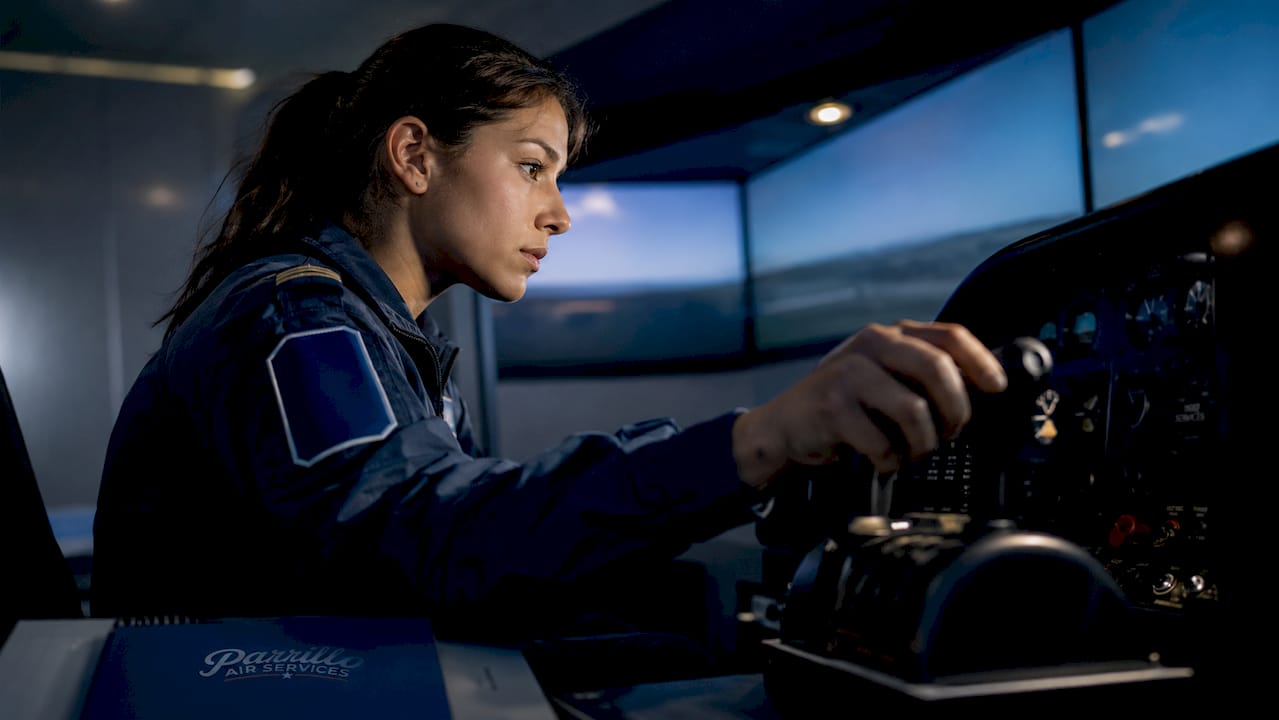
A concrete example makes this clear. A pilot with 700 total hours and 500 PIC hours presents a more compelling application than one with 1,100 total hours and minimal PIC time. The first pilot has repeatedly made go/no-go decisions, managed emergencies, and owned the outcome of every flight. That record signals readiness for the captain's seat.
The four types of hours that carry the most career weight:
Pro Tip: When building hours as a CFI, vary your students' training routes deliberately. You log PIC time, your students get diverse experience, and your logbook shows geographic and operational variety rather than the same 30-mile loop repeated 400 times.
The mix of hours in your logbook signals reliability and readiness to any recruiter who reviews it. Repetitive local flying fills the total but does not build the situational awareness that airlines actually test.
Efficient hour building is not about flying as many hours as possible each month. It is about flying the right hours consistently without burning out.
Sustainable hour accumulation runs at around 80–90 hours per month. Pilots who push past 120 hours monthly report higher error rates, decision fatigue, and career interruptions from health and burnout. Steady, high-quality flying over 18 months outperforms a frantic sprint every time.
Practical strategies for building hours that count:
Pro Tip: Track your logbook sub-totals in a spreadsheet updated weekly. Pilots who monitor cross-country, night, and instrument hours monthly never face a last-minute scramble to meet ATP sub-minimums.
The flight training time commitment for most pilots runs 18–24 months from zero to ATP minimums when flying consistently. Planning that timeline with specific milestones makes the process manageable and keeps you on track.
Meeting the ATP minimum gets you in the door at a regional airline. What happens after that depends on how you used those hours. Career advancement in aviation follows a clear hour-based ladder, but the rungs above regional first officer require more than a logbook total.
Pilots reaching major carriers typically accumulate 3,000–5,000+ hours and develop leadership, communication, and business understanding well beyond flying skills. That combination of hours and professional growth is what separates candidates at the major airline level.
| Career stage | Typical hour range | Key requirement beyond hours |
|---|---|---|
| Regional airline first officer | 1,500 hours (ATP minimum) | ATP certificate, CRM skills |
| Regional airline captain upgrade | 2,000–3,000 hours | PIC time, leadership record |
| Major airline first officer | 3,000–5,000+ hours | Competitive interview, type rating |
| Major airline captain | 5,000+ hours | Command experience, management skills |
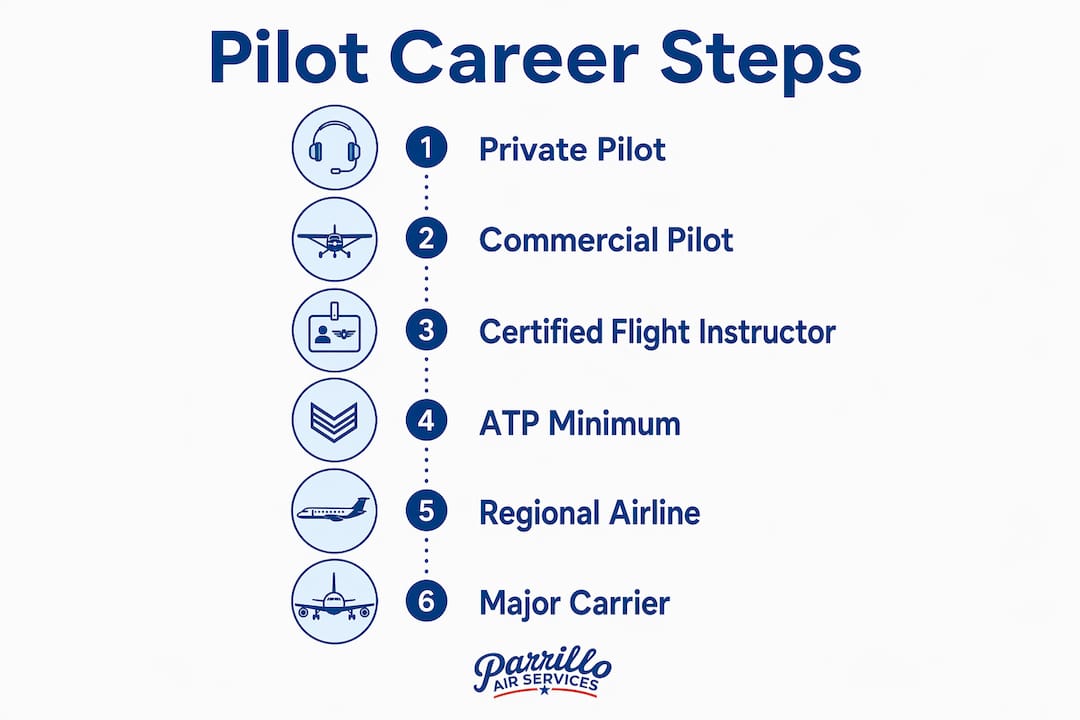
The airline interview process evaluates your hours as context, not as the answer. Recruiters want to know what you learned during those hours. Pilots who can articulate specific decisions, lessons from difficult flights, and growth in judgment consistently outperform candidates with higher totals but less self-awareness.
Professional advancement requires intentional career planning and growth beyond flying skills to include leadership and industry understanding. Communication, crew management, and the ability to perform under pressure are skills you develop during your hour-building years, not after you join an airline.
Flight hours establish legal eligibility and practical readiness, but the quality, variety, and documented competency behind those hours determine how fast and how far a pilot advances.
| Point | Details |
|---|---|
| FAA hour minimums are non-negotiable | Standard ATP requires 1,500 hours; approved degree programs reduce this to 1,000 or 1,250 hours. |
| PIC time outweighs total time | Recruiters weight PIC hours heavily because they demonstrate real decision-making authority. |
| CBTA is reshaping hiring | Airlines now assess documented competency alongside raw hours, so quality of training matters as much as quantity. |
| Sustainable pacing prevents burnout | Flying 80–90 hours per month builds skills steadily without the performance decline that comes from overloading. |
| Major airlines require more than hours | Pilots advancing to major carriers need leadership, communication skills, and a strong interview record beyond their logbook. |
The pilots I've seen advance fastest are not the ones who flew the most hours in the shortest time. They are the ones who treated every flight as a deliberate practice session and built a reputation for reliability long before they hit 1,500 hours.
Raw hour accumulation is a trap if you are not careful. Flying the same 40-mile training loop 600 times does fill a logbook. It does not build the judgment that a regional airline captain needs at 2 AM in actual IMC with a nervous first officer. The pilots who stand out in interviews are the ones who can describe a specific hard decision, explain what they learned, and show how it changed their flying.
My honest advice: treat your CFI years as a leadership apprenticeship, not just a time-building job. Every student you teach is a chance to develop communication skills, manage stress, and practice the kind of calm authority that defines a good captain. Those habits compound over hundreds of hours and show up clearly in every interview you ever sit.
Burnout is real and it ends careers early. Flying 120+ hours a month to hit a milestone faster is almost never worth it. The pilots who pace themselves at a sustainable rate arrive at the airlines with sharper skills, better judgment, and more energy to perform well from day one. Intentional, consistent flying beats frantic sprinting every time.
— Gm
Aspiring pilots who want to build flight hours with purpose, not just volume, need a training environment that prioritizes skill development from the first lesson.

Parrillo Air Services offers FAA-certified flight training programs in Lynchburg, VA, covering every stage from private pilot through commercial and flight instructor ratings. The programs are structured under FAA Part 61 with personalized instruction designed to build the PIC time, diverse experience, and competency documentation that airlines now look for. Whether you are starting from zero or working toward your ATP minimums, Parrillo Air Services provides the structured, career-focused training pathway that turns logged hours into genuine professional readiness.
Get in Touch Today