
A significant portion of airline pilots commute to their assigned base city, flying to work before their trip even begins. You live in one city, your airline assigns you to another, and every work period starts with a commute that can span hundreds of miles. That's the core of it.
The mechanics are straightforward on paper:
What makes this lifestyle demanding is the layer of logistics that sits on top of an already complex job. You're managing two lives simultaneously, one at home and one near base, while staying compliant with FAA duty rules and showing up rested every single time.
Base assignment at most airlines is driven by seniority, not preference. Junior pilots typically get whatever base has an opening, which rarely matches their hometown.
Key factors pilots weigh when deciding whether to commute or relocate:
Flight frequency: Bases with multiple daily flights on your airline give you more commuting options and better backup routes
Family ties: Many pilots stay near spouses, schools, and support networks rather than uprooting for a base assignment that may change
Cost of living: Hub cities like New York or San Francisco carry housing costs that can overwhelm a first officer's early salary
Interline options: Highly connected bases with at least two reliable interline partners make commuting far more predictable
Seniority trajectory: Some pilots commute short-term, planning to hold a local base once they gain enough seniority
Living near base is almost always easier on quality of life. But for pilots with deep roots elsewhere, commuting is the practical choice, at least for a few years.
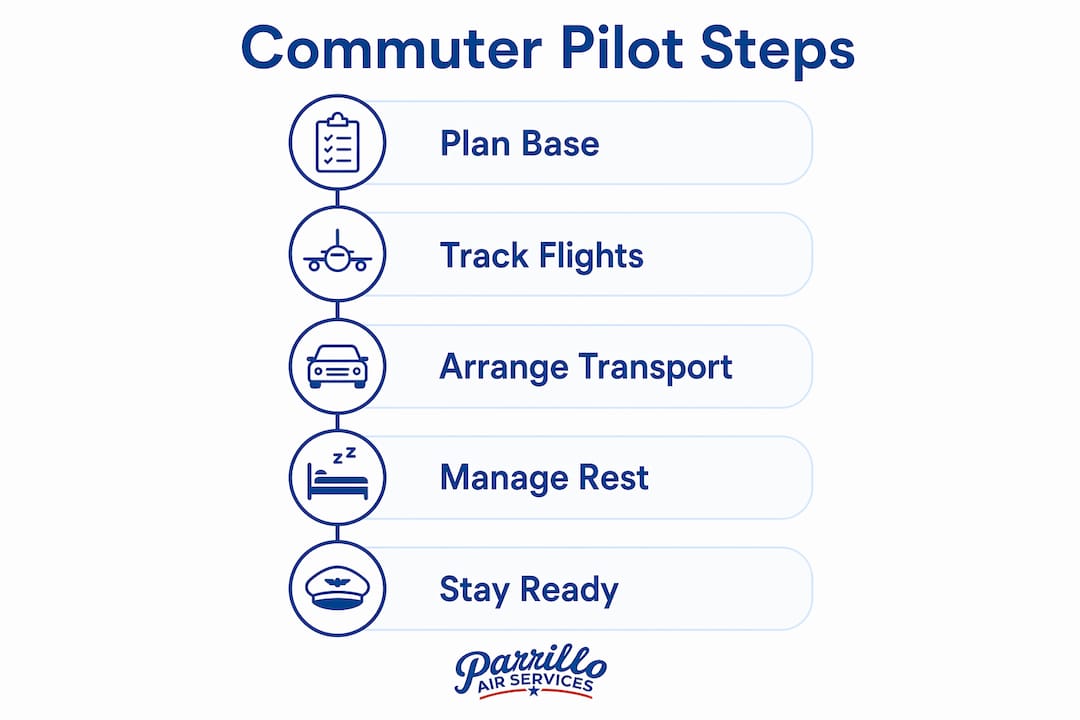
Getting to base is not as simple as booking a flight. Most pilots rely on a combination of methods, and the smart ones always have a backup.
Common commuting methods:
Pilots who commute successfully track flight loads obsessively. Tools like FlightAware and the ALPA app provide real-time delay data and seat availability, which turns commute planning into something closer to operational mission planning.
Pro Tip
Treat your commute like a flight you're dispatching. Identify your primary flight, a backup, and a third option. If all three are risky, you leave a day early.

Fatigue management for commuter pilots starts before the first leg of any trip. The commute itself is not protected time under federal rules.
FAA Part 117 rest regulations exclude commuting time entirely. Your commute counts as personal time, which means you carry full responsibility for arriving rested and fit for duty. A red-eye commute followed by a 6:00 AM report is legal on paper and brutal in practice.
Smart trip planning for commuters focuses on:
The pilots who manage this lifestyle well treat rest as part of the job, not a personal preference.
Renting a full apartment in an expensive hub city on a junior first officer's salary is not realistic. The industry's answer is the crash pad.
Crash pads are shared apartments or houses located within a short drive of the base airport. Monthly costs typically run $200–$600, covering a bunk in a shared room. They operate on strict quiet hours and cleanliness standards because crews sleep at all hours.

Beyond the economics, crash pads serve a social function. They're where new pilots learn which gate agents are helpful, which flights are consistently oversold, and how the unwritten rules of jumpseating actually work. That informal knowledge network has real operational value.
Alternatives to crash pads:
Crash pad community standards are largely unadvertised. Respecting quiet hours, keeping shared spaces clean, and removing all personal items when you leave are non-negotiable norms. Violating them gets you removed, and finding a replacement spot mid-month is a headache nobody wants.
The financial cost of commuting is higher than most new pilots expect. Monthly commuting expenses, including crash pad rent, backup tickets, ground transport, and extra meals, typically range from $200 to $600 per month. That's a meaningful bite out of a regional first officer's paycheck.
The emotional cost is harder to quantify. Commuting adds financial strain and missed family time that compounds over months and years. Pilots miss birthdays, school events, and ordinary evenings at home. The stress of standby travel, where a full flight can strand you and cost you a trip, creates a background anxiety that doesn't fully switch off.
Health takes a hit too. Travel days blur the line between work and rest, and the psychological workload of commuting contributes directly to fatigue. Irregular sleep, airport food, and constant schedule uncertainty wear on pilots over time in ways that don't show up in any duty log.
Junior pilots carry the heaviest commuter burden. Low seniority means limited bidding power, which means less control over when trips start and end. Junior pilots face the most commuting stress because they can't reliably bid for the commuter-friendly lines that senior pilots lock up first.
As seniority grows, the picture changes substantially:
For junior pilots grinding through the early years, the practical move is to minimize exposure. Bid for the most commuter-friendly trips available at your seniority level, build buffer days into every work period, and use the crash pad network to stay informed. The airline career pathway does get easier as you climb the seniority list. It just takes time.
More than half of commercial airline pilots commute at some point in their careers. That prevalence means the industry has developed real institutional knowledge around managing it well.
The consistent advice from experienced commuters comes down to a few principles. Arrive at base the night before your trip starts whenever possible. Treating early arrival as standard practice eliminates most missed-trip scenarios before they start. Know your backup flights cold, not just your primary.
Pro Tip
View your commute days as protected operational time, not personal travel. Pack the night before, check loads at least 24 hours out, and never assume the first flight will work.
Senior pilots consistently report that the lifestyle becomes manageable once scheduling becomes predictable. The early years are the hardest, and pilots who build disciplined commuting habits in year one carry those habits forward when it matters most.
FAA Part 117 governs flight and duty time for commercial pilots, but it draws a clear line at the airport door. Commuting time falls entirely outside its protections. You are responsible for your own fitness for duty, regardless of how long or difficult the commute was.
This creates a genuine compliance burden. A pilot who commutes through the night and reports for a 6:00 AM duty period has not violated any regulation, but they have accepted personal responsibility for their alertness and judgment. The FAA's position is unambiguous: commuting is personal time, and showing up fatigued is the pilot's failure, not a scheduling error.
Jumpseat access adds another regulatory layer. The Cockpit Access Security System (CASS) verifies flight crew credentials for jumpseat eligibility, and pilots must follow strict protocols when requesting a cockpit jumpseat. Misrepresenting credentials or failing to follow jumpseat etiquette can result in loss of jumpseat privileges across multiple carriers.
Understanding these rules before you start commuting, not after your first close call, is the baseline for flying a professional career. Parrillo Air Services builds this kind of regulatory awareness into training from the ground up, because pilots who understand the rules make better decisions at every stage of their career.
Commuter pilot life is sustainable with disciplined planning, but the financial and personal costs are real and should be factored into career decisions from day one.
| Point | Details |
|---|---|
| Commuting is widespread | Over half of commercial pilots commute at some point, making it a standard part of airline career life. |
| FAA Part 117 excludes commutes | Commuting time is personal time; pilots bear full responsibility for arriving rested and fit for duty. |
| Monthly costs add up | Crash pads, backup tickets, and transport can cost $200–$600 per month for commuting pilots. |
| Seniority changes the equation | Senior pilots bid for commuter-friendly trips; junior pilots face the most scheduling uncertainty and stress. |
| Buffer time prevents missed trips | Arriving at base the night before a trip starts is the single most reliable way to protect your schedule. |
Ace Your Airline Pilot Interview: Complete Prep Guide | Parrillo Air Services
Parrillo Air Services
Commercial Pilot Certificate Requirements | Parrillo Air Services
Parrillo Air Services
Commercial Pilot Job Market Guide for 2026
Parrillo Air Services
Airline Pilot Career Pathway Steps: 2026 Guide
Parrillo Air Services