The airline pilot interview is one of the most high-stakes moments in any aviator's career. You've logged the hours, earned your ratings, and built real experience in the cockpit, yet the interview room can feel like an entirely different kind of challenge. The difference between candidates who get the call back and those who don't almost always comes down to preparation.
Airlines are not simply hiring someone who can fly a plane. They are selecting a professional who will represent their brand, protect their passengers, and operate safely under pressure for decades. That means the bar is high on both the technical and human sides of the equation.
The five competencies airlines value most are:
Pro Tip: Before your interview, spend at least two hours researching the specific airline. Study their fleet, routes, company values, and recent news.
Your paperwork tells your story before you say a single word. A disorganized or incomplete application packet signals carelessness, and in aviation, carelessness is a serious red flag.
Follow these steps to assemble a professional application packet:
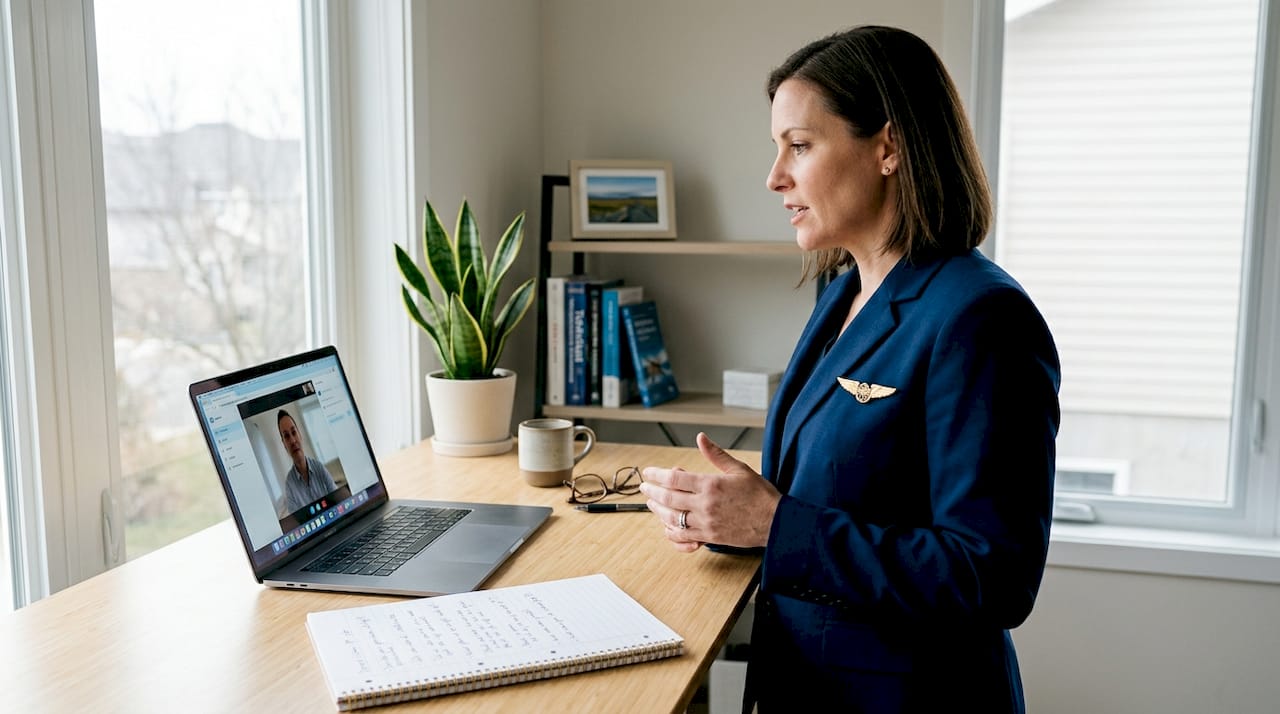
Airline pilot interviews typically include three distinct components:
Use the STAR method (Situation, Task, Action, Result) when answering behavioral questions. It keeps your answer structured, concise, and memorable.
"Every answer you give in an airline interview should reflect a pilot who puts safety and sound judgment first. Interviewers are not just listening to what you say. They are evaluating how you think."
Many candidates walk into airline interviews well-prepared on paper but stumble on execution. Here are the most frequent mistakes:
Pro Tip: Send a brief, personalized thank-you email within 24 hours of your interview. Reference something specific from the conversation to show genuine engagement.
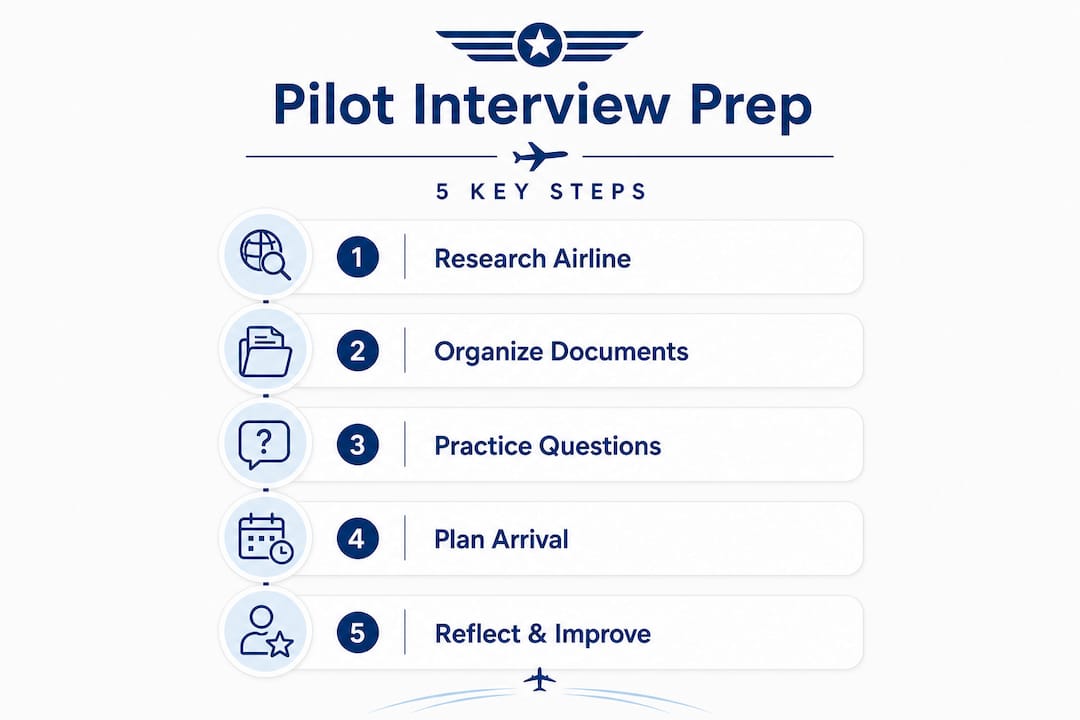
After each interview, ask yourself:
Avoid Over-Rehearsing: Candidates spend hours memorizing scripted answers and then deliver them with all the warmth of a recorded announcement. Interviewers have heard thousands of polished responses. What they remember are the candidates who spoke like real human beings.
Humility is Massively Undervalued: When asked about a mistake, the instinct is to minimize or redirect. Resist that. A pilot who says "I got it wrong, here's exactly what I learned, and here's how I fly differently now" demonstrates self-awareness.
Adaptability Matters: If an interviewer pushes back on your answer, don't crumble and don't dig in stubbornly. Engage with the challenge. Ask a clarifying question. Think out loud. Show them how you process new information in real time.
The Tip That Changes Everything: Treat the interview like a two-way conversation. You are also evaluating whether this airline is the right fit for your career and values. When you approach it that way, your body language shifts, your answers become more genuine, and you come across as a confident professional rather than a nervous applicant.
At Parrillo Air Services, we train pilots from their first discovery flight through commercial and flight instructor certifications — building the skills and professionalism that airlines actually hire.
Get in TouchBring your updated resume, pilot's license, logbooks, medical certificate, and recommendation letters — all organized and easy to present.
Review flight scenarios, FAA regulations, and aircraft systems. Practice answering out loud to build fluency and confidence.
Incomplete paperwork, poor communication, and failing to demonstrate sound judgment in scenario-based questions.
Soft skills like communication, adaptability, and decision-making carry equal or greater weight than technical knowledge in most airline hiring decisions.