
An aviation career knowledge base is the organized collection of technical knowledge, regulatory understanding, and practical skills a pilot builds from first flight to professional certification. Without a structured approach to developing this foundation, aspiring pilots risk knowledge gaps that stall progress at every certificate level. The FAA, EASA, and the Federal Aviation Regulations/Aeronautical Information Manual (FAR/AIM) define the standards every pilot must master. Parrillo Air Services structures its FAA Part 61 training programs around exactly this kind of progressive knowledge development, giving students a clear path from discovery flight to airline career.
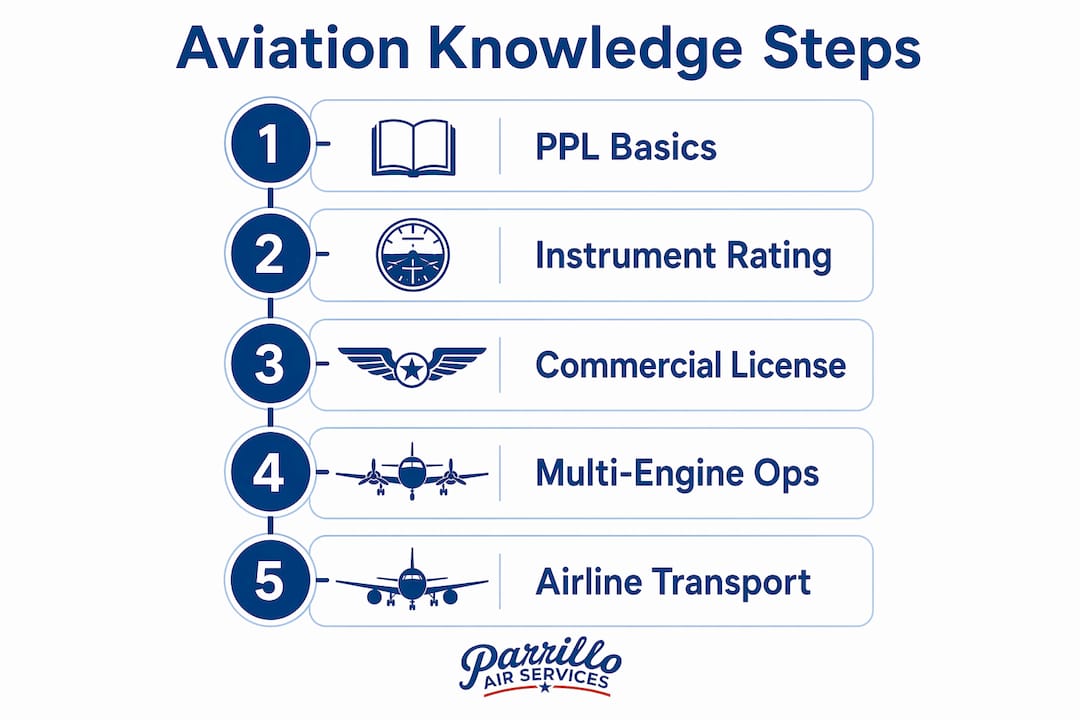
The core of aviation career development is knowing what to learn, in what order, and why it matters. Aerodynamics, weather theory, navigation, airspace regulations, and human factors form the bedrock. Every advanced certificate builds directly on these subjects, so treating them as optional or surface-level creates problems later.
Certificate milestones follow a clear sequence: Private Pilot License (PPL), Instrument Rating (IFR), Commercial Pilot License (CPL), and eventually the Airline Transport Pilot (ATP) certificate. Each stage introduces new regulatory requirements and operational complexity. Proper knowledge sequencing is vital to avoid plateauing and ensure smooth progression through certificates.
Skipping fundamentals creates what instructors call "knowledge debt." This debt shows up at checkrides, where oral exam questions probe the reasoning behind procedures, not just the steps themselves. Failing to master fundamentals before progressing adversely affects checkride performance, and active recall early prepares candidates better for oral exams than passive reading does.

Study tools matter as much as study time. Question banks, digital flashcards, and spaced repetition systems all accelerate retention. Active recall methods reduce exam prep time by 20–30%, which translates directly into lower training costs and faster certificate completion.
Key knowledge areas by certificate level:
Pro Tip: Build a personal "knowledge map" before starting each certificate. List every topic the FAA knowledge test covers, then track your confidence level on each one weekly. This turns vague studying into targeted preparation.
The most effective aviation learners treat their knowledge base as a living system, not a one-time study sprint. Digital tools, structured roadmaps, and personal knowledge management techniques all play a role in building expertise that sticks.
Here is a practical framework for organizing your aviation learning:
Pro Tip: After every flight lesson, spend 10 minutes writing down one thing you learned and one question you still have. This simple habit builds a personal study log that becomes invaluable during checkride prep.
Career-ready aviation professionals curate knowledge with digital tools, building indexed workflows rather than relying on static manuals to handle fast-changing standards. The pilots who advance fastest are the ones who treat their knowledge base as a career asset they actively maintain.
Most aspiring pilots underestimate how many ways a knowledge base can break down. The problems are predictable, and knowing them in advance gives you a real advantage.
Common pitfalls and how to fix them:
The airline pilot career pathway from zero hours to a regional airline typically requires 2.5 to 4 years, including 12–18 months of certificate training and 1–2 years of flight instructing to build the required 1,500 hours. That timeline leaves plenty of room for knowledge to decay if you are not actively managing it.
Getting your certificates is not the finish line. The pilots who reach major airline captain positions, which can take 10–15 years, are the ones who treat their knowledge base as something that grows with their career.
The "Three Knows" framework defines the three dimensions every aviation professional needs. Know-How is learnable technical skill; Know-Why covers the underlying reasons behind procedures; Know-Where is the ability to locate necessary information quickly. Missing any one of these risks repeating past errors.
| Knowledge Dimension | Definition | Career Application |
|---|---|---|
| Know-How | Technical skills and procedures | Flying maneuvers, operating aircraft systems |
| Know-Why | Reasoning behind rules and procedures | Understanding why minimums exist, not just what they are |
| Know-Where | Locating information when needed | Finding the correct FAR/AIM section under pressure |
Know-Why is the dimension most pilots neglect. A pilot who knows the ILS approach procedure but cannot explain why the decision height exists will struggle when an examiner or chief pilot probes deeper. Building Know-Why into your study habit from day one pays dividends at every career stage.
Viewing knowledge as static harms career resilience. Active knowledge networking and conference attendance bolster evolving expertise. Industry events, recurrent training programs, and professional organizations all expose you to the unwritten knowledge that experienced pilots carry but rarely publish.
Digital knowledge capture is now a professional expectation in aerospace. The most successful aviation professionals adopt ongoing digital-first training to stay current amid complex, advancing aircraft and regulations. Building this habit early, during student pilot training, makes it natural by the time you reach an airline cockpit.
Building an aviation career knowledge base requires structured certificate sequencing, active knowledge management with digital tools, and continuous updates across all three dimensions of Know-How, Know-Why, and Know-Where.
| Point | Details |
|---|---|
| Sequence knowledge deliberately | Progress from PPL fundamentals to IFR, CPL, and ATP without skipping foundational subjects. |
| Use active recall methods | Spaced repetition and flashcards reduce exam prep time by 20–30% compared to passive reading. |
| Curate a digital knowledge index | Build an indexed, searchable personal knowledge system rather than relying on static manuals. |
| Apply the Three Knows framework | Develop Know-How, Know-Why, and Know-Where equally to avoid gaps that surface at checkrides and in the cockpit. |
| Treat knowledge as perishable | Review and update your knowledge base regularly, especially between certificate stages and after regulatory changes. |
Most of the advice you will find about pilot training focuses on flight hours and written test scores. Those matter. But the pilots I have seen struggle most are not the ones who lacked raw aptitude. They are the ones who treated their knowledge as a box to check rather than a system to build.
The Three Knows framework changed how I think about this. Know-Where is the one that separates good pilots from great ones in real operations. Knowing where to find an answer under pressure, quickly and confidently, is a skill you have to practice deliberately. It does not come from passing a written test.
The other thing worth saying plainly: knowledge gaps compound. A weak understanding of weather theory at the PPL level does not just affect your PPL checkride. It shows up again during IFR training, and again during CPL, and again when you are flying passengers in actual instrument conditions. The flight training time commitment is significant enough that you want every hour to build on solid ground.
Build your knowledge base the way you would build anything meant to last. Start with the foundation. Add layers in order. Review what you have built before adding more. And never mistake a certificate for the end of learning.
— Gm
Structured training is the fastest way to turn aviation interest into a real career. Parrillo Air Services, based in Lynchburg, VA, offers FAA Part 61 instruction from introductory discovery flights through private pilot, instrument, commercial, and flight instructor ratings.

Every program at Parrillo Air Services is built around the kind of progressive, sequenced knowledge development this article describes. Personalized instruction means your training adapts to how you learn, not a one-size schedule. If you are ready to move from curiosity to commitment, explore the training programs and find the path that fits your goals and timeline.
An aviation career knowledge base is the organized collection of technical skills, regulatory knowledge, and operational understanding a pilot builds across all certificate levels. It covers aerodynamics, weather, navigation, FAR/AIM regulations, and practical flight experience.
Transitioning from zero hours to a regional airline typically takes 2.5 to 4 years, including certificate training and 1,500 flight hours. Major airline captain positions generally require 10–15 years of progressive experience.
Active recall and spaced repetition are the most effective methods. These techniques reduce exam preparation time by 20–30% compared to passive reading and build long-term retention across FAR/AIM rules, procedures, and aircraft systems.
Skipping foundational subjects creates knowledge debt that surfaces during advanced checkrides and commercial training. Each certificate level builds directly on the previous one, so gaps in PPL fundamentals affect IFR and CPL performance.
Review regulatory updates regularly, attend industry events to acquire unwritten professional knowledge, and maintain a digital knowledge index you update after every training session or recurrent check. Knowledge in aviation is highly perishable and requires active maintenance throughout your career.