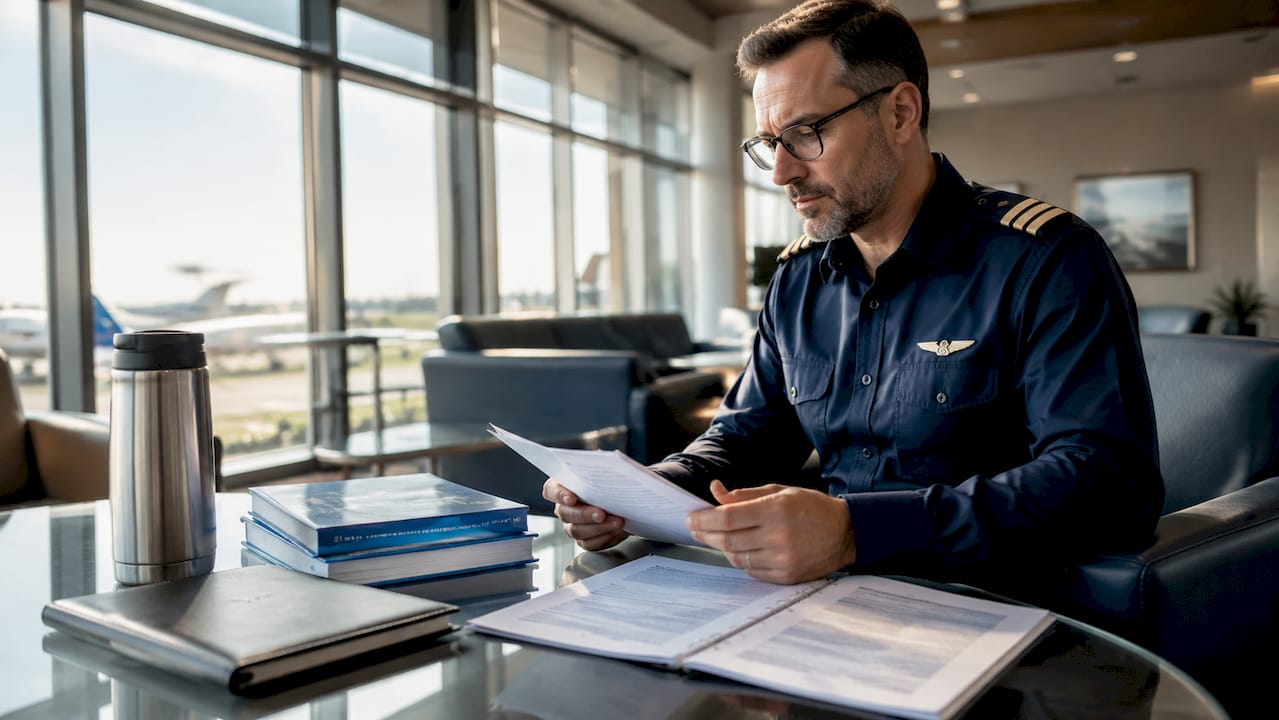
An aircraft airworthiness certificate is the official FAA document that confirms a specific aircraft is safe and legally authorized to fly. Every aircraft operating in U.S. airspace must carry one, and 14 CFR § 91.203 requires it to be displayed where passengers and crew can read it during every flight. For aspiring pilots and aviation career seekers, understanding this certificate is not optional. It sits at the foundation of every preflight check, every regulatory exam, and every professional aviation career.
An airworthiness certificate is defined as an FAA-issued document certifying that a specific, serial-numbered aircraft conforms to its approved type design and is in a condition for safe operation. The key word is "specific." The certificate belongs to one aircraft, not a model or fleet. A Cessna 172 rolling off the production line and a Cessna 172 with 5,000 flight hours are two entirely different stories from a regulatory standpoint.
The certificate does not expire like a driver's license. It remains valid for the life of the aircraft, as long as the aircraft stays registered in the U.S. and meets all maintenance and regulatory requirements. That permanence sounds reassuring, but it carries a sharp edge. Miss a single mandatory inspection, and the certificate loses its legal effect immediately.
The FAA issues airworthiness certificates through its aircraft certification process, which evaluates whether the aircraft matches its approved design and has been built or maintained to the required standard. The certificate is the final administrative link confirming that a specific aircraft conforms to a type design proven safe through rigorous testing. Without it, the aircraft cannot legally leave the ground.
The FAA issues two main categories: Standard and Special. Each carries different eligibility rules, operational permissions, and regulatory requirements.
Standard certificates apply to aircraft that fully comply with FAA type certification standards. They cover aircraft in the normal, utility, acrobatic, commuter, and transport categories. Most of the aircraft you will train in and fly professionally fall under this category. A Standard certificate signals that the aircraft was designed, built, and approved to the highest level of FAA scrutiny.
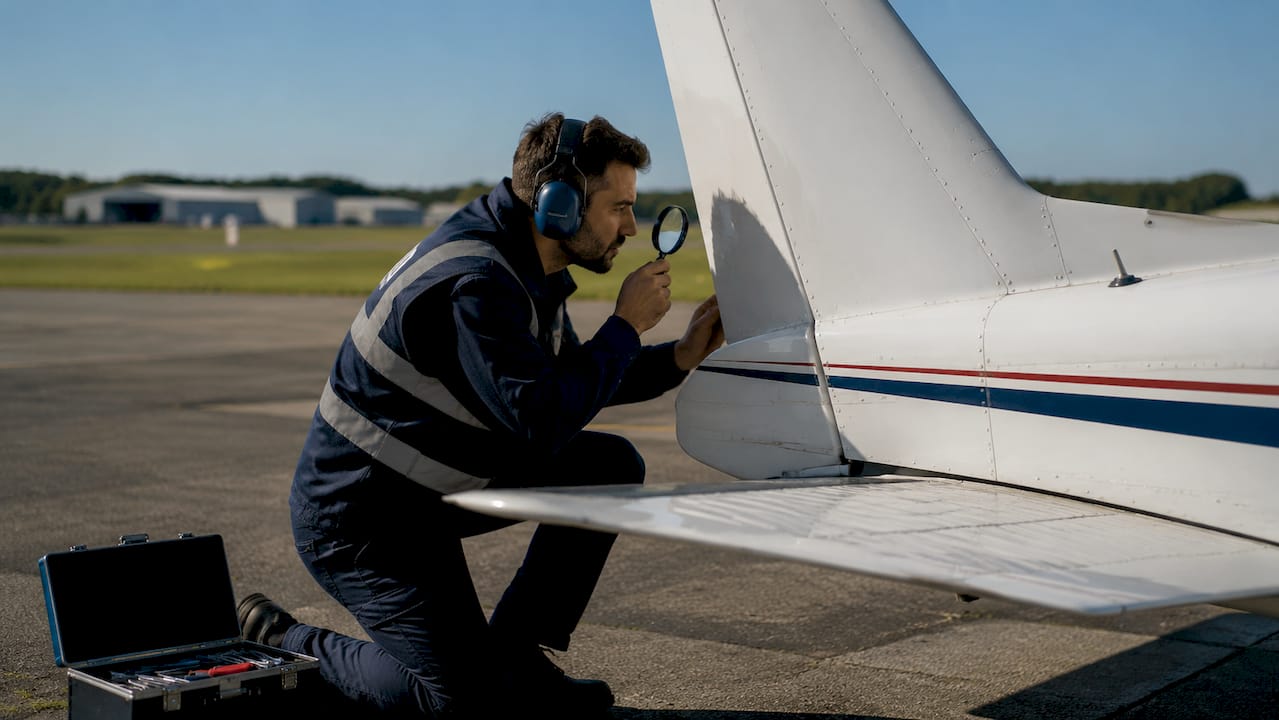
Special certificates cover aircraft that do not meet Standard category requirements but are approved for specific, limited operations. The main subcategories include:
Special certificates come with operational limits that Standard certificates do not carry. A restricted-category aircraft cannot fly passengers for hire. An experimental aircraft cannot be used for commercial operations without specific FAA authorization.
Pro Tip: If you are training toward a professional pilot career, confirm that your training aircraft holds a Standard airworthiness certificate. Flying experimental or special-category aircraft during training can create logbook complications for certain FAA certification requirements.
The legal framework around airworthiness certificates is specific and unforgiving. The AROW acronym covers the four documents every civil aircraft must carry: Airworthiness certificate, Registration, Operating limitations, and Weight and balance data. Missing any one of them makes the aircraft legally un-airworthy, regardless of its physical condition.
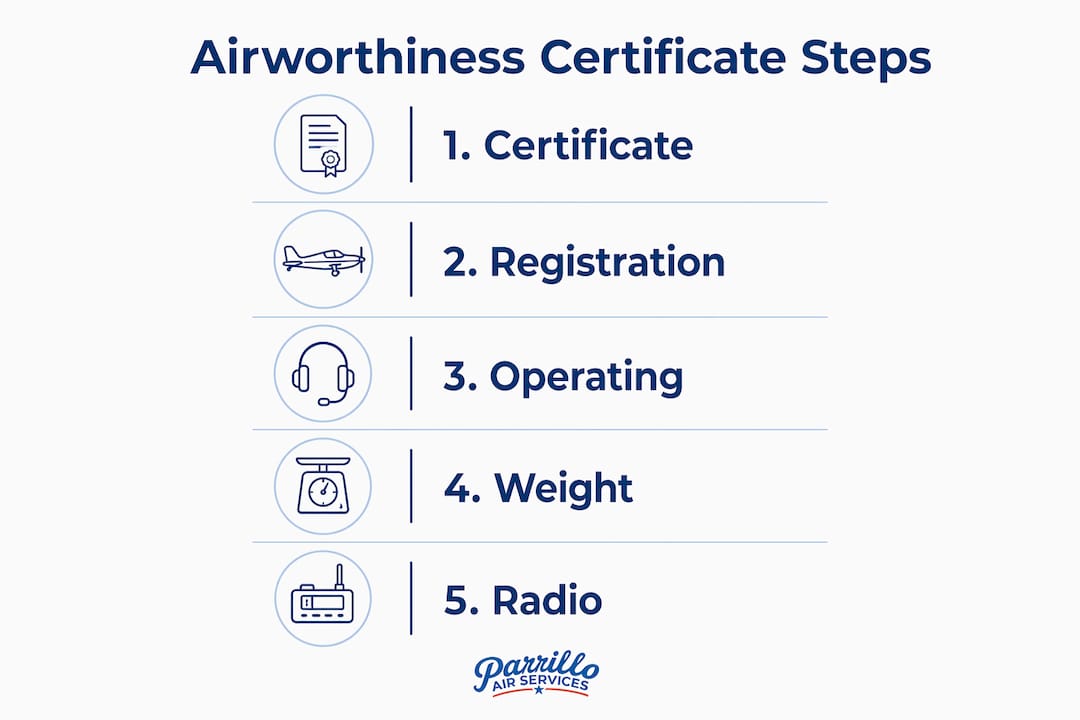
The display requirement under 14 CFR § 91.203 is not a suggestion. The certificate must be legible to passengers and crew. Tucking it in a maintenance folder in the baggage compartment does not satisfy the regulation.
The pilot-in-command carries the ultimate legal responsibility for airworthiness. Federal regulations make this clear:
"The pilot-in-command holds the legal obligation to determine that the aircraft is airworthy before and during flight, and must discontinue flight if un-airworthy conditions arise, even if the airworthiness certificate is physically present in the aircraft."
That last clause matters. The certificate's presence does not equal current airworthiness. A pilot's legal responsibility extends beyond paperwork. It includes verifying that all required inspections are current, that no open maintenance discrepancies exist, and that all required documents are aboard.
The Operating Limitations document deserves special attention. These are the specific limitations prescribed when the aircraft was originally certificated. Missing these documents technically renders the aircraft un-airworthy, even if every other document is in order.
Pro Tip: Use the AROW check as a dedicated step in your preflight routine, not just a written test memory aid. Verify each document is present, current, and legible before every flight.
Understanding the aircraft certification process requires separating two distinct concepts: the Type Certificate and the Airworthiness Certificate. Pilots and aviation students frequently confuse them, and the distinction matters.
A Type Certificate (TC) approves an aircraft's design. It confirms that the design, as tested and evaluated, meets FAA airworthiness standards. The TC belongs to the design, not to any individual aircraft. A Type Certificate approves the design, while the airworthiness certificate confirms that a specific serial-numbered aircraft conforms to that design and is maintained correctly.
Here is how the certification process flows from design to flight:
Step five is where most pilots and owners underestimate the work involved. Continuing airworthiness is an ongoing process of maintenance, inspections, and compliance with Airworthiness Directives (ADs). ADs are legally enforceable safety mandates issued by the FAA when a safety issue is identified in a certified aircraft or component. Ignoring an applicable AD does not just risk a fine. It voids the airworthiness certificate.
Annual inspections, required for most general aviation aircraft, and 100-hour inspections, required for aircraft used in commercial operations, are the most common compliance checkpoints. Both require a logbook sign-off from an FAA-certificated mechanic or inspector. Without that sign-off, the aircraft is grounded.
The airworthiness certificate is a starting point, not a finish line. Pilots and operators carry ongoing responsibilities that go well beyond keeping a piece of paper in the aircraft.
The most common mistake new pilots make is assuming that a valid-looking certificate means the aircraft is ready to fly. A certificate is invalidated immediately if mandatory inspections like the annual or 100-hour are missed. The certificate does not change. The aircraft simply becomes illegal to operate.
Practical airworthiness responsibilities for pilots and operators include:
Understanding aviation career requirements means recognizing that airworthiness compliance is not just a student pilot concern. Airline pilots, charter operators, and flight instructors all operate under the same fundamental obligation. The scale changes. The responsibility does not.
Pro Tip: Build a personal preflight checklist that includes a logbook review step. Most accidents linked to maintenance issues involve aircraft where the pilot never checked whether required inspections were current.
An airworthiness certificate confirms a specific aircraft is safe and legally authorized to fly, but the certificate alone does not guarantee the aircraft is currently airworthy.
| Point | Details |
|---|---|
| Certificate definition | The FAA issues it for a specific aircraft to confirm it meets its approved design and safety standards. |
| Two main categories | Standard certificates cover normal operations; Special certificates cover experimental, light-sport, and restricted uses. |
| No expiration, but conditional | The certificate stays valid only while the aircraft remains registered and all inspections are current. |
| Pilot responsibility | The pilot-in-command must verify airworthiness before every flight, not just check for the certificate's presence. |
| AROW documents required | All four documents (Airworthiness, Registration, Operating limitations, Weight and balance) must be aboard for legal flight. |
Most aspiring pilots focus on the airworthiness certificate as a regulatory checkbox. Pass the written test, learn the AROW acronym, move on. That approach misses the point entirely.
The certificate is an administrative confirmation. The real safety work happens in the hangar, in the logbooks, and in the preflight walk-around. I have seen students who could recite 14 CFR § 91.203 word for word but had never actually opened an aircraft logbook to check inspection currency. That gap between regulatory knowledge and practical application is where real risk lives.
New pilots also tend to underestimate how quickly airworthiness status can change. A missed annual inspection does not send a warning. The aircraft does not stop working. It just becomes illegal and unsafe to operate, and the pilot who flies it carries full legal and moral responsibility for that decision.
The pilots who build strong aviation careers treat airworthiness as a daily discipline, not a one-time certification event. Checking regional airline hiring requirements will show you that professional operators expect pilots to arrive with this mindset already formed. The airlines do not teach it from scratch. They expect it.
Respect the certificate for what it represents. Then go deeper and learn what actually keeps an aircraft safe.
— Gm
Parrillo Air Services trains pilots at its Lynchburg, VA facility under FAA Part 61, covering everything from first discovery flights to commercial and flight instructor ratings. Regulatory knowledge, including airworthiness requirements, inspection responsibilities, and document compliance, is built into every stage of training, not treated as an afterthought.

Aspiring pilots who understand airworthiness before they solo are better prepared for checkrides, professional operations, and the responsibilities that come with every flight. Parrillo Air Services structures its programs so that flight training fundamentals connect directly to the regulatory framework you will work within throughout your career. If you are ready to build that foundation, reach out to learn more about current program availability and scheduling.
Reach out to Parrillo Air Services to learn more about current program availability and scheduling.
Get in TouchCommercial Pilot Certificate Requirements | Parrillo Air Services - Lynchburg, VA
Parrillo Air Services
Ace Your Airline Pilot Interview: Complete Prep Guide | Parrillo Air Services
Parrillo Air Services
Student Pilot Certificate Guide | Parrillo Air Services - Lynchburg, VA
Parrillo Air Services
What Is the FAA Knowledge Test for Pilots?
Parrillo Air Services