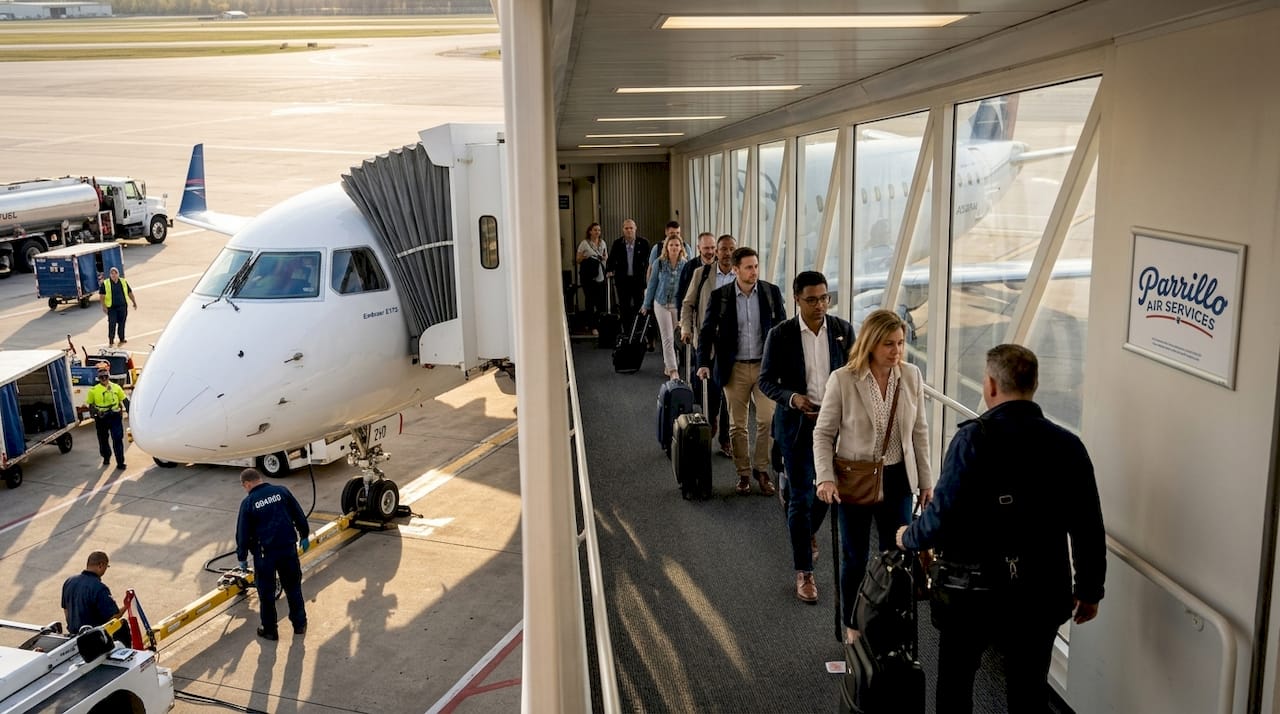
A regional airline is a carrier that operates short-haul feeder flights connecting smaller airports to major airline hubs, forming the backbone of the hub-and-spoke model that makes modern air travel possible. Without regional carriers, millions of passengers in smaller cities would have no practical access to the global air network. United Express, operated in part by Mesa Airlines, is one of the most visible examples of how this system works in practice. Regional airlines typically fly aircraft with 20 to 100 seats and operate under contract with major carriers, often wearing the major airline's brand while remaining independent companies. Understanding how these carriers work matters whether you are planning a trip, studying aviation, or mapping out a pilot career.
A regional airline is defined as a carrier that provides feeder flights connecting smaller communities to larger hub airports, where passengers connect to long-haul or international flights on major carriers. The term "regional airline" is the widely recognized industry label, though you will also hear these carriers called commuter airlines or feeder carriers depending on context. The distinction matters because the business model, not just the geography, defines what makes a carrier regional.
The hub-and-spoke model is the structural reason regional airlines exist. Major carriers like United Airlines and American Airlines concentrate their long-haul operations at large hub airports such as Chicago O'Hare or Dallas/Fort Worth. Regional partners then feed passengers into those hubs from dozens of smaller cities that mainline jets would never serve profitably on their own. This arrangement lets a traveler in Lynchburg, VA, connect through Charlotte or Washington Dulles to virtually any destination on earth.
430 of 635 commercially served US airports are served exclusively by regional carriers, representing 94.5% of all commercially served airports in the country. That figure tells you exactly how much of the national air network depends on carriers most passengers barely think about. Remove regional airlines from the equation and the majority of American airports go dark overnight.
Regional airlines operate primarily through capacity purchase agreements, or CPAs, with major network carriers. Under a CPA, the major airline pays the regional carrier a fixed fee to operate flights on its behalf, covering costs like fuel, labor, and maintenance. CPAs shift revenue and operational risk between the two parties in ways that define what routes get flown, how often, and with what aircraft. The regional carrier functions more like a contractor than an independent airline.
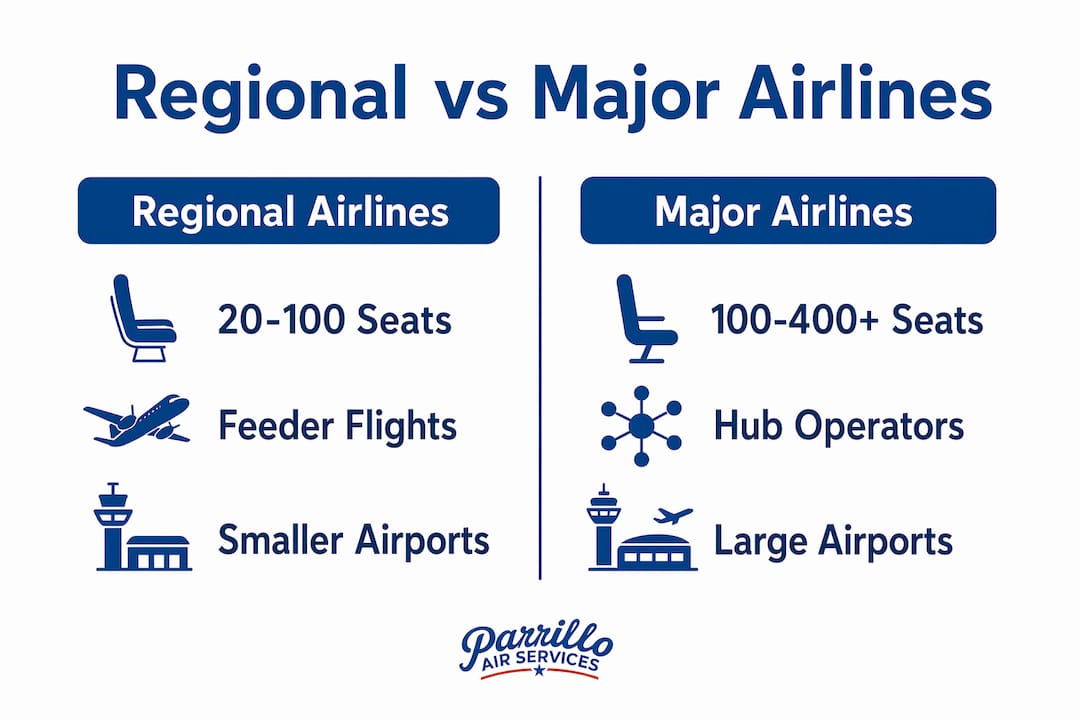
This contractual structure has significant consequences for route availability. Regional route networks are constrained more by contracting terms and labor scope limitations than by actual passenger demand in a given market. A community might have strong demand for air service, but if the CPA does not cover that route or the labor agreement restricts the aircraft type, the flight simply does not happen.
Mesa Airlines flying as United Express under a codeshare deal is a textbook example of how this branding and contracting structure plays out. The ticket says United, the gate agent wears a United uniform, but the aircraft and crew belong to Mesa. Passengers often have no idea they are flying a separate company. Rebooking, baggage handling, and operational coordination all run under a single contract, so the experience feels unified even when the operator is not.
Key operational features of the regional airline model include:
Capacity purchase agreements cover fuel, labor, and maintenance costs, with the major airline absorbing most revenue risk
Code-sharing lets regional flights appear under the major airline's flight number and booking system
Scope clauses in pilot contracts at major airlines restrict the size and number of aircraft regional partners can fly
Independent operations mean regional carriers hire their own crews, maintain their own certificates, and hold their own FAA operating authority
Pro Tip: When booking a connecting itinerary, check the "operated by" field on your ticket. Knowing which regional carrier operates your flight helps you set accurate expectations for aircraft size and onboard amenities.
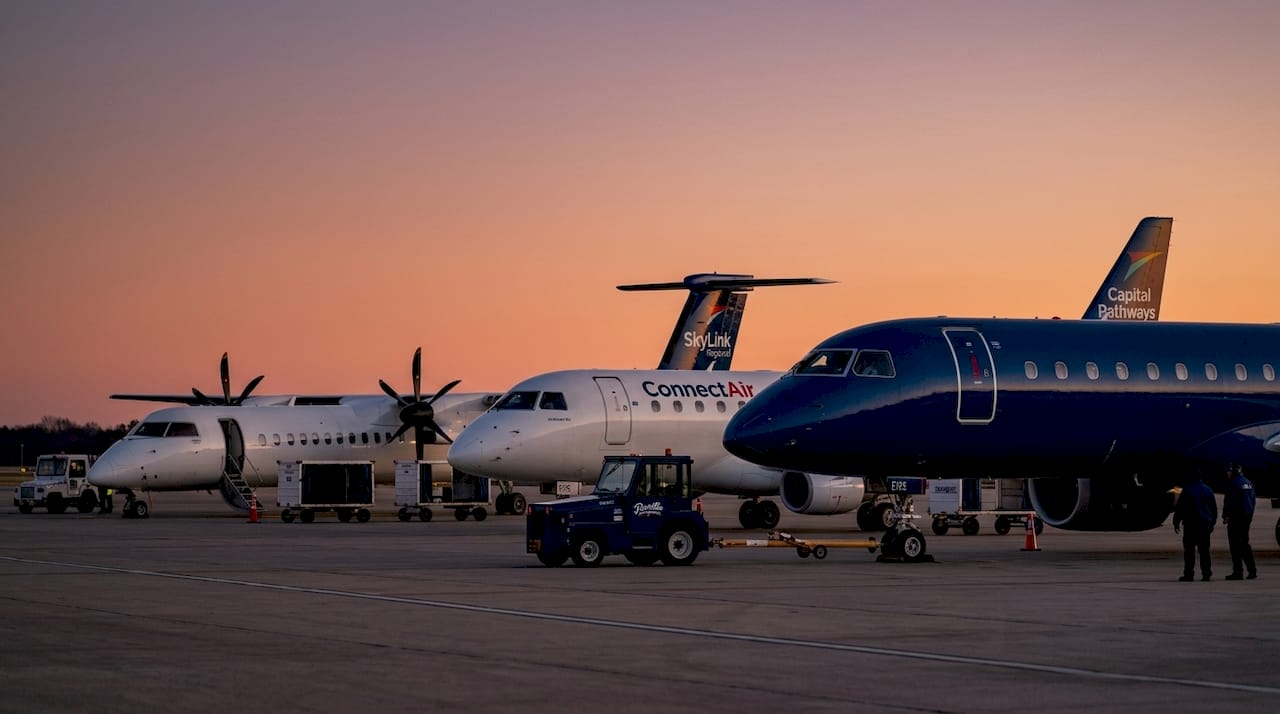
Regional airlines use aircraft specifically sized for lower-density routes, typically carrying between 20 and 100 passengers per flight. Two broad categories dominate regional fleets: regional jets and turboprops. Each serves a different market niche, and choosing the right aircraft type for a given route is as much an economic decision as an operational one.
| Aircraft type | Typical seats | Range | Common use case |
|---|---|---|---|
| Embraer 175 (E175) | 76 | ~2,200 miles | Busy regional routes, scope-clause compliant |
| Bombardier CRJ 700/900 | 70-90 | ~1,600 miles | Mid-density hub feeders |
| ATR 72 turboprop | 70 | ~900 miles | Short routes, lower-traffic markets |
| Embraer ERJ 145 | 50 | ~1,550 miles | Thin routes requiring frequent service |
Regional jets like the Embraer 175 and the Bombardier CRJ series offer jet-speed travel with a cabin experience closer to what passengers expect on mainline flights. The E175 in particular has become the preferred aircraft for many US regional operators because its 76-seat configuration fits within scope clause limits that major airline pilot contracts impose. That regulatory detail, not passenger preference, drives a significant share of fleet decisions.
Turboprops like the ATR 72 serve markets where jet economics do not work. They burn less fuel per seat on short sectors and can operate from shorter runways, making them practical for remote or mountainous communities. Right-sized regional aircraft enable connectivity in markets where larger jets would fly half-empty and where driving or other ground transport is genuinely impractical. Embraer and ATR both argue that the future of regional aviation depends on matching aircraft size precisely to route demand rather than defaulting to larger jets.
Pro Tip: If you are an aviation student evaluating type ratings, the Embraer 170/175 family is one of the most in-demand regional type ratings in the US market right now. Training on it early can accelerate your path to a regional airline seat.
The most direct benefit of regional airlines is simple: they make air travel possible in places where it otherwise would not exist. Many smaller US communities depend exclusively on regional carriers for commercial air access, with no mainline service available at any price. For a business traveler in a mid-sized city or a patient needing to reach a specialized medical center, that regional flight is not a convenience. It is the only option.
Beyond access, regional airlines provide several concrete advantages for passengers and communities:
Hub connectivity lets passengers in small cities reach international destinations with a single connection, using the major carrier's full global network
Frequent service on thin routes is possible because smaller aircraft can be filled more easily, supporting multiple daily departures where a mainline jet would fly once
Economic impact at smaller airports includes jobs, business travel support, and cargo capacity that sustain local economies
Branded consistency means passengers booking through United, American, or Delta get integrated check-in, baggage transfer, and rebooking protection even on regional legs
The passenger experience on a regional flight differs from mainline travel in predictable ways. Cabin width is narrower, overhead bin space is tighter, and some turboprop aircraft have no first-class cabin at all. But passengers booking mainline brands who end up on regional partners still receive the same loyalty miles, the same customer service protections, and the same baggage policies as if they had flown the mainline carrier directly. The operational handoff is invisible by design.
The economic argument for regional airlines extends beyond individual travelers. Airports that lose regional service often see cascading effects: businesses relocate, property values drop, and the community loses a competitive advantage in attracting employers. Regional carriers are infrastructure in the same way that highways and rail lines are infrastructure.
The differences between regional and major airlines go well beyond aircraft size. Major carriers like Delta, United, and American operate wide-body jets on transcontinental and international routes, employ tens of thousands of people, and manage their own revenue risk on every flight. Regional carriers operate under contract, fly narrower aircraft on shorter sectors, and often have no direct relationship with the end passenger at all.
| Feature | Regional airline | Major airline |
|---|---|---|
| Aircraft size | 20 to 100 seats | 100 to 400+ seats |
| Route length | Typically under 500 miles | Domestic and international |
| Revenue model | Capacity purchase agreement | Direct ticket sales |
| Branding | Often flies under major's brand | Own brand, own marketing |
| Pilot career stage | Entry to mid-level | Senior, high-hour pilots |
For pilots, the regional airline is the standard entry point into the airline industry. Most major airline captains spent years building hours and experience at regional carriers before moving up. The regional airline hiring requirements for first officers typically include an FAA Airline Transport Pilot certificate and 1,500 flight hours, though some pathways allow entry at 1,000 hours through aviation degree programs. Regional carriers accept pilots at lower experience thresholds than majors, making them the practical first step in an airline career.
The branding gap creates real confusion for passengers. A traveler who books a Delta ticket may fly on a SkyWest Airlines aircraft operated as Delta Connection without ever realizing it. This is not deceptive. It is the designed architecture of the hub-and-spoke system. But it does mean that reading the fine print on your itinerary gives you a clearer picture of what your actual flight experience will look like.
Regional airlines are the structural foundation of US air travel, serving 94.5% of commercially served airports and connecting smaller communities to the global network through contracted partnerships with major carriers.
| Point | Details |
|---|---|
| Core definition | Regional airlines operate short-haul feeder flights connecting smaller airports to major hubs. |
| Business model | Capacity purchase agreements define routes, risk, and revenue between regional and major carriers. |
| Aircraft types | Regional fleets use 20 to 100-seat jets and turboprops matched to route demand and scope clause limits. |
| Community impact | 430 US airports are served exclusively by regional carriers, making them critical infrastructure. |
| Career pathway | Regional airlines are the standard entry point for aspiring airline pilots building hours toward major carriers. |
Most aviation coverage focuses on the big names: Delta, United, Southwest. Regional carriers operate in the background, and that invisibility is by design. But after years of watching how the aviation industry actually works, I think that invisibility does real damage to public understanding of what keeps the air network running.
The capacity purchase agreement model is genuinely clever, and genuinely fragile. Major airlines offload operational risk to regional partners, which keeps their own balance sheets cleaner. But it also means that when a CPA expires or a major carrier decides to pull back from a hub, entire communities lose air service overnight. The passengers in those cities did not change. The demand did not disappear. A contract changed, and the flights vanished.
I also think the turboprop conversation is more interesting than most people realize. Modern turboprops could regain favor as fuel costs and sustainability pressures mount, particularly if manufacturers address the comfort and perception gap that has made passengers prefer jets even on 200-mile sectors. The economics of turboprops on thin routes are hard to argue with. The passenger psychology is the real obstacle.
For anyone considering a pilot career, the regional airline path is not a consolation prize. It is where you build the judgment, the instrument proficiency, and the crew resource management skills that define a professional aviator. The hours matter, but the environment matters more. Flying 4 to 6 legs a day in all weather conditions at a regional carrier teaches things that a simulator never can.
— Gm

The regional airline industry needs pilots, and the path to that first officer seat starts with structured, professional flight training. Parrillo Air Services, based in Lynchburg, VA, offers FAA Part 61 pilot instruction from discovery flights through commercial certificates and flight instructor ratings, the exact credentials regional airlines require. Every program is built around personalized instruction, flexible scheduling, and the kind of real-world experience that prepares you for the demands of professional aviation. If a regional airline career is your goal, explore the flight training programs at Parrillo Air Services and take the first concrete step toward that cockpit.
A regional airline is a carrier that flies shorter routes connecting smaller airports to major airline hubs, typically using aircraft with 20 to 100 seats. These carriers usually operate under contract with major airlines and often fly under the major carrier's brand name.
Regional airlines operating in the United States are certified and regulated by the FAA under the same safety standards as major carriers. All commercial airline pilots, regardless of carrier size, must hold FAA certificates and meet the same minimum flight hour requirements.
SkyWest Airlines, Mesa Airlines, Envoy Air, and Republic Airways are among the largest US regional carriers. They operate flights branded as United Express, Delta Connection, and American Eagle, among others.
Regional airline pilot positions typically require fewer total flight hours than major airline roles, making them the standard entry point for new commercial pilots. Pay and benefits scale up significantly as pilots gain experience and move to larger carriers.
Most regional airlines focus on domestic short-haul routes, though some operate transborder flights between the US and Canada or Mexico. True international long-haul operations are handled by major and ultra-long-haul carriers, not regional operators.
Regional Airline Hiring Requirements: 2026 Pilot Guide
Parrillo Air Services
Ace Your Airline Pilot Interview: Complete Prep Guide
Parrillo Air Services
Major Airline Pilot Salary Ranges: 2026 Guide
Parrillo Air Services
Flight Instructor Career Pathway: Your Step-by-Step Guide
Parrillo Air Services