Becoming a certified flight instructor is one of the most direct routes into professional aviation, yet most aspiring pilots underestimate how deliberate the process needs to be. The flight instructor career pathway requires more than just logging hours. It demands the right sequence of certificates, a strategic choice between training programs, and a clear-eyed understanding of how instructing fits into your long-term goals. Whether you are finishing your commercial certificate or just starting to research flight training careers, this guide breaks down every step from FAA requirements to your first airline interview.
Sequence matters. You must hold a commercial certificate and instrument rating before starting CFI training.
Part 61 vs Part 141. Part 141 programs can qualify pilots for a Restricted ATP at reduced hours, speeding your airline timeline.
Earn all three ratings. CFI, CFII, and MEI together maximize your earnings and job market options as an instructor.
Build hours strategically. Teaching full-time lets you log 60 to 80 flight hours per month, reaching ATP minimums in 1.5 to 2.5 years.
Apply early to airlines. Start regional airline applications 3 to 6 months before hitting your minimum hour requirements.
Before you can teach a single student, the FAA requires you to meet a specific set of qualifications. These are spelled out under 14 CFR Part 61.183, and skipping any one of them will stop your progress cold.
Here is what you need before starting CFI training:
The medical certificate piece often catches students off guard. A Third Class medical gets you through the CFI process, but you will need a First Class medical to serve as pilot in command at an airline. If you have any known medical history, getting a Special Issuance or a BasicMed review before investing in instructor training is worth your time.
Pro Tip: Apply for your First Class medical before beginning commercial training. Finding out about a medical issue after spending tens of thousands of dollars is an avoidable problem.
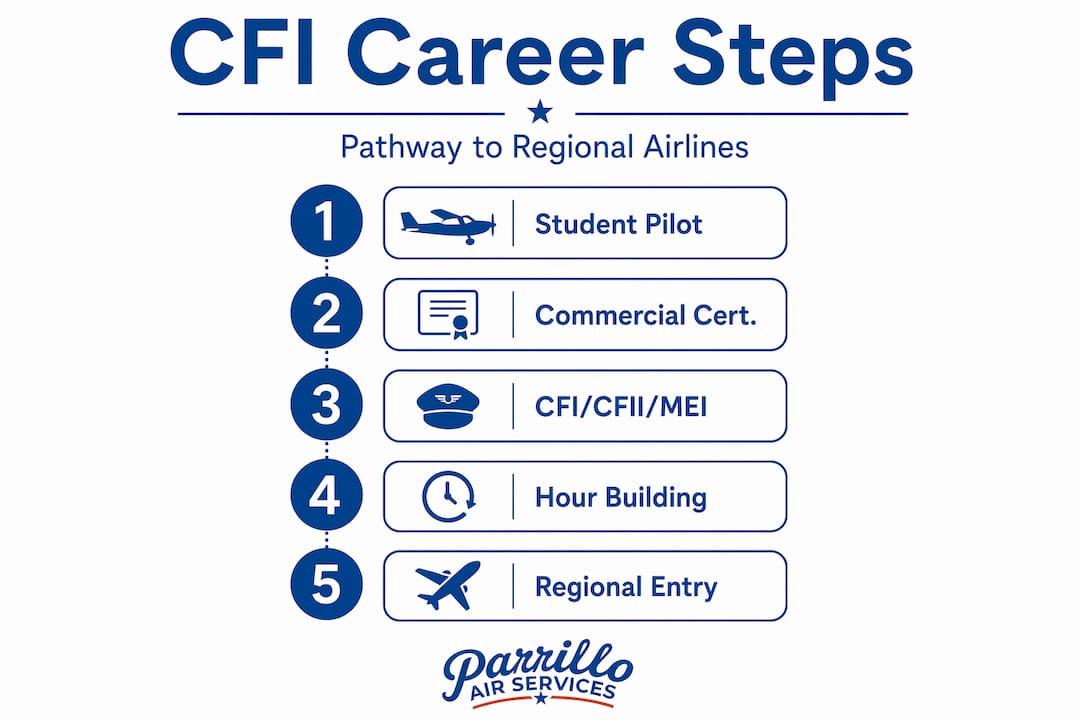
The pathway from zero hours to a regional airline position typically spans 2.5 to 4 years total, with roughly 12 to 18 months covering initial ratings and CFI certification. Knowing that timeline helps you plan finances and stay motivated when the process feels slow.
This is one of the most consequential decisions in your pilot instructor job path, and most students do not fully understand what they are choosing between.
| Feature | Part 61 | Part 141 |
|---|---|---|
| Curriculum structure | Flexible, instructor-led | FAA-approved, standardized syllabus |
| Scheduling | Highly flexible | More structured and scheduled |
| Minimum hours for Private Pilot | 40 hours | 35 hours |
| Restricted ATP eligibility | 1,500 hours | As low as 1,000 hours with a degree |
| Best for | Self-motivated learners, career changers | Students targeting fast airline timelines |
The Restricted ATP certificate allows Part 141 graduates with a bachelor's degree to qualify for an ATP at just 1,000 total hours instead of 1,500. That difference alone can shave 6 to 12 months off your timeline to a regional airline seat.
That said, Part 141 programs provide structured milestones with FAA oversight, which benefits students who thrive with clear benchmarks. Part 61 works extremely well for students who need flexible scheduling or who are paying out of pocket over a longer period.
A few practical considerations when choosing:
Pro Tip: Visit the school in person before committing. Talk to current students, not just admissions staff. Ask how many instructors left in the last year. High turnover at a training school is a warning sign worth taking seriously.
You can read a detailed breakdown of how training programs differ to help you finalize this decision before enrolling.
The FAA issues three main instructor certificates: the Certified Flight Instructor (CFI), the Certified Flight Instructor Instrument (CFII), and the Multi-Engine Instructor (MEI). Each one makes you more versatile and better paid. Here is the sequential process for earning all three.
Pro Tip: Do not wait to start your CFII prep. Begin studying instrument instructor material during the slow periods between student flights. The sooner you hold all three ratings, the sooner you can command better pay and work at more flight schools.
For a full breakdown of the rating process, the FAA flight instructor rating guide at Parrillo Air Services covers every stage in detail.
Once you have your certificates, the real work begins. This phase of the pilot instructor job path is where many aspiring airline pilots struggle, mostly because they misunderstand what instructing actually involves on a daily basis.
Teaching full-time allows you to log 60 to 80 flight hours per month, which means reaching the 1,500-hour ATP minimum in roughly 1.5 to 2.5 years. But those hours do not come automatically. You have to build a student base, show up consistently, and treat every lesson as professional practice.
Here is what compensation looks like across different instructor roles:
| Role | Typical Earnings |
|---|---|
| Independent CFI (freelance) | $25 to $75 per flight hour |
| Full-time CFI at a flight school | $30,000 to $55,000 per year |
| Chief Flight Instructor | $70,000 to $80,000+ per year |
| Flight school with high student volume | $40,000 to $60,000 per year |
Source: Aviation Career Paths Guide 2026
The career in flight education also rewards pilots who think beyond just accumulating flight time. Consider these strategies for making the most of this phase:
High-volume schools in busy flight training markets let you accumulate hours faster. If your current school has too few students to keep you flying regularly, consider relocating or adding yourself to multiple school rosters as an independent instructor.
When you approach 1,400 hours, it is time to shift focus from building time to building your airline application. Start applying 3 to 6 months before you hit your minimum hours. Regional airlines know you are still building, and many will interview you early and hold your file.
Key milestones and facts to know as you make this transition:
Your regional airline hiring requirements page is a solid resource when preparing your actual application materials.
The instructing years are not just a waiting room for the airlines. They are where your reputation as a pilot is built. Examiners, chief pilots, and airline recruiters all talk to each other. How you perform as an instructor follows you.
I have seen a lot of pilots rush through their CFI certification just to get to the airlines as fast as possible. I get it. The goal is the left seat of a jet, not endless pattern work in a Cessna. But that mindset actually slows people down.
What I have found is that pilots who genuinely invest in becoming skilled instructors, who study the why behind every maneuver and actually care about their students, arrive at the airlines with a competence that is immediately obvious. Airline check airmen notice the difference between a pilot who taught 800 hours and one who merely flew 800 hours sitting next to students.
The income during the CFI years is not spectacular, and yes, there are frustrating weeks. But the earnings are not as grim as the reputation suggests. A busy CFI at an active school, especially one holding CFII and MEI ratings, can earn more than most people realize. The instability comes from not being strategic about where you work.
My advice: do not take the first CFI job offered just because it exists. Ask about student volume, aircraft availability, and whether the school has a history of helping instructors transition to airlines. Those things matter more than the hourly rate.
The aviation instructor opportunities available right now, given the pilot shortage, are genuinely the best in decades. You are entering this field at the right time.
— Gm

If you are ready to pursue aviation instructor opportunities with a school that takes your career as seriously as you do, Parrillo Air Services in Lynchburg, VA offers FAA-certified flight training under Part 61, with experienced instructors who have walked this exact pathway. From your first discovery flight through commercial certification and CFI training, every phase is taught with real-world career progression in mind. You will not get lost in a system built for volume over outcomes. Explore the training programs and find out how Parrillo Air Services can get you to your first CFI certificate and beyond. Reach out directly to ask about current availability and scheduling options at parrilloair.com.
You must hold a commercial pilot certificate with the appropriate aircraft category rating, an instrument rating, and a minimum of 250 total logged flight hours before beginning CFI training under FAA regulations.
Most candidates complete their initial CFI certification within 3 to 6 months after their commercial certificate, though accelerated Part 141 programs can compress the full rating sequence to as little as 7 to 9 months.
The CFI covers basic flight instruction, the CFII authorizes instrument flight instruction, and the MEI covers multi-engine aircraft instruction. Holding all three certificates increases both your earning potential and the range of students you can legally teach.
A full-time CFI at an active flight school can typically log 60 to 80 flight hours per month, allowing most instructors to reach the 1,500-hour ATP minimum within 1.5 to 2.5 years of teaching.
Start your regional airline applications 3 to 6 months before reaching your minimum hour requirement. Many carriers will interview early and hold your file, and acceptance rates are currently high due to the ongoing pilot shortage.