
From zero flight hours to a regional airline cockpit takes 2.5 to 4 years. Reaching a major airline adds another 3 to 7 years on top of that. The full pilot career timeline expectations, from first lesson to major airline captain, typically span 8 to 12 years total. Here is the roadmap:
Key milestones at a glance:
The FAA requires an Airline Transport Pilot (ATP) certificate for every pilot in a Part 121 airline cockpit, captain or first officer. That means a minimum of 1,500 total flight hours and a minimum age requirement. Restricted ATP options exist for qualifying aviation degrees and military-trained pilots with reduced hour requirements. A First-Class FAA Medical certificate is also required and must be renewed every six months once you are flying for an airline.
Flight training follows a fixed sequence. Each certificate builds on the last, and skipping steps is not an option under FAA rules.
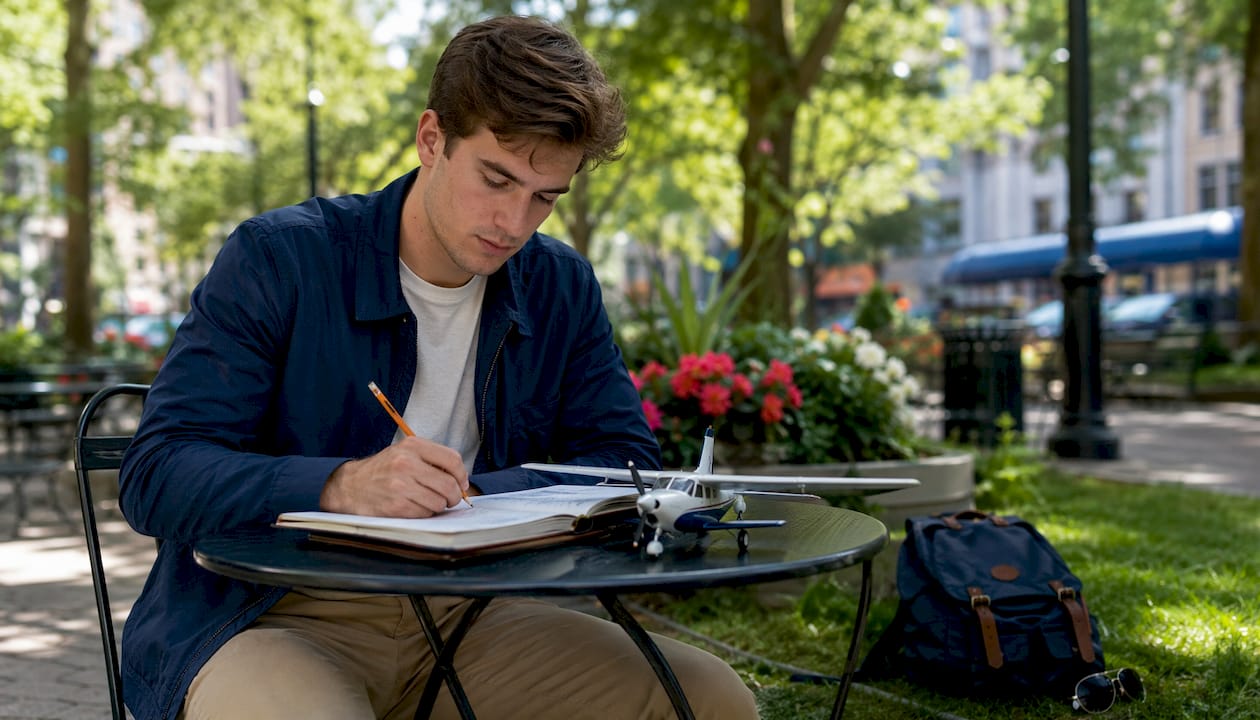
Private Pilot License (PPL)
The PPL is the
foundation. The FAA minimum is 40 hours, but the national average runs
60–70 hours. Full-time students finish in 3–6 months; part-time students
often take 6–12 months. Cost typically falls between $12,000 and
$20,000.
Instrument Rating (IR)
After the PPL, the
instrument rating teaches you to fly in clouds and low visibility using
cockpit instruments alone. Plan for 2–4 months of focused training.
Without it, an airline career is not possible.
Commercial Pilot License (CPL)
The CPL is the
certificate that legally allows you to be paid to fly. You need 250
total hours under FAA Part 61 rules. Most students reach this point 3–6
months after completing the instrument rating. Cost runs roughly
$8,000–$15,000 for this phase.
CFI, CFII, and MEI ratings
The Certified Flight
Instructor (CFI), Instrument Flight Instructor (CFII), and Multi-Engine
Instructor (MEI) ratings typically take 1–3 months combined. Without the
CFII, you can only teach private students, which limits your billable
hours and slows hour building considerably.
Accelerated vs. traditional pacing
Accelerated
civilian programs can compress the PPL-through-CFI phase to as little as
7–9 months. Traditional part-time training stretches it to 18 months or
longer. Flying three to four times per week is the single biggest lever
for controlling both cost and calendar time.
The commercial certificate gets you to 250 hours. The ATP minimum is 1,500. That gap of roughly 1,250 hours is where most aspiring airline pilots spend the better part of two years.
Renting an airplane to fill that gap would cost more than all the training that came before it. So the standard solution is to get paid to fly instead. Flight instructing pays a moderate salary while you log significant flight hours monthly, making it the most cost-effective hour-building route by a wide margin. At that pace, you reach 1,500 hours in 1.5–2.5 years.
Common hour-building strategies:
For a deeper look at the CFI career pathway and how it connects to airline minimums, Parrillo Air Services covers the full progression in detail.
The regional airline is where the professional pilot career truly begins. Most pilots arrive with right around 1,500 hours and step into the right seat of a regional jet, typically a CRJ or Embraer E175.
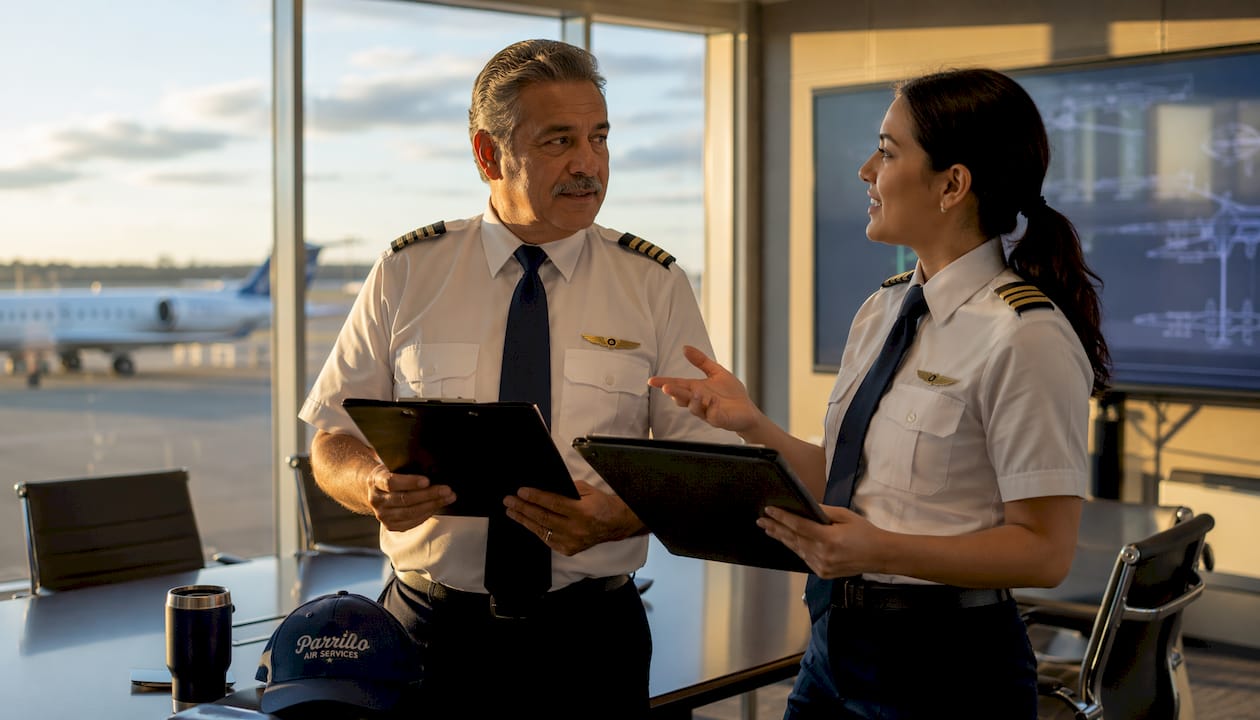
Regional first-year first officers earned a substantially increased total compensation recently at 2026 contract rates. A decade ago, that same seat paid under $30,000. The pilot shortage drove that change, and it has fundamentally altered the financial calculus of this career.
Career progression milestones and approximate pay:
Most pilots spend 3–7 years at a regional before a major airline calls. The seniority system controls everything once you are hired: pay rate, aircraft assignment, schedule, vacation, and upgrade timeline. Critically, seniority does not transfer between airlines. A pilot who leaves a regional for a different major airline starts at the bottom of the new list, regardless of experience. Getting to your target airline early and staying there compounds lifetime earnings in a way that no pay raise can replicate.
For a full breakdown of how airline pay scales progress by seniority year, Parrillo Air Services has a dedicated 2026 guide.
The military path is the most financially efficient route to an airline cockpit, though it comes with a significant commitment. Military pilots typically serve 10–12 years, accumulate 2,000–4,000+ hours of advanced flying, and transition directly to airline hiring afterward. The restricted ATP hour reduction for military pilots is 750 hours, compared to 1,500 for the standard civilian route. The trade is a decade of service obligation.
For civilian pilots, accelerated programs compress the certificate phase to 7–9 months versus the traditional 12–18 months. The R-ATP with a qualifying aviation degree reduces the hour minimum to 1,000 (bachelor's) or 1,250 (associate's), which can shave 6–12 months off the time-building phase and move up your airline hire date by a meaningful margin.
Alternative career timelines by sector:
The pilot career path is long, and the financial picture during the training and hour-building years is genuinely tight. Zero-to-CFI training costs $80,000–$110,000, with accelerated academies reaching up to $120,000. That investment comes before you earn a professional salary, which means most aspiring pilots carry debt or deplete savings during the first two to three years.
Regional first-year first officer pay has grown substantially over the past decade. That shift makes the financial case for this career far stronger than it was for the previous generation.
Common challenges and how to prepare:
The aviation job market in 2026 remains strong at the regionals, with structural demand driven by mandatory retirements at the major carriers continuing through the next decade. That does not mean every year will be a hiring boom. Plan for variability.
Parrillo Air Services, based in Lynchburg, VA, offers FAA Part 61 flight training designed to take aspiring pilots from their first discovery flight through every certification step on the airline career ladder. The programs cover private pilot, instrument rating, commercial pilot, and flight instructor certifications, with personalized instruction and flexible scheduling built around each student's pace and goals.
The school's approach is direct: structured, safety-focused training that moves students efficiently through each milestone without cutting corners on fundamentals. Instructors work with students on career planning alongside the technical training, covering hour-building strategies, regional airline hiring timelines, and the financial realities of the profession.
What Parrillo Air Services offers aspiring airline pilots:
For pilots who want a training environment that treats the airline career goal seriously from day one, Parrillo Air Services provides the structured foundation that the timeline demands.
Parrillo Air Services gives aspiring airline pilots something most training programs do not: a clear, honest path from first flight to airline cockpit, with personalized instruction that keeps you moving through each certification without wasted time or money. The training is FAA Part 61, the scheduling is flexible, and the instructors know exactly what regional and major airlines expect from new hires.

The pilot shortage is real, the pay at regionals has tripled over the past decade, and the window to build a full airline career before mandatory retirement at 65 is open right now. Every month you delay is a month of seniority you will never recover. Schedule a discovery flight with Parrillo Air Services at parrilloair.com and get your timeline started with instructors who have walked this path themselves.
Reaching a major airline cockpit takes 8–12 years from zero experience, with the first airline job typically arriving 2.5–4 years into full-time training and hour building.
| Point | Details |
|---|---|
| Total career timeline | Zero to major airline first officer takes 8–12 years; zero to first regional job takes 2.5–4 years full-time. |
| Training investment | Zero-to-CFI costs $80,000–$110,000; accelerated academies reach up to $120,000. |
| Hour-building phase | CFI work pays $35,000–$60,000 per year while logging 80–100 hours monthly to reach the 1,500-hour ATP minimum. |
| Regional pay in 2026 | First-year regional first officers earn $85,000–$110,000, up from under $30,000 a decade ago. |
| Parrillo Air Services | FAA Part 61 training in Lynchburg, VA, covering PPL through CFI with personalized instruction and airline career guidance. |