
Aviation career timeline planning is the process of mapping your path from first flight lesson through professional certifications to a paid pilot seat, structured to minimize wasted time and money. The FAA defines a clear certification ladder from Student Pilot Certificate to Airline Transport Pilot (ATP), and understanding that ladder before you start training is what separates pilots who reach the flight deck in three years from those who take six. A First-Class Medical Certificate, FAA Part 61 training standards, and a realistic cost projection are the three anchors every aspiring pilot needs before committing to a program. Parrillo Air Services, based in Lynchburg, VA, builds its programs around exactly this kind of structured progression.
The professional pilot certification sequence follows a fixed order: Private Pilot License (PPL), Instrument Rating (IR), Commercial Pilot License (CPL), Certified Flight Instructor (CFI), and finally the Airline Transport Pilot certificate (ATP). Each builds on the last, and skipping ahead is not an option under FAA regulations.
Professional pilot training costs typically range from $60,000 to $150,000 depending on the path and ratings obtained. Breaking that down by phase gives you a clearer picture of where the money goes:

| Certificate or Rating | Typical Cost Range | Minimum Flight Hours (FAA) |
|---|---|---|
| Private Pilot License | $10,000–$20,000 | 40 hours |
| Instrument Rating | $8,000–$18,000 | 50 hours instrument |
| Commercial Pilot License | $8,000–$30,000 | 250 hours total |
| Multi-Engine Rating | $3,000–$5,000 | No fixed minimum |
| Certified Flight Instructor | Included in CPL programs | 250+ hours |
These are FAA minimums. Most students finish with more hours than the minimum, which raises costs but also raises hire-ability.
One step most aspiring pilots overlook is the First-Class Medical Certificate. Securing your medical early is a non-negotiable risk management step. Failing to qualify medically after spending $40,000 on training is a financial disaster that a simple early appointment with an Aviation Medical Examiner (AME) could have prevented.
Pro Tip: Schedule your First-Class Medical exam before you pay for a single flight lesson. The exam costs a few hundred dollars and can save you from a six-figure mistake.
EASA certification, used across Europe, follows a similar ladder but with different hour requirements and modular structure. If you plan to fly internationally, research EASA's Modular vs. Integrated program paths early, since converting licenses between regulatory systems adds time and cost.
Training duration depends almost entirely on one choice: full-time accelerated program or part-time modular training. Accelerated full-time programs can compress all certificate phases to 7–9 months, while modular part-time programs typically run 12–18 months or longer. That gap matters enormously when you factor in seniority.
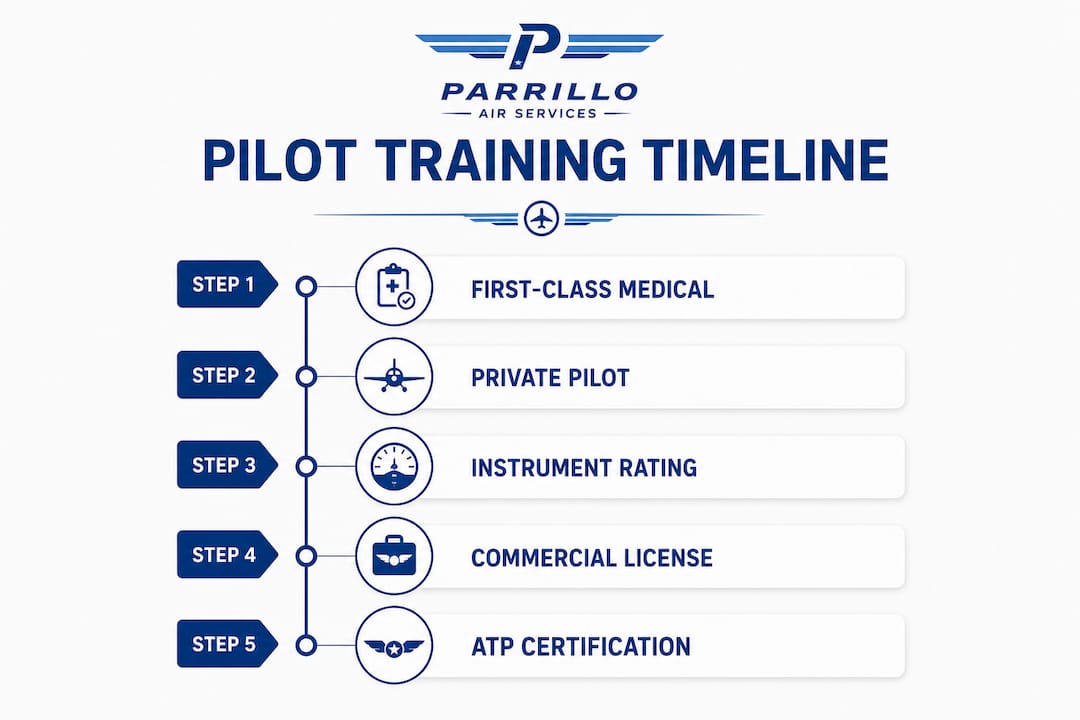
Full-time training demands a higher upfront investment and requires you to pause other income. Part-time training spreads costs but delays your airline hire date, which directly reduces lifetime earnings. The time commitment for each phase is significant regardless of path, and understanding it upfront prevents the most common reason pilots stall: running out of money mid-training.
After earning a CPL, most pilots build the 1,500 hours required for an ATP certificate by working as a CFI. Flight instructing is the most direct hour-building path because it pays while you fly. Other options include banner towing, aerial survey work, and charter flying, though these positions are competitive and geographically limited.
Common pitfalls that delay the timeline include:
Pro Tip: Build a six-month financial reserve before starting training. Pilots who run out of money mid-program often take 12–18 months longer to finish than those who fund the full path upfront.
Financing your flight training as an adult requires planning well before your first lesson. Loans, scholarships, and employer tuition programs all exist, but they require lead time to secure.
The typical timeline from zero experience to a regional airline first officer seat runs 2.5–4 years, including training and CFI hour-building. That is the entry point, not the destination.
Regional airlines hire pilots at the First Officer (FO) level, typically requiring 1,500 flight hours and an ATP certificate. From there, the career ladder looks like this:
| Career Stage | Typical Timeline | Key Requirement |
|---|---|---|
| Regional Airline First Officer | Year 2.5–4 from start | 1,500 hours, ATP certificate |
| Regional Airline Captain | 1.5–4 years after FO hire | Seniority, upgrade bid |
| Major Airline First Officer | 5–10 years from start | 1,500+ hours, strong record |
| Major Airline Captain | 8–15 years at major airline | Seniority, equipment bid |
Upgrade timelines at regional airlines run 1.5–4 years for captain, while major airline captain upgrades take 8–15 years. That range reflects seniority list position, not just skill.
Seniority date impacts pay scale, scheduling, aircraft assignments, and job security. It is established the day you are hired, and it cannot transfer between carriers. Every year you delay your airline hire date costs you a year of seniority benefits compounded over a 30-year career. Early career start maximizes lifetime earnings by a margin that can reach millions of dollars.
Major airlines require deep experience and a spotless record. Pilots who interrupt their careers, whether for personal reasons or financial gaps in training, often find themselves years behind peers who flew continuously.
Alternative paths exist for pilots who prefer variety. Cargo operations, corporate aviation, and military transition routes each offer different lifestyle and pay tradeoffs. Cargo flying, for example, offers strong pay and schedule predictability but fewer passenger-facing advancement opportunities. Corporate aviation offers flexibility but limited seniority structures. These paths are worth considering, but they require the same foundational certifications as airline flying.
The transition from First Officer to Captain is more than a seat change. Command authority and crew management require a mindset shift that goes well beyond stick-and-rudder skill. Pilots who prepare for that shift deliberately, through mentorship and leadership training, upgrade faster and perform better.
A personal aviation career plan follows a four-step framework: assess your current position, identify gaps, set short-term goals, and reassess regularly. Scheduling career reassessments every six months keeps your plan aligned with both industry changes and your own evolving priorities.
Here is a practical planning sequence:
Pro Tip: Treat your aviation career like a business. Track your hours, ratings, and professional contacts in a single document. Pilots who can articulate their progression clearly in interviews consistently outperform those who cannot.
The pilot shortage projected through 2030 and beyond means strong employment prospects for aspiring pilots. That demand does not eliminate the need for careful planning. It simply means the pilots who plan well will capture the best positions first.
Aviation career timeline planning is the single most important step an aspiring pilot can take before spending a dollar on training, because seniority date and medical qualification determine lifetime earnings more than any other factor.
| Point | Details |
|---|---|
| Get your medical first | Secure a First-Class Medical Certificate before investing in any training to confirm eligibility. |
| Know the full cost range | Professional pilot training costs $60,000–$150,000 total; plan financing before you start. |
| Seniority date drives earnings | Every year of delay in your airline hire date reduces lifetime earnings significantly. |
| Reassess your plan biannually | Review your career plan every six months to stay aligned with market conditions and personal goals. |
| Full-time training saves years | Accelerated programs finish in 7–9 months vs. 12–18 months for part-time, compressing your timeline to the flight deck. |
Most pilots I have worked with start thinking seriously about their career timeline after they have already spent money. They buy their first few flight lessons, fall in love with flying, and then start asking the hard questions: How much will this cost? How long will it take? Can I even get a medical? That sequence is backwards, and it costs people real money and real years.
The pilots who reach the flight deck fastest are the ones who treated their career like a project from day one. They got their medical in month one. They chose their training path based on a financial plan, not enthusiasm. They understood that their seniority date, not their flying skill, would determine their quality of life for the next 30 years.
The other thing I have seen derail good pilots is rigidity. The aviation industry shifts. Hiring cycles open and close. New aircraft types create new opportunities. The pilots who build flexibility into their plan, who reassess every six months and adjust without ego, consistently outperform those who lock in a five-year plan and refuse to adapt.
Start early. Get your medical. Pick a path you can actually fund. Then fly as much as possible, as consistently as possible. The timeline takes care of itself when the foundation is right.
— Gm

Parrillo Air Services offers FAA Part 61 flight training programs in Lynchburg, VA, designed for aspiring pilots who want a clear path from first flight to professional certification.
Programs at Parrillo Air Services cover every stage of the certification ladder, from introductory discovery flights through private pilot, instrument, commercial, and flight instructor ratings. Scheduling is flexible to fit both full-time and working-adult timelines, and instruction is personalized rather than factory-paced. If you are ready to build a real plan around your aviation goals, explore Parrillo Air Services' training programs to see program details, costs, and enrollment options. The right training structure is the first decision that shapes everything that follows.
The typical timeline from zero experience to a regional airline first officer seat is 2.5–4 years, including training and hour-building as a CFI. Full-time accelerated programs compress the training phase to 7–9 months.
Professional pilot training costs range from $60,000 to $150,000 depending on the certifications obtained and the training path chosen. Costs include PPL, instrument rating, commercial license, and multi-engine rating phases.
Get your First-Class Medical Certificate before your first paid flight lesson. Discovering a disqualifying medical condition after investing in training creates significant financial loss.
A seniority date is the date you are hired by an airline, and it determines your pay, scheduling, aircraft assignments, and upgrade eligibility for your entire career. It cannot transfer between carriers, so earlier is always better.
The core steps are: obtain a First-Class Medical Certificate, complete PPL training, earn an Instrument Rating, finish a Commercial Pilot License, build 1,500 hours as a CFI or in other commercial roles, and then apply for ATP certification and airline hiring.