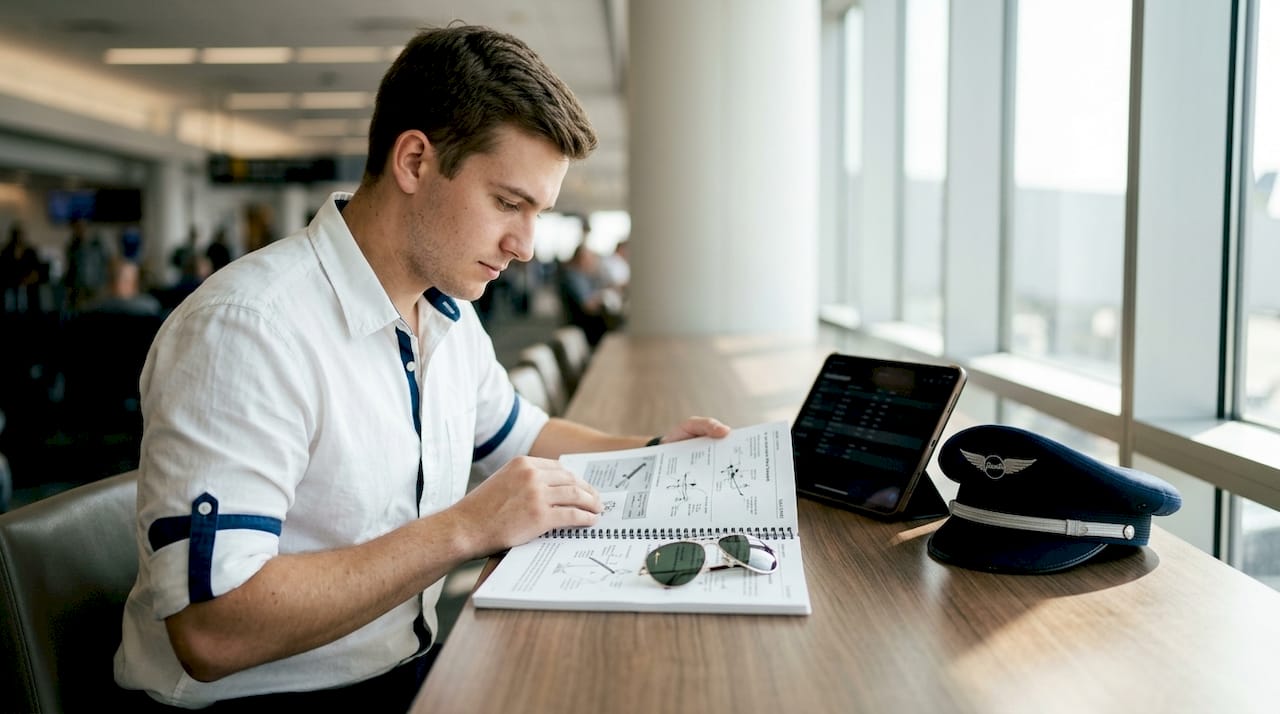
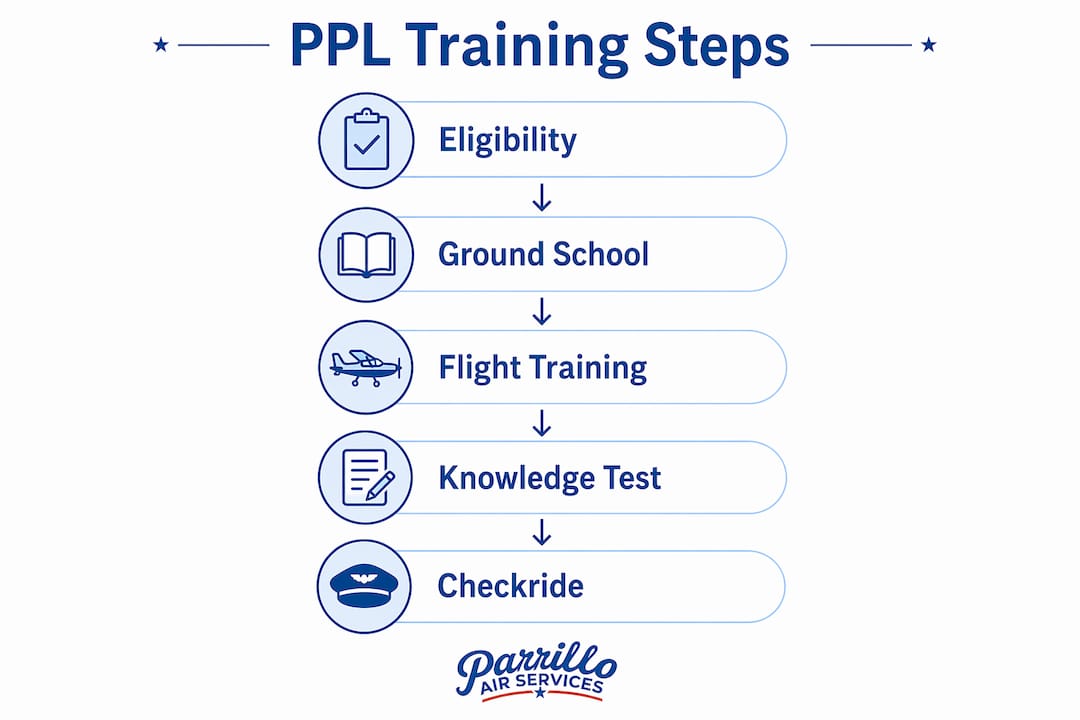
A private pilot license (PPL) is the FAA credential that authorizes you to fly aircraft as pilot in command and carry passengers legally. Earning it follows a defined sequence: meet eligibility requirements, pass a medical exam, complete ground school and flight training, pass the FAA knowledge test, and clear the checkride. Most students complete the private pilot certification process in several months to a year, depending on schedule and consistency. Understanding each private pilot license step before you start saves time, money, and frustration.
The FAA sets clear minimum standards before you can begin formal training toward a private pilot certificate. You must be at least 16 years old to fly solo and 17 years old to hold a private pilot certificate. You must also read, speak, write, and understand English at a functional level. These are non-negotiable entry points, not suggestions.
Medical certification is the step most aspiring pilots underestimate. A third-class FAA medical certificate, issued by an FAA Aviation Medical Examiner (AME), is required before you fly solo. The exam covers vision, hearing, cardiovascular health, and neurological history. Most healthy adults pass without issue, but conditions like insulin-dependent diabetes or certain psychiatric diagnoses require additional review.
The FAA also recognizes BasicMed as an alternative for pilots who already hold a valid medical certificate. BasicMed allows qualified pilots to fly certain aircraft without renewing through an AME, but it carries restrictions on aircraft weight and altitude. For student pilots starting fresh, the standard third-class medical is the right path.
Pro Tip: Schedule your medical exam before investing in ground school or flight lessons. Discovering a disqualifying condition early prevents wasted spending.
Flight school selection shapes your total cost and training timeline more than any single factor. Fleet condition and instructor turnover matter far more than advertised hourly rates. A school with aging aircraft and high instructor turnover will cost you more in the long run through delays, rebooking, and inconsistent instruction.
The two main regulatory frameworks are FAA Part 141 and FAA Part 61. Part 141 schools offer structured syllabi and faster completion for full-time students, while Part 61 schools provide greater scheduling flexibility for part-time learners. If you work full-time or have an unpredictable schedule, a Part 61 school like Parrillo Air Services fits your life better than a rigid Part 141 program.
When visiting a school, ask specific questions rather than accepting a sales pitch.
The local airport environment matters more than most students realize. Training at a towered airport builds communication skills faster, but it also adds complexity early. A quieter, uncontrolled field can accelerate early maneuver practice. The right choice depends on your goals and learning pace.
Pro Tip: Visit at least two schools before committing. Sit in the aircraft, meet the instructors, and ask to speak with a current student. First impressions of culture and organization are usually accurate.
Private pilot training divides into two parallel tracks: ground school and flight training. Both run simultaneously, and progress in one reinforces the other. Treating them as separate tasks is a common mistake that slows students down.
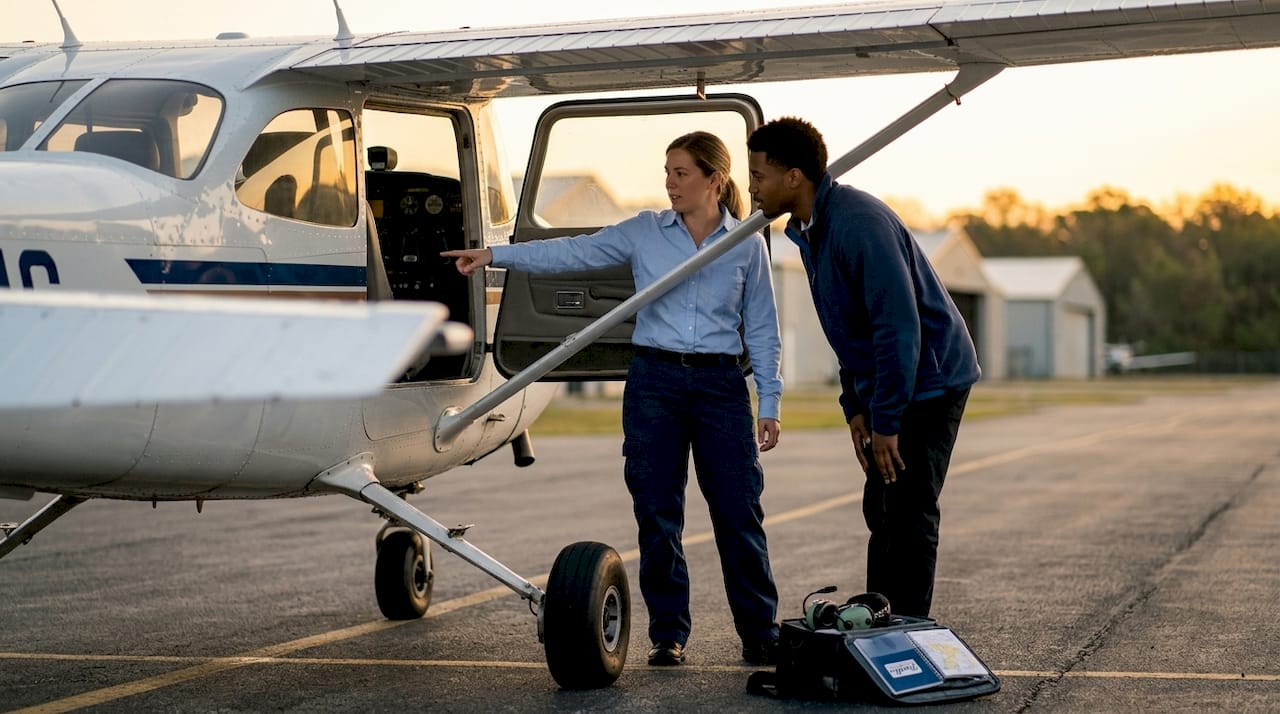
Ground school covers FAA regulations, meteorology, aircraft systems, navigation, aerodynamics, and emergency procedures. You can complete ground school through an in-person course, a self-study program, or an online platform. The goal is to build the theoretical knowledge you need to make sound decisions in the air. Chair-flying, where you mentally rehearse maneuvers in a chair before flying them, is a proven technique that accelerates skill transfer from ground to cockpit.
The FAA legal minimum is 40 flight hours, but the realistic average for most students is 60–75 hours. That gap exists because weather cancellations, scheduling gaps, and the natural learning curve all add time. Planning for 60–75 hours from the start prevents the most common financial mistake in flight training.
| Training milestone | Typical hours into training |
|---|---|
| First solo flight | 15–20 hours |
| Solo cross-country flight | 35–45 hours |
| Checkride readiness | 60–75 hours (average) |
| FAA legal minimum | 40 hours |
Pro Tip: Fly at least twice per week during active training. Students who fly once a week or less spend the first 20 minutes of each lesson relearning what they forgot. Frequency builds retention.
The FAA knowledge test is a written exam you take at an approved testing center before your checkride. The test consists of 60 multiple-choice questions with a 70% passing threshold, and fees typically run $175–$200. That passing score is not difficult to beat with proper preparation, but students who rush it often score just above the minimum and then struggle during the oral exam when examiners probe weak areas.
Knowledge test results are valid for 24 months. If you do not complete your checkride within that window, you must retake the written exam. Plan your test timing so you sit for it roughly 2–4 months before your anticipated checkride date.
The checkride itself has two parts. A Designated Pilot Examiner (DPE) conducts both. The oral exam covers regulations, weather interpretation, aircraft systems, and flight planning. The flight test then evaluates your ability to perform maneuvers to FAA Airman Certification Standards. The DPE is not trying to fail you. They are verifying that you are safe to fly without an instructor.
Common checkride mistakes to avoid:
Pro Tip: Review your FAA knowledge test results with your instructor before the checkride. Examiners often focus oral questions on the topics where you scored lowest.
The most common reason students fail to finish is financial. Students who budget for the 40-hour minimum frequently run out of funds before reaching checkride readiness. The fix is straightforward: plan financially for 60–75 hours from day one and treat any hours under that as a bonus, not the goal.
Consistency is the second major challenge. Maintaining a steady flying schedule and integrating ground studies with flight practice produces the fastest progress. Students who fly sporadically spend more total hours and more total money reaching the same skill level as students who fly regularly.
Practical strategies that keep training on track:
Choosing the right pace matters as much as choosing the right school. Full-time students who fly daily can finish in 2–3 months. Part-time students flying twice a week typically finish in 6–12 months. Neither pace is wrong. The wrong pace is one that creates financial stress or forces you to fly when you are fatigued or distracted.
Pro Tip: Build a cash reserve equal to 20 additional flight hours beyond your planned budget. Weather delays and scheduling gaps are inevitable. That buffer prevents training interruptions.
Earning a private pilot certificate requires meeting FAA eligibility standards, completing 60–75 hours of flight training on average, passing a 60-question knowledge test, and clearing a checkride with a Designated Pilot Examiner.
| Point | Details |
|---|---|
| Budget for realistic hours | Plan for 60–75 flight hours, not the 40-hour FAA minimum, to avoid running out of funds. |
| Medical exam comes first | Schedule your third-class FAA medical before spending money on lessons or ground school. |
| School selection drives outcomes | Fleet condition and instructor continuity affect total cost more than advertised hourly rates. |
| Knowledge test timing matters | Pass the written exam 2–4 months before your checkride to stay within the 24-month validity window. |
| Consistency beats intensity | Flying twice per week produces faster, cheaper progress than cramming lessons into short bursts. |
The students who finish fastest are rarely the most naturally talented. They are the ones who show up on a schedule and trust the process even when a lesson feels like a step backward. Aviation expert Garrett Gleim has made this point directly: consistent practice and trust in the training process are the defining factors for student pilots, not raw aptitude.
The single biggest mistake I see is treating the 40-hour minimum as a target. It is a legal floor, not a realistic finish line. Students who internalize that early stop feeling behind when they hit 50 hours without a checkride date. They stay focused instead of panicking.
Choosing a school based on price alone is the second most expensive decision a student can make. A school with lower hourly rates but poor aircraft availability or high instructor turnover will cost more in total hours. Visit the school. Meet the instructors. Ask about their checkride pass rate. Those conversations reveal more than any website.
The private pilot training process is not complicated. It is sequential and demanding, but every step is learnable. The pilots who struggle are usually the ones who try to skip steps or rush the timeline. The ones who succeed fly regularly, study consistently, and ask questions without embarrassment.
— Gm
Parrillo Air Services operates an FAA Part 61 flight training program in Lynchburg, VA, built specifically for students who need scheduling flexibility without sacrificing instruction quality. The program covers every stage of private pilot certification, from your first discovery flight through checkride preparation, with personalized instruction from experienced CFIs.

Part 61 training at Parrillo Air Services means your schedule drives the timeline, not a rigid syllabus calendar. Students receive one-on-one instruction tailored to their learning pace, with clear milestones at every stage. For aspiring pilots who want a direct path to certification with real-world instruction, Parrillo Air Services flight training is a practical starting point worth exploring.
You must be at least 17 years old to hold a private pilot certificate. You can begin flight training and fly solo at age 16 with an instructor endorsement.
The FAA legal minimum is 40 flight hours, but most students need 60–75 hours to reach checkride readiness. Budget for the higher figure from the start.
The FAA knowledge test is a 60-question multiple-choice exam with a 70% passing score. Test fees typically run $175–$200, and results are valid for 24 months.
Part 141 schools follow a structured FAA-approved syllabus suited for full-time students. Part 61 schools offer more scheduling flexibility, making them a better fit for working adults and part-time learners.
Full-time students flying daily can finish in 2–3 months. Part-time students flying twice a week typically complete training in 6–12 months. Consistency matters more than total calendar time.
Commercial Pilot Certificate Requirements | Parrillo Air Services - Lynchburg, VA
Parrillo Air Services
Student Pilot Certificate Guide | Parrillo Air Services - Lynchburg, VA
Parrillo Air Services
How to Get Your FAA Student Pilot Certificate Fast | Parrillo Air Services
Parrillo Air Services
Regional Airline Hiring Requirements: 2026 Pilot Guide | Parrillo Air Services
Parrillo Air Services