
Instrument flying skill requirements are defined by FAA 14 CFR 61.65 and begin with three non-negotiable prerequisites: a private pilot certificate, demonstrated English proficiency, and specific flight hour thresholds. The formal industry term for this certification is the Instrument Rating, commonly abbreviated as IR. Earning it means you can fly legally in clouds, low visibility, and instrument meteorological conditions (IMC). This guide breaks down every requirement you need to meet, the skills you must demonstrate, and how to stay current once you hold the rating.
The FAA mandates specific minimums under Part 61 that every instrument rating candidate must meet before sitting for a checkride. These are not suggestions. They are legal thresholds.
The core hour requirements under Part 61 include:
The 50-hour PIC cross-country requirement surprises many student pilots. It means time you logged before starting instrument training counts, so your private pilot cross-country hours apply directly.
Pro Tip: Log your cross-country hours carefully from your first solo flight. Many students reach instrument training and realize they are short on PIC cross-country time, which delays their checkride eligibility.
Part 141 schools operate under a structured syllabus approved by the FAA and can reduce the instrument time minimum to 35 hours. The cross-country PIC requirement, however, remains unchanged. If you train under Part 61 instruction, you get more scheduling flexibility but must meet the full hour minimums.
The FAA Airman Certification Standards (ACS) define exactly which skills you must demonstrate on your instrument checkride. Knowing the list ahead of time lets you train with purpose rather than guessing.
The core skills include:
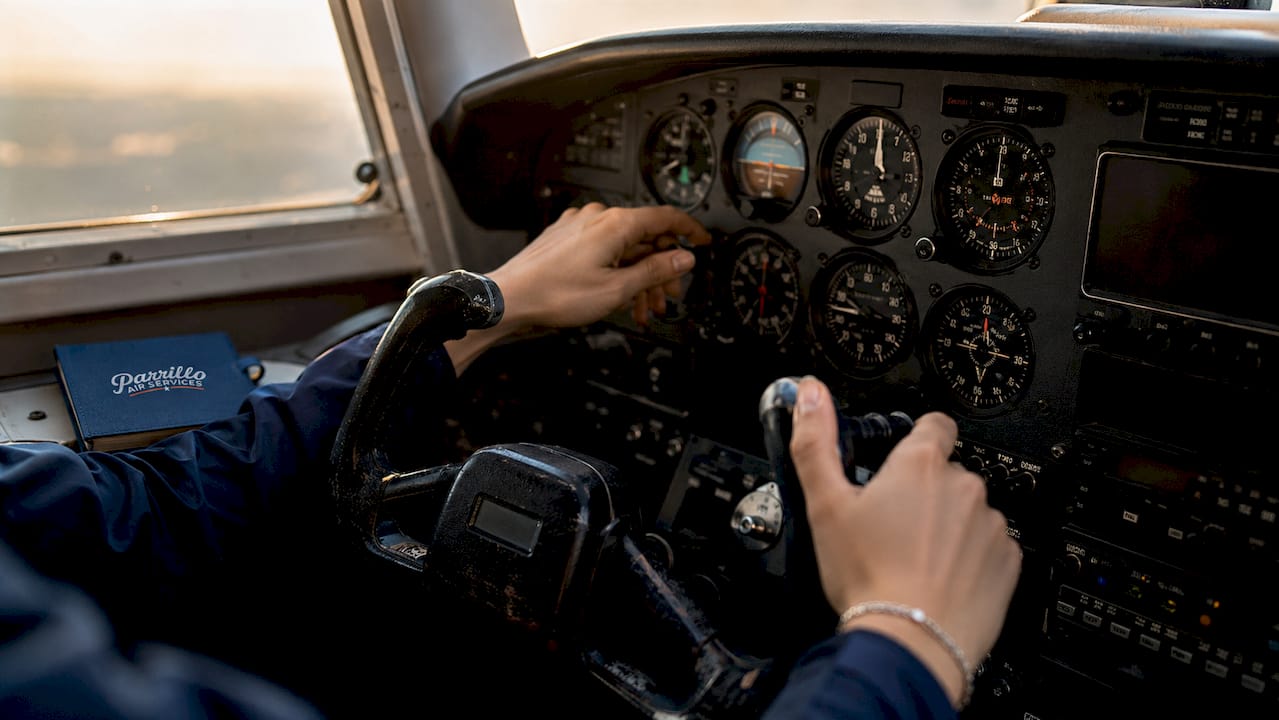
The instrument scan is the foundation of everything else. A weak scan causes fixation, which leads to spatial disorientation. Proficient pilots develop a scan pattern that covers attitude, heading, altitude, and airspeed in a continuous loop.
Holding patterns are a common checkride stumbling block. ATC uses holds to manage traffic flow, and you must enter correctly based on your arrival heading relative to the holding fix. The three entry types each require different geometry, and wind correction inside the hold must keep you on the protected airspace side.
Pro Tip: Practice holding pattern entries on the ground using a printed diagram and a pencil. Visualizing your aircraft's position relative to the fix before you fly it dramatically reduces errors in the cockpit.
Partial panel training simulates the failure of primary attitude instruments, typically the attitude indicator and heading indicator. You must then cross-check the turn coordinator, altimeter, and airspeed indicator to maintain control. This skill goes beyond checkride preparation. It is a real safety tool for any IFR flight.
English proficiency is a legal requirement for IFR operations, not a soft skill. The FAA requires that every instrument-rated pilot can read, speak, write, and understand English at a level sufficient for safe ATC communication.
The practical communication skills you need include:
ATC clearances in IFR operations carry legal weight. A "cleared as filed" instruction is not just information. It is a formal legal authorization for you to fly the route you filed. Misunderstanding or misreading that clearance creates both a safety risk and a regulatory violation.
Clear and confident ATC communication, including accurate readbacks, is a core IFR safety behavior. Student pilots often underestimate how much communication practice they need. Flying in the IFR system means talking to controllers continuously, from departure clearance to landing. Hesitation or unclear speech creates workload for controllers and increases risk.
The best way to build communication fluency is to listen to live ATC feeds using tools like LiveATC.net before you fly. Hearing real clearances at real speed prepares you for what the radio actually sounds like in IMC.
Earning the Instrument Rating is not the finish line. The FAA requires you to maintain currency and demonstrate proficiency on a regular schedule.
To stay instrument current, you must complete within the previous 6 months:
Instrument currency lapses if you do not complete these tasks within 6 months. You then enter a grace period of another 6 months during which you can fly with a safety pilot under simulated IMC to rebuild currency. After that second 6-month window closes, you must pass an Instrument Proficiency Check (IPC) with a CFII before flying IFR again.
The IPC is not a checkride, but it covers the same core maneuvers. A CFII evaluates your scan, approaches, holds, partial panel skills, and emergency procedures. Think of it as a structured review that confirms you can still operate safely in the IFR system.
Currency and proficiency are not the same thing. Currency means you have met the legal minimums. Proficiency means you can actually handle the demands of real IMC safely. Many experienced pilots fly practice approaches regularly even when they are technically current, because the IFR environment punishes rust quickly.
The FAA knowledge test for the Instrument Rating covers 60 questions and requires a 70% passing score, with results valid for 24 months. Topics include IFR regulations, weather interpretation, navigation, and instrument procedures. Passing the written test before your flight training accelerates your checkride preparation significantly.
Instrument flying skill requirements center on meeting FAA-mandated flight hours, demonstrating specific maneuvers, maintaining English proficiency, and staying current through regular approaches and holds.
| Point | Details |
|---|---|
| Minimum flight hours | Part 61 requires 40 hours instrument time, 50 hours PIC cross-country, and 15 hours with a CFII. |
| Core skills for checkride | Master instrument scan, holding patterns, approach procedures, and partial panel flying before your checkride. |
| English proficiency is mandatory | You must read, speak, write, and understand English to operate legally in the IFR system. |
| Currency vs. proficiency | Legal currency requires 6 approaches and holds every 6 months; true proficiency demands regular practice beyond minimums. |
| IPC restores lapsed privileges | After two consecutive 6-month periods without currency tasks, only an IPC with a CFII restores your IFR privileges. |
The single biggest obstacle I see is not hours. It is mindset. Student pilots who have flown visually for years arrive at instrument training and instinctively look outside the cockpit for reference. That instinct works against you in IMC. The mental shift to trusting instruments completely, even when your body tells you something different, takes deliberate practice and repetition.
Partial panel training reveals more about a pilot's actual skill level than any other exercise. When the attitude indicator disappears, pilots who have been relying on it as a crutch fall apart quickly. The ones who have built real cross-check habits barely miss a beat. I always tell students to treat partial panel not as a checkride box to check, but as the truest test of whether their scan is actually working.
The other thing most articles skip: communication anxiety is real and it slows training down. Students who listen to ATC audio before their first IFR lesson arrive with a massive advantage. They already know the rhythm of clearances, the pace of controllers, and the vocabulary. That comfort frees up mental bandwidth for actually flying the airplane.
Instrument flying does not reward natural talent. It rewards consistent, deliberate practice over time. The pilots who earn the rating and actually use it safely are the ones who kept flying approaches on clear days, long after the checkride was done.
— Gm
Parrillo Air Services, based in Lynchburg, VA, offers FAA Part 61 instrument rating training built around personalized instruction and flexible scheduling. Their CFII instructors work with you on the exact skills the ACS requires, from your first instrument scan to your final approach on checkride day.

If you are ready to move from visual flying to the IFR system, Parrillo Air Services structures training to meet every FAA requirement while fitting your schedule. You can review their flight training programs to see how instrument instruction fits into a full professional pilot pathway, from private certificate through commercial and flight instructor ratings. The avionics training integrated into their program also prepares you for the glass cockpit environments you will encounter in airline operations.