Major airlines require a minimum of 1,500 flight hours for Airline Transport Pilot (ATP) certification, but that number is just the starting point. The real standard is far more demanding. Airlines want pilots who have built multi-crew turbine experience, demonstrated sound operational judgment, and followed a structured career path that proves long-term commitment to the profession. Understanding why major airlines require experience this specific helps you plan a career path that actually gets you hired, not just qualified on paper.

Major airlines require experience because commercial aviation leaves no room for on-the-job learning at the captain level. Every flight carries hundreds of passengers, operates in complex airspace, and demands split-second decisions under pressure. Airlines need pilots who have already made those decisions hundreds of times before stepping into a cockpit with paying passengers.
The FAA mandates 1,500 flight hours for ATP certification, with specific emphasis on multi-engine and instrument time. That requirement exists because raw hours build the muscle memory and situational awareness that no simulator can fully replicate. Airlines also look for multi-crew operational experience, meaning time spent coordinating with another pilot in a structured crew environment. A pilot who has only flown solo lacks the communication habits and crew resource management skills that commercial operations demand.

The importance of experience in aviation goes beyond technical skill. Airlines are investing millions in each pilot they hire and train. They need candidates who have already proven they can handle real-world complexity, not just pass a written exam.
Airlines evaluate experience across several dimensions, not just total hours. Multi-engine turbine time and recent operational currency carry more weight than a high logbook total with outdated or low-complexity flying.
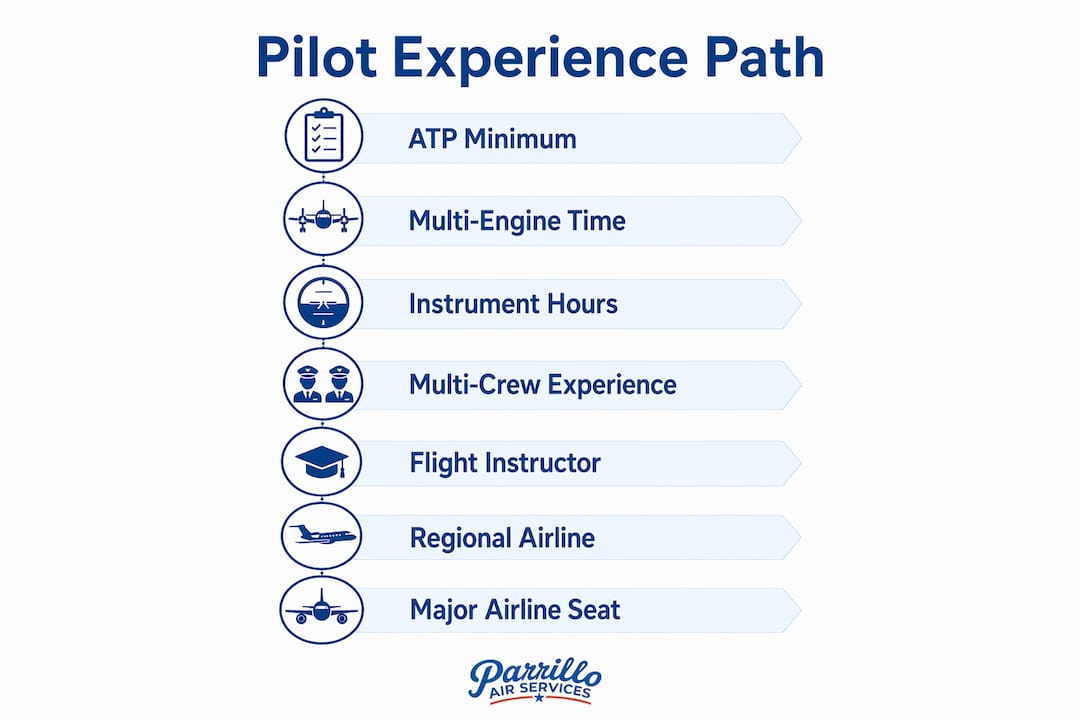
The core experience categories major airlines assess include:
Meeting the FAA minimums is necessary but insufficient for competitive hiring. Airlines expect candidates to have pursued structured career progression with diverse flight experiences that prove genuine readiness.
Academic degrees are not legally required at most major airlines, but they function as a powerful screening tool. 77% of active airline pilots hold a bachelor's degree, which reflects how deeply embedded degree expectations are in airline culture.
When hundreds of applications arrive for a small number of seats, HR departments need fast filters. A bachelor's degree signals discipline, the ability to complete a long-term commitment, and a baseline of academic capability. Airlines dropped formal degree requirements during recent pilot shortages to widen their applicant pools. However, degrees remain a crucial sorting tool in practice, even when they are listed as "preferred" rather than "required."
Beyond degrees, other qualifications that strengthen a major airline application include:
You can read more about degree considerations for pilots at Parrillo Air Services' blog, which breaks down how degree preferences play out in real hiring decisions.
The gap between the number of qualified applicants and the number of available seats at major airlines creates intense competition. Minimum qualifications get you into the applicant pool. Experience quality determines whether you advance.
Airlines prioritize candidates based on the breadth and recency of their experience, the reputation of their flight schools, and evidence of a structured career path. A pilot who flew for a regional airline for three years, upgraded to captain, and accumulated turbine time in a multi-crew environment will consistently outrank a pilot who simply logged 1,500 hours in single-engine aircraft.
| Career path | Experience profile | Hiring competitiveness |
|---|---|---|
| Regional airline first officer | Multi-crew turbine time, structured CRM | High |
| Charter or cargo pilot | Diverse conditions, often single pilot | Moderate |
| Flight instructor only | High hours, limited turbine exposure | Lower without additional turbine time |
| Military transition | Extensive turbine and multi-crew time | Very high |
The quality and diversity of experience heavily influence hiring success beyond minimum qualifications. Airlines also consider the reputation of the training institutions where candidates built their skills. A structured program with documented safety standards carries more credibility than informal hour-building.
Building the right experience requires a deliberate plan, not just accumulating hours. The structured career progression that airlines value most follows a clear sequence.
Aspiring pilots who choose reputable flight schools with structured programs, like those offered through Parrillo Air Services, build the documented training history that airline recruiters want to see. The commercial pilot job market in 2026 rewards pilots who can show a clear, credible progression from student to professional.
The strict experience standards at major airlines create ripple effects throughout the entire aviation system. Pilot advancement bottlenecks at regional carriers create a talent vacuum that affects scheduling, route coverage, and operational reliability across the industry.
The key industry-wide effects include:
Airlines have responded by launching cadet programs, offering signing bonuses, and partnering with flight schools to create direct pipelines. These efforts reflect how seriously the industry takes the experience gap. For aspiring pilots, the shortage creates real opportunity, but only for those who build the right credentials.
Major airlines require substantial, diverse flight experience because operational safety and multi-crew proficiency cannot be developed through minimum hours alone.
| Point | Details |
|---|---|
| FAA minimum is the floor | 1,500 ATP hours qualify you to apply; multi-crew turbine time determines whether you compete. |
| Degree preference is real | 77% of active airline pilots hold a bachelor's degree, making it a practical hiring filter even when not required. |
| Experience quality beats quantity | Recent, diverse, multi-crew experience outweighs a high logbook total with limited complexity. |
| Regional airlines are the pathway | Three to seven years at a regional carrier builds the turbine and crew experience major airlines demand. |
| Structured training matters | FAA Airman Certification Standards and reputable flight schools create the documented record airlines trust. |
The most common mistake aspiring pilots make is treating the 1,500-hour mark as a finish line. It is not. It is a minimum entry fee. The pilots who get hired at major airlines are the ones who spent those hours doing the right things, flying in crew environments, handling turbine aircraft, and building a record that tells a story of deliberate professional growth.
I have seen pilots with 3,000 hours get passed over because their time was all single-engine, solo flying with no multi-crew exposure. I have also seen pilots with 1,800 hours land major airline interviews because they spent every hour building exactly the experience recruiters want. The math is less important than the story your logbook tells.
The degree question comes up constantly, and my honest view is this: get the degree if you can. Not because it is always required, but because it removes a filter that could cost you an interview when you are competing against 400 other qualified candidates. The airline interview process is competitive enough without giving HR a reason to pass on your resume before you even get a call.
Patience matters more than most pilots expect. The regional years feel slow. Captain upgrades take time. But every hour in a multi-crew turbine environment is building the exact profile that major airlines pay top dollar for. The pilots who stay consistent, keep their logbooks current, and invest in quality training from the start are the ones who get the call.
— Gm
Aspiring pilots who want a clear path to a major airline career need more than hours. They need the right hours, earned through structured, safety-focused instruction that mirrors professional aviation standards.

Parrillo Air Services, based in Lynchburg, VA, offers FAA Part 61 flight training from discovery flights through commercial pilot and flight instructor certifications. The programs are built to give you the multi-engine ratings, instrument proficiency, and documented training history that airline recruiters look for. Every stage of training at Parrillo Air Services is designed to move you closer to the experience profile that major airlines require. Get the details on flight training programs and find out how to start building a competitive aviation career today.
Learn how Parrillo Air Services' structured Part 61 training builds the experience profile major airlines look for.
Get Flight Training Details