Crew Resource Management (CRM) is defined as the structured use of all available resources, including people, information, and equipment, to achieve safe and efficient flight operations. Understanding why CRM matters in airline careers means recognizing that it operates on two levels: as a flight deck safety framework and as a corporate customer management system. Human factors cause 70–80% of all aviation accidents, which makes CRM the most direct tool for reducing that risk. Airlines and regulatory bodies including the FAA and ICAO have embedded CRM training into certification requirements precisely because communication failures, not mechanical failures, drive most incidents. Aspiring pilots and aviation professionals who master both dimensions of CRM gain a measurable edge in hiring, promotion, and long-term career resilience.
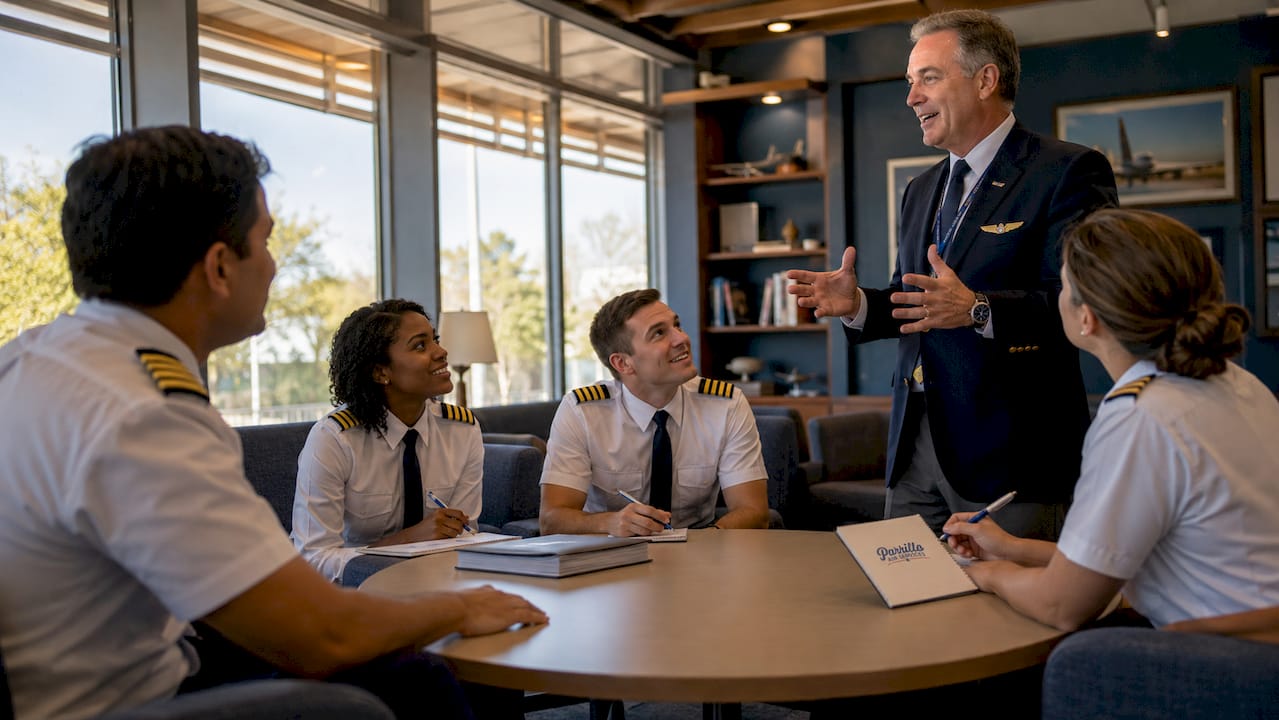
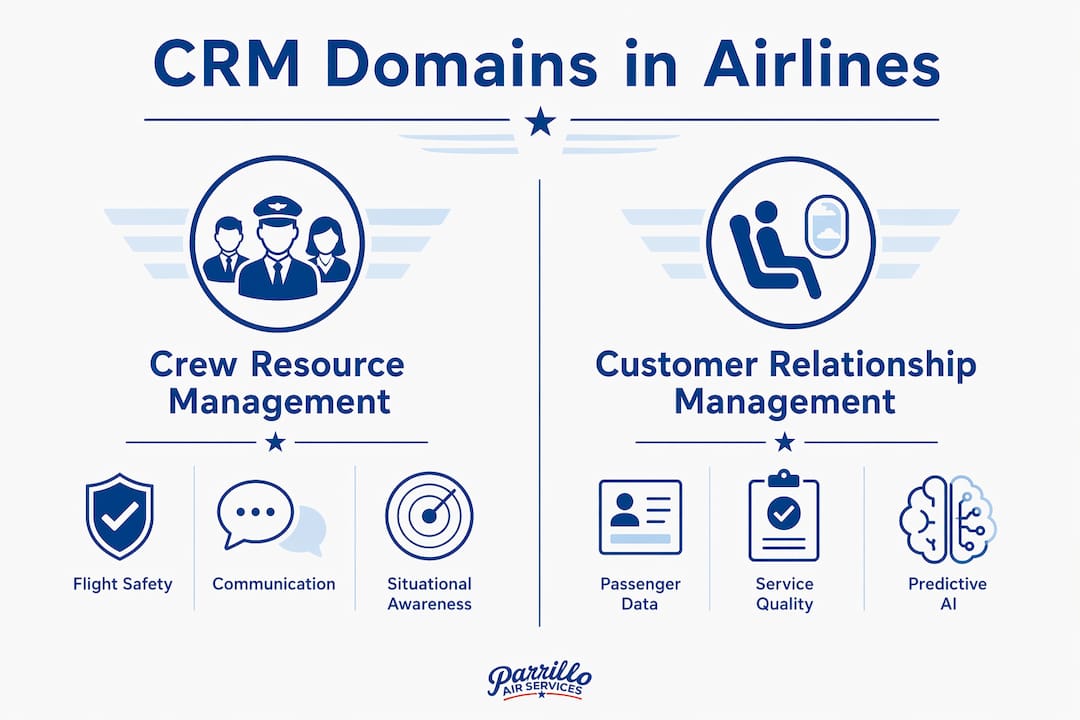
Crew Resource Management is not a soft skills course. CRM is a structural redesign of flight deck authority and information flow, converting individual pilot competence into a coordinated team safety system. That distinction matters because it changes how you train for it, talk about it in interviews, and apply it on the job.
The core components of Crew Resource Management include:
CRM developed directly from accident analysis. The 1977 Tenerife disaster, the deadliest accident in aviation history, traced back to communication failures and authority gradients on the flight deck. That event accelerated the FAA's push for formal CRM programs throughout the 1980s. Today, ICAO Annex 6 requires CRM training for all commercial flight crews as a non-negotiable standard.
CRM is a perpetual behavioral framework applied on every flight, not a one-time certification. That means a pilot who completed a CRM course five years ago and has not actively practiced its principles is not CRM proficient. Airlines evaluate this during line checks, simulator assessments, and behavioral interviews.
Customer Relationship Management in the corporate airline context is a data platform that tracks passenger behavior, manages loyalty programs, and drives revenue through personalized communication. This is a completely separate system from cockpit CRM, and confusing the two in a professional setting signals a lack of industry awareness.

Airlines use Customer Relationship Management platforms to manage millions of passenger records, predict booking behavior, and reduce churn. The business case is direct: suboptimal CRM use costs airlines up to $1.4 billion in annual revenue. That figure explains why airlines invest heavily in CRM analysts, customer experience managers, and data-driven marketing teams.
Key career functions tied to Customer Relationship Management proficiency include:
Predictive AI is now embedded in leading airline CRM platforms. Predictive CRM strategies have driven a 76% increase in revenue generated per 1,000 emails for airlines using them. That number reflects a fundamental shift: airlines no longer send mass communications. They send individualized messages timed to each passenger's behavior pattern.
CRM proficiency includes tracking NPS and reducing friction in passenger rebooking, skills that are now baseline requirements for airline marketing and customer experience roles. Professionals who can read a CRM dashboard and translate it into a business recommendation are the ones advancing into management.
The aviation professionals who advance fastest are the ones who understand CRM in both its meanings and can apply each in context. That dual fluency signals industry maturity to recruiters and opens doors across the airline organization, not just in the cockpit.
Mentorship accelerates CRM development in ways that classroom training cannot. A senior captain or airline manager who has applied CRM principles across hundreds of flights or operational cycles can transfer pattern recognition that no course replicates. Aviation mentorship is one of the most direct paths to building the behavioral fluency that airlines actually evaluate.
The most damaging misconception is that CRM is a checkbox. Pilots complete a CRM module during initial training, mark it done, and move on. That approach fails in practice and in interviews.
CRM requires cultural commitment and behavioral application on every flight. An airline evaluator watching a line check is not looking for a pilot who remembers CRM terminology. They are watching how that pilot responds when the first officer raises a concern, how they manage a high-workload descent, and whether their communication style creates or reduces crew tension.
A second misconception affects professionals pursuing customer-facing airline roles. Many candidates list "CRM experience" on a resume without specifying which type. That ambiguity can work against them.
"Distinguishing cockpit CRM from customer CRM is not a technicality. It is a signal of whether you understand how airlines actually operate. Recruiters notice when candidates conflate the two, and it raises questions about their overall industry awareness."
The third misconception is that CRM training is uniform across airlines. It is not. Each carrier builds its CRM program around its own operational culture, fleet type, and incident history. A pilot transitioning from a regional carrier to a major airline will encounter a different CRM framework and must adapt quickly. The regional airline hiring requirements for 2026 reflect this: carriers increasingly assess cultural fit and behavioral adaptability alongside technical qualifications.
Avoiding these pitfalls requires one habit: treat every flight as a CRM evaluation. The professionals who do that consistently are the ones who perform well when it actually counts.
CRM mastery, across both the flight safety and customer management domains, is the single most transferable skill set in an airline career.
| Point | Details |
|---|---|
| CRM has two distinct meanings | Crew Resource Management governs flight safety; Customer Relationship Management drives passenger revenue and retention. |
| Human factors dominate accidents | Human factors cause 70–80% of aviation accidents, making behavioral CRM training non-negotiable for flight crews. |
| CRM is ongoing, not a course | Airlines evaluate CRM behavioral competency on every line check and simulator assessment, not just at certification. |
| Data literacy expands career options | Proficiency in CRM dashboards and analytics opens roles in CX analysis, loyalty management, and airline operations. |
| Dual CRM fluency signals industry maturity | Candidates who understand both CRM domains consistently outperform peers in structured airline interviews. |
I have watched pilots with exceptional stick-and-rudder skills stall at the first officer seat for years while peers with fewer flight hours moved into captain roles and training positions. The difference, almost every time, was CRM. Not the certificate. The actual behavioral practice.
What surprises most aspiring pilots is that airlines are not primarily evaluating your flying when they assess CRM. They are evaluating how you think, communicate, and respond when things go wrong. A captain who shuts down a first officer's concern, even subtly, is a liability. Airlines know this, and their evaluation systems are designed to surface it.
The customer CRM side is equally underestimated. Pilots who understand how airlines use data to manage passenger relationships have a fundamentally different view of the business. That view makes them better advocates for operational decisions, better communicators with ground teams, and stronger candidates for leadership roles.
My practical advice: do not wait until you are flying for an airline to develop CRM habits. Build them during training. Practice closed-loop communication with your instructor. Ask questions when something does not make sense. Treat every flight as a team operation, even when you are the only one in the aircraft planning the next crew interaction. The dedication required for aviation careers is real, and CRM is one of the clearest ways to channel that dedication into measurable career outcomes.
— Gm
Parrillo Air Services, based in Lynchburg, VA, integrates CRM principles into every stage of its FAA Part 61 flight training programs. From the first discovery flight through commercial and flight instructor certifications, students practice the communication, decision-making, and situational awareness habits that airlines evaluate during hiring.

Personalized instruction at Parrillo Air Services means you work directly with experienced instructors who model CRM behavior on every flight, not just in a classroom module. If you are serious about building the skills that regional and major airlines actually look for, explore the flight training programs at Parrillo Air Services and take the first step toward a career built on a real foundation.
Parrillo Air Services integrates Crew Resource Management into every stage of its FAA Part 61 training in Lynchburg, VA.
Explore Flight Training Programs