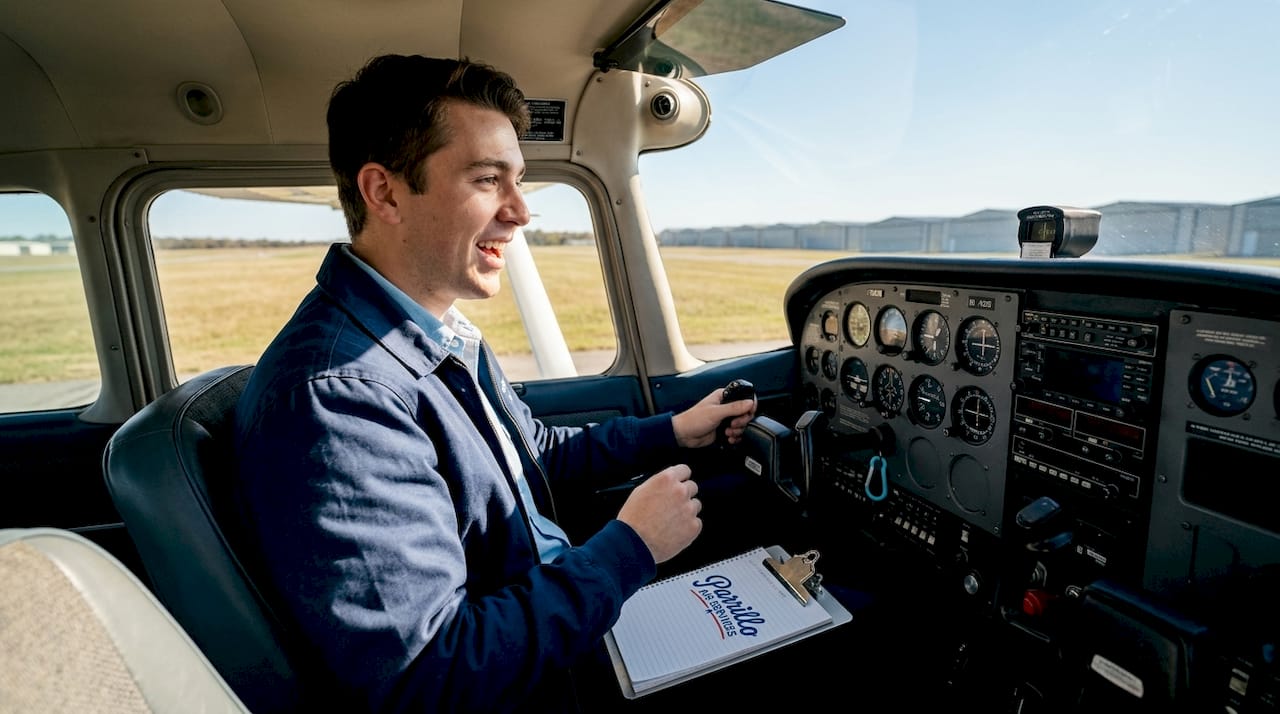
A discovery flight is a structured, introductory flying lesson with a certified flight instructor (CFI) that puts you in the cockpit of a real aircraft and lets you take the controls. Unlike a sightseeing tour or a flight simulator session, this experience is designed to teach you what piloting actually feels like. Discovery flights last around 60 to 90 minutes total, covering a pre-flight briefing, 30 to 60 minutes of actual flight time, and a post-flight debrief. At Parrillo Air Services in Lynchburg, VA, discovery flights serve as the official starting point for aspiring pilots considering FAA Part 61 training toward a private pilot certificate and beyond.
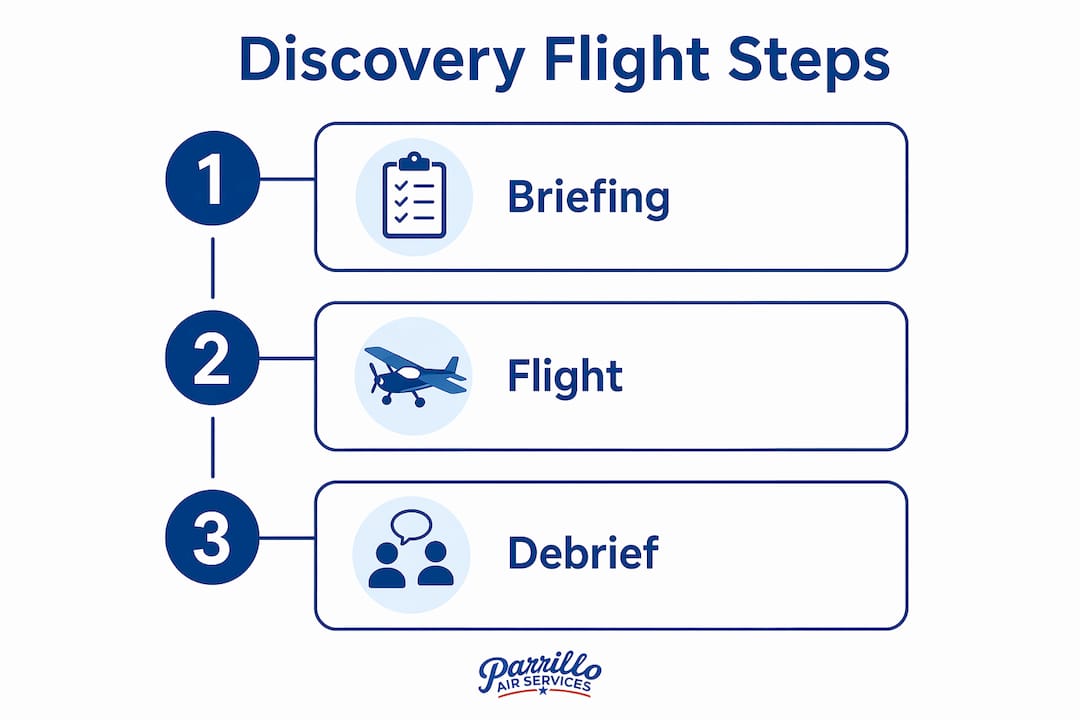
A discovery flight follows a clear three-part structure: briefing, flight, and debrief. Each phase serves a specific purpose, and knowing what to expect removes the guesswork before you ever set foot on the tarmac.
Your instructor opens with a ground briefing covering basic aircraft controls, safety procedures, and what you will do in the air. This is not a lecture. It is a focused, practical conversation that takes roughly 15 to 20 minutes. You will learn what the yoke, rudder pedals, throttle, and altimeter do before you touch any of them. Most students find this portion settles nerves more than anything else.
Once airborne, the instructor handles takeoff. At cruising altitude, you take the controls. You may practice gentle turns, climbs, and descents while the instructor monitors every input and provides real-time coaching. The aircraft used is typically a two-seat trainer like a Cessna 172 or Piper Cherokee, both of which are forgiving and stable. The instructor manages the landing, though some students with a natural feel for the controls get to assist on final approach.
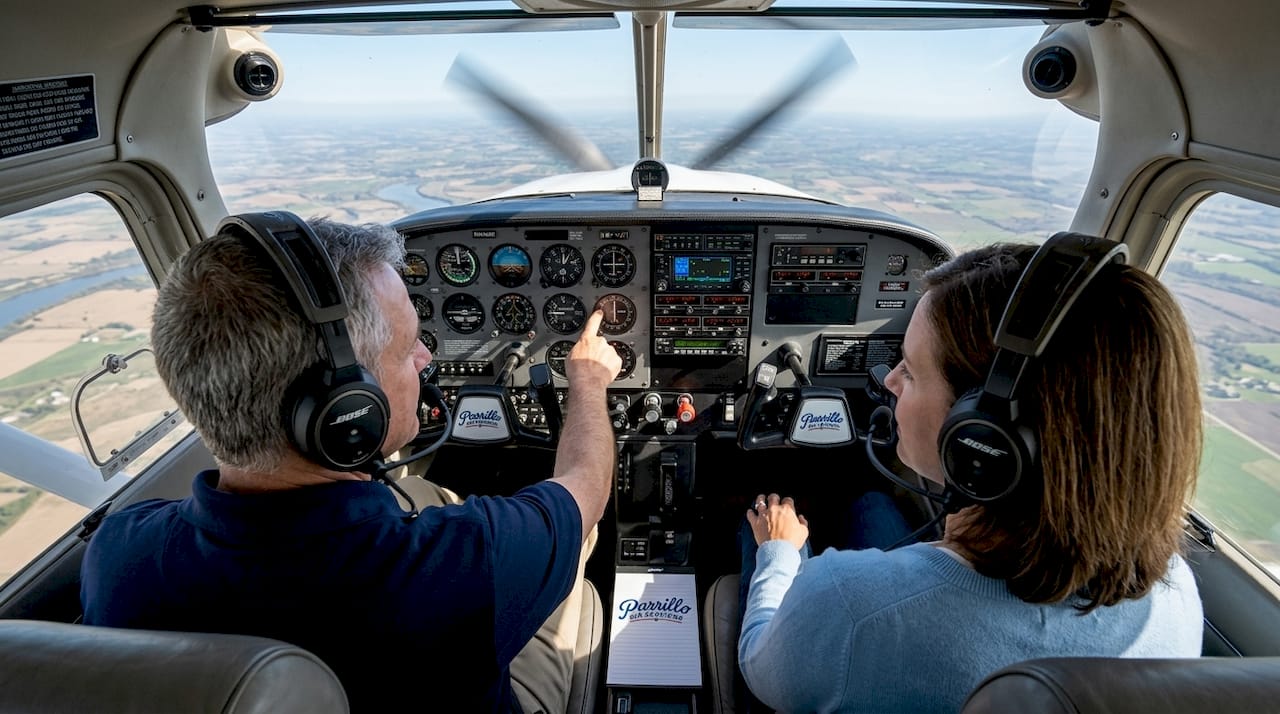
Landing is not the end of the lesson. Debriefing after the flight is where much of the instructional value lives. Your CFI will walk through what you did well, what felt awkward, and what a continued training path would look like. This is also your best opportunity to ask every question you have been holding since you first looked up at a passing aircraft and wondered what it would feel like to fly one.
You do not need any prior experience to participate
Comfortable clothing and closed-toe shoes are recommended
Bring a list of questions for your instructor
Inform the school in advance if you have motion sickness concerns
Arrive 15 minutes early to complete any required paperwork
Pro Tip: Write down three specific things you want to feel or understand during the flight before you arrive. Students who set a personal goal for the session consistently report a richer experience than those who show up with no particular focus.
A discovery flight is not just a fun experience. It can be the first official entry in your pilot logbook. Discovery flight hours may be logged toward FAA Private Pilot Certificate requirements under Part 61, counting toward the 40-hour minimum aeronautical experience needed to sit for the private pilot checkride. That means the time you spend in the cockpit on your very first flight is not wasted. It is working for you.
Here is how the progression typically works after a discovery flight:
Log the flight. Your CFI signs your logbook for the dual instruction time flown. This is official FAA-recognized training time.
Assess your interest. Use the debrief conversation to decide whether you want to continue. Most students know within the first 20 minutes of flight whether aviation is for them.
Enroll in a structured program. If you proceed, you begin ground school alongside regular flight lessons, building toward the 40-hour minimum and the FAA written knowledge test.
Progress through ratings. After the private pilot certificate, pilots at Parrillo Air Services can continue toward instrument, commercial, and flight instructor ratings, opening the door to regional and major airline careers.
The private pilot license pathway is well-defined, and your discovery flight is the first data point in that progression. Every hour counts, and starting with a logged discovery flight means you are already on the clock.
Pro Tip: Before your flight ends, explicitly ask your instructor to complete and sign your logbook entry. Logbook entries must be requested explicitly to count toward official FAA training hours. Do not assume it happens automatically.
The discovery flight purpose goes beyond novelty. It solves a real problem for anyone considering pilot training: the cost and commitment of full certification is significant, and most people want proof they will enjoy flying before they invest thousands of dollars and hundreds of hours into it.
A discovery flight is a low-risk way to experience flying firsthand without any obligation to continue. That single fact makes it the most rational first step in aviation. Beyond the financial logic, the benefits stack up quickly:
Personal comfort assessment. You learn how your body and mind respond to small aircraft flight. Some people discover they are completely at ease. Others identify specific concerns they can work through with a good instructor.
Instructor evaluation. A discovery flight is also an audition for the flight school. You get a direct read on the instructor's communication style, patience, and teaching approach before committing to a full training program.
Motivation and clarity. Many pilots trace their decision to pursue a certificate back to a single discovery flight. The experience converts abstract interest into concrete motivation in a way that YouTube videos and flight simulators simply cannot replicate.
Informed financial decision. Knowing what training actually feels like helps you budget and plan realistically, rather than making a $10,000 decision based on assumptions.
The top benefits of discovery flights extend to career clarity as well. Students who complete a discovery flight before enrolling in a structured program tend to show higher persistence through the more demanding phases of training, because they already know why they are doing it.
Many people confuse a discovery flight with other aviation activities. The differences matter, especially if your goal is to eventually earn a pilot certificate.
| Experience | Hands-on control | Counts toward FAA hours | Instructor feedback | Real aircraft |
|---|---|---|---|---|
| Discovery flight | Yes, at altitude | Yes, under Part 61 | Yes, full debrief | Yes |
| Sightseeing tour | No | No | No | Yes |
| Flight simulator | Yes, simulated | No (for initial hours) | Varies | No |
| Drone operation | Yes, remote | No | Varies | No |
A discovery flight is distinct from sightseeing tours and flight simulation in one critical way: you are the pilot in training, not a passenger or a hobbyist. A sightseeing tour puts you in a seat with a view. A discovery flight puts you in the left seat with a purpose. Flight simulators like those used in Redbird or Frasca systems are valuable training tools later in your education, but they do not replicate the sensory reality of actual flight and do not count toward the initial aeronautical experience hours required by the FAA. Drone operation develops spatial awareness and remote control skills, but it shares almost nothing with the physical and cognitive demands of piloting a manned aircraft.
The introductory flight lesson format is specifically designed to give you the most accurate preview of what pilot training involves. No other aviation experience does that.
A discovery flight is the most efficient first step toward a pilot certificate because it delivers real flight time, logged FAA hours, and direct instructor feedback in a single 60 to 90 minute session.
| Point | Details |
|---|---|
| Official definition | A discovery flight is a supervised introductory lesson with a CFI in a real aircraft. |
| Logged training time | Hours count toward the FAA Part 61 minimum of 40 hours for a private pilot certificate. |
| Logbook entry required | Ask your instructor to sign your logbook before you leave the flight school. |
| Distinct from other experiences | Unlike simulators or tours, a discovery flight gives you actual hands-on piloting with instructor feedback. |
| Low commitment, high value | No obligation to continue, but the experience directly informs your decision about pilot training. |
Most first-time flyers walk off the ramp still buzzing from the experience of holding the controls at 3,000 feet. That feeling is real and worth savoring. But in my experience, the students who get the most out of a discovery flight are the ones who treat the debrief as seriously as the flight itself.
The debrief is where you find out whether your instincts in the cockpit were sound or whether you were overcorrecting without realizing it. It is where a good instructor tells you something honest, not just encouraging. I have seen students leave a discovery flight convinced they were naturals, only to learn in the debrief that they were fighting the controls the entire time. That feedback is not discouraging. It is exactly the kind of information you need to decide how to train.
My advice: go into the debrief with two or three direct questions. Ask the instructor what you did well and what needs the most work. Ask whether they saw anything that would affect your training timeline. Ask what they recommend you study before your next lesson. Instructors respect students who engage seriously, and that relationship starts on day one.
One more thing worth saying plainly: do not skip the logbook step. I have spoken with pilots who completed a discovery flight years before formally enrolling in training and never got the entry signed. Those hours are gone. Thirty minutes of flight time is not life-changing on its own, but it is yours if you ask for it.
— Gm

Parrillo Air Services offers FAA Part 61 certified flight training in Lynchburg, VA, from introductory discovery flights through private pilot, instrument, commercial, and flight instructor ratings. A discovery flight with Parrillo Air is a structured, one-on-one lesson with a certified instructor in a real training aircraft. It is the clearest way to find out whether a pilot career is the right path for you. To learn more about available programs and how a discovery flight fits into the full training pathway, visit the flight training programs page or go directly to Parrillo Air Services to schedule your first lesson.
A discovery flight is an introductory flying lesson with a certified flight instructor in a real aircraft, lasting roughly 60 to 90 minutes total including briefing, flight time, and debrief. You take the controls at altitude under direct supervision.
Yes. Discovery flight hours count toward FAA requirements under Part 61, contributing to the 40-hour minimum for a private pilot certificate, provided your instructor signs your logbook.
Costs vary by flight school and aircraft type, but discovery flights are typically priced as a single introductory lesson rather than a full training block. Contact Parrillo Air Services directly for current pricing in Lynchburg, VA.
No prior experience is required. A discovery flight is specifically designed for beginners, and your instructor covers all necessary controls and safety procedures during the pre-flight briefing.
A sightseeing flight makes you a passenger. A discovery flight makes you the student pilot, with hands-on control of the aircraft and real-time instructor feedback that counts toward official FAA training hours.
Top Benefits of Discovery Flights for Aspiring Pilots | Parrillo Air Services
Parrillo Air Services
Top benefits of discovery flights for aspiring pilots
Parrillo Air Services
What is an introductory flight lesson? Your first step to flying
Parrillo Air Services
How flight training programs work: your path to FAA certification
Parrillo Air Services