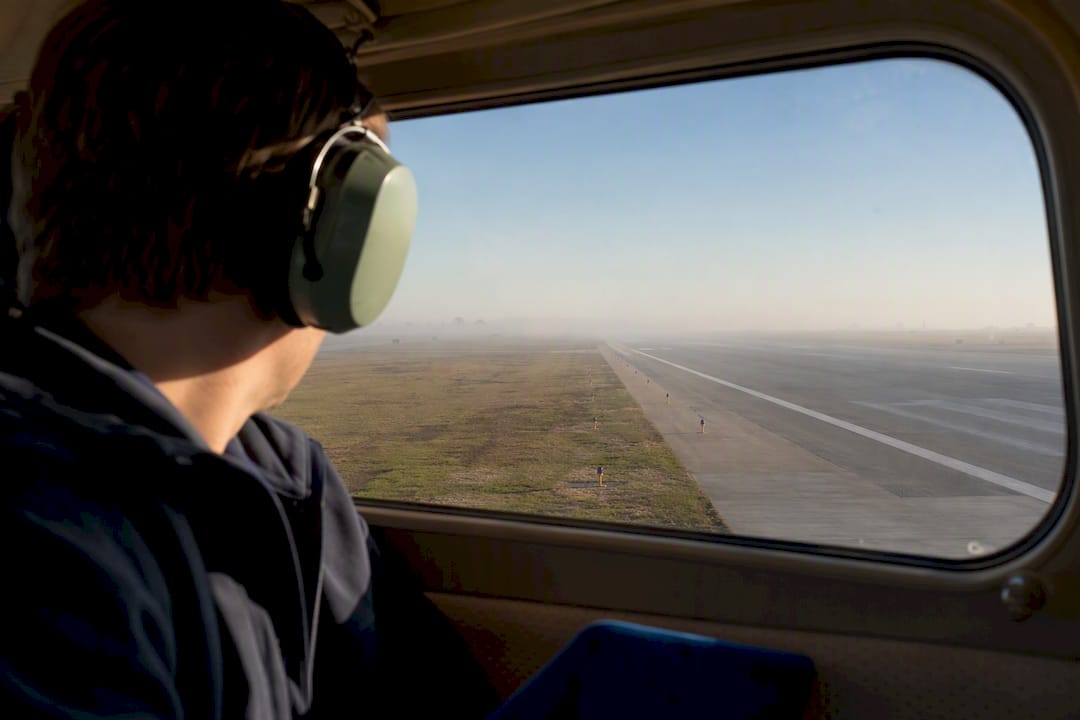
Before you taxi out alone, the law requires 3 statute miles of visibility by day, 5 at night, and continuous visual reference to the surface under 14 CFR §61.89. Those numbers are the floor, not the target. You also have to satisfy Part 91's airspace-specific minimums, and if your instructor wrote tighter limits in your logbook, those override everything else.
TL;DR:
- Student pilots must meet or exceed 3 miles visibility during the day and 5 miles at night, with continuous surface sight required under §61.89.
- Logbook restrictions from the instructor's endorsement take precedence over legal minimums and can include higher visibility, ceiling, wind, or route limits.
- Solo flights must adhere to the VFR weather minimums of 3 miles visibility and cloud clearance in each airspace class, with stricter rules above 10,000 feet MSL.
- Creating a personal minimums checklist that exceeds legal minimums helps pilots maintain safety margins under changing weather conditions.
- Regularly checking current METARs, TAFs, and NOTAMs, and delaying or diverting if conditions are borderline, reduces weather-related risks during solo flights.
Table of Contents
- Student Pilot Weather Minimums Under 14 CFR §61.89
- Basic VFR Minimums by Airspace: The 91.155 Table Explained
- Your Instructor's Logbook Limits Are the Law for You
- Building Your Go/No-Go Checklist and Personal Minimums
- Weather Hazards That Ground Student Solos
- What Parrillo Air Services Has Learned From Training Solo Students
- Practice Your Weather Judgment With Real Instructor Feedback
- Where to Verify These Rules Yourself
- Sources
Student Pilot Weather Minimums Under 14 CFR §61.89
Section 61.89 is short, but it carries a lot of weight for anyone flying solo. It sets two hard visibility numbers: 3 statute miles during the day, 5 statute miles at night, plus a requirement to keep the surface in sight the entire flight under 14 CFR §61.89. No exceptions for a "pretty good" haze layer or a broken deck you could probably climb through. If you can't see the surface continuously, you're not legal to be up there solo, regardless of what the airspace itself allows.
The part students overlook is subsection (a)(8): any weather or operating limitation your instructor puts in your logbook is legally binding. That means Part 91 minimums and §61.89's numbers can both be satisfied and you're still grounded, because your endorsement says something stricter.
Before every solo flight, run through this:
- Confirm current visibility and ceiling meet or beat the §61.89 floor for the time of day.
- Check whether your solo endorsement lists a different (usually higher) minimum.
- Look for any airspace, radius, or route restrictions tied to your endorsement.
- Verify the endorsement hasn't expired (most schools cap them at 90 days).
Basic VFR Minimums by Airspace: The 91.155 Table Explained
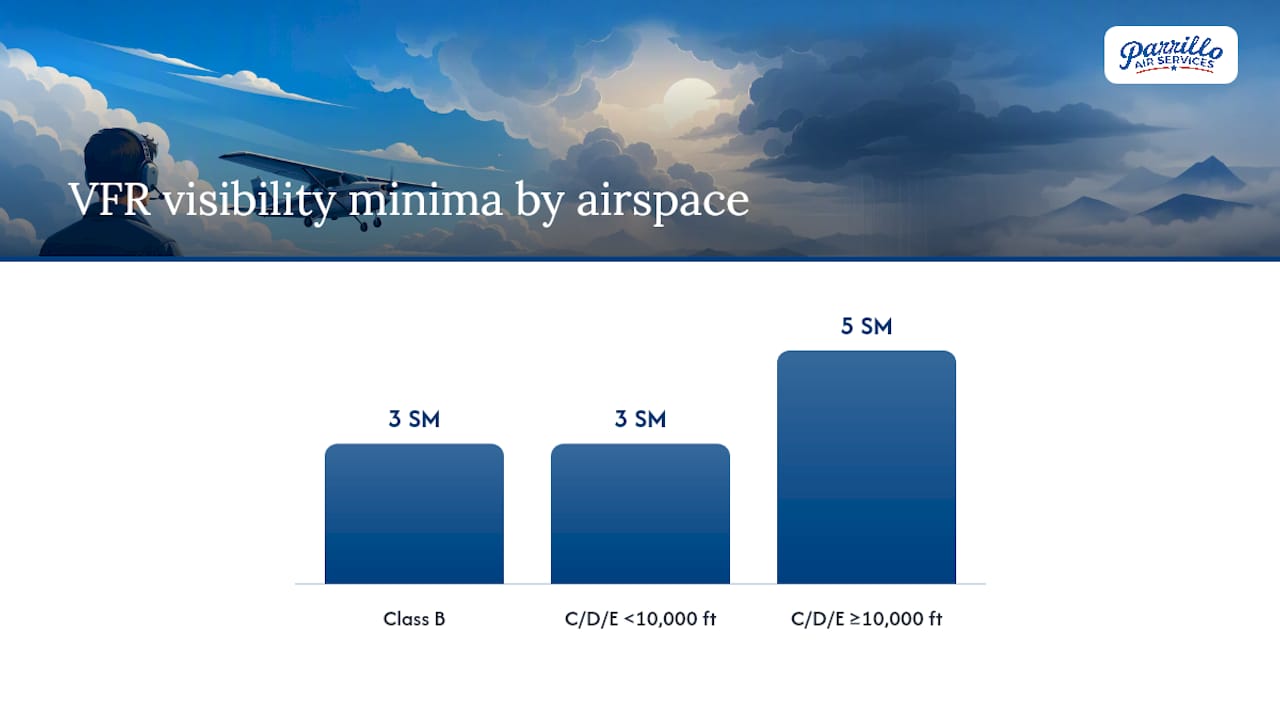
14 CFR §91.155 sets the general VFR cloud clearance and visibility rules, and it's the second test every solo flight has to pass. Here's how the numbers break down by airspace class:
- Class B: 3 statute miles visibility, clear of clouds.
- Class C, D, and E below 10,000 feet MSL: 3 statute miles, and you need to stay 500 feet below, 1,000 feet above, and 2,000 feet horizontally from clouds.
- At or above 10,000 feet MSL: 5 statute miles, with 1,000 feet vertical clearance and 1 statute mile horizontal clearance.
- Class G: varies by altitude and time of day, with looser rules near the surface and tighter ones as you climb.
Quick fact: Once you climb to 10,000 feet MSL or higher, Part 91 actually demands more visibility (5 SM) than your student floor requires at night. Altitude, not the clock, can be the stricter constraint.
The FAA's VFR weather minimums training material breaks these numbers down with worked examples, and it's worth running through once so the table stops feeling like an abstraction. The logic behind the tighter numbers up high comes down to see-and-avoid: traffic moves faster and air traffic control coverage thins out, so pilots need more room and more warning to spot each other.
Your Instructor's Logbook Limits Are the Law for You
Reading §61.89 tells you the legal floor. It doesn't tell you what you're actually cleared to fly in, because that's your instructor's call, written into your logbook under §61.89(a)(8). Those entries are not suggestions. They're binding conditions on your solo privileges, and flying outside them is a violation even if the sky looks perfectly flyable.
Watch for these common restrictions in a typical solo endorsement:
- A visibility or ceiling minimum higher than the federal floor, sometimes 5 SM or a 3,000-foot ceiling for a brand-new solo student.
- A maximum wind speed or gust spread, often 10 to 15 knots depending on the airplane and your experience.
- A maximum crosswind component tied to your demonstrated landing skill.
- Airspace or route restrictions, like staying within the local practice area.
- A requirement to call your instructor or the school before departing if conditions are borderline.
AOPA's guidance on airspace and weather requirements shows this pattern across flight schools nationwide. Restrictions loosen as you build experience toward your checkride.
Building Your Go/No-Go Checklist and Personal Minimums
Legal minimums tell you what's allowed. Personal minimums tell you what you should actually do, and the gap between those two numbers is where good judgment lives. How weather affects your flight training schedule covers this tension in more depth, but the short version is: never plan a solo flight right at the legal edge.
Run this sequence before every solo departure:
- Pull the current METAR and TAF for your departure and destination airports.
- Check the wind direction, speed, and gust spread against your endorsement's crosswind limit.
- Scan PIREPs and NOTAMs for anything the forecast might miss, like a temporary ceiling drop.
- Confirm ground visibility reports match what you're seeing from the ramp.
- Compare all four against your personal minimums, not just the regulatory floor.
A workable framework: start with the legal number, then pad it. Add at least 1 statute mile of visibility buffer during the day, 200 to 500 feet of ceiling buffer, and a crosswind limit a few knots below your instructor's cap. Write these down. A local pattern solo can run closer to the legal floor than your first solo cross-country, and a night solo (if you're endorsed for one) deserves the widest buffer of all, since terrain and traffic are harder to judge in the dark. The FAA night flight training requirements guide walks through how those night-specific risks stack up.
Weather Hazards That Ground Student Solos
Ceilings and visibility get the headlines, but a handful of other conditions catch students off guard just as often.
- Fog and low ceilings: develop fast near dawn and dusk, exactly when many student flights happen.
- Precipitation: even light rain can cut visibility below your personal minimum well before it hits the legal one.
- Gusty wind and wind shear: the gust spread matters more than the steady-state number for a student pilot's crosswind tolerance.
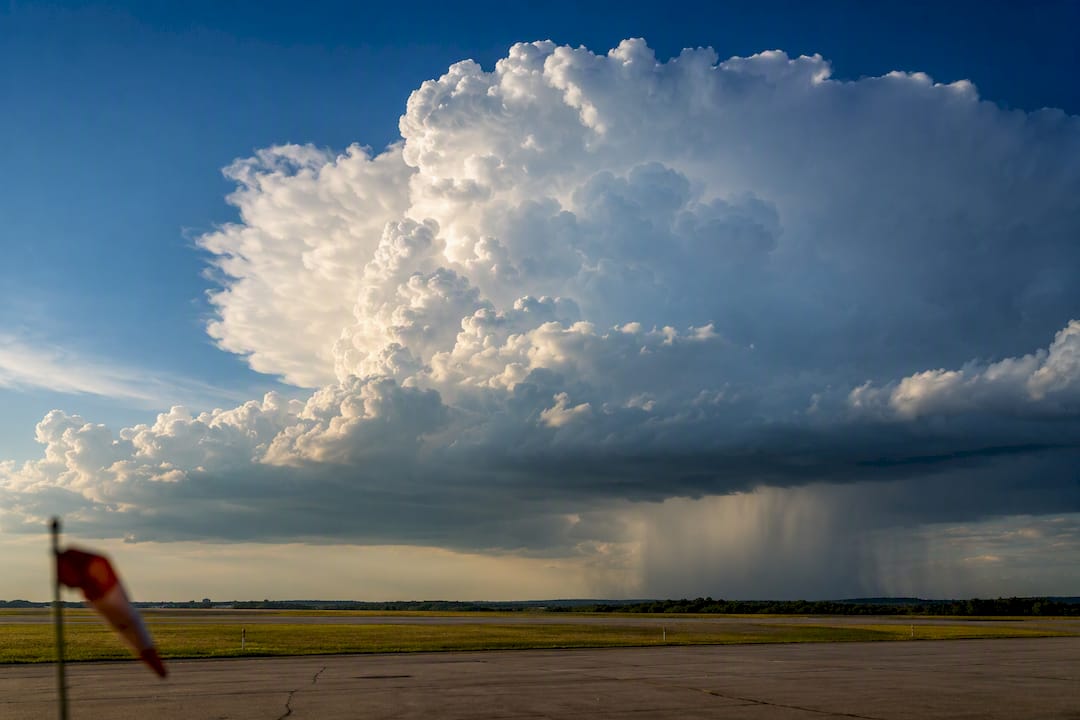
- Convective activity: a single cumulus buildup can turn into a thunderstorm cell inside 20 minutes.
- Icing potential: less common for day VFR training but worth checking in shoulder seasons.
Quick fact: A TAF's probability language (PROB30, PROB40) flags a real chance of deteriorating conditions during your flight window, not a guarantee, so treat any probability trend as a reason to look closer, not ignore it.
Before departure, check Aviationweather for current METARs, TAFs, and convective outlooks. If a number is borderline, delay, divert to plan B, or call your instructor. Canceling a solo costs you nothing that a bent airplane wouldn't cost far more.
What Parrillo Air Services Has Learned From Training Solo Students
Some flight schools set solo weather limits tighter than the federal floor on purpose, and it's rarely the first-solo student who pushes back. Students later in their training sometimes think they've earned looser rules. Two patterns show up constantly: a stricter crosswind cap for early solos, and a higher ceiling requirement until a student has logged real time in marginal conditions with an instructor watching. Our post on why solo flight hours matter gets into why that buildup matters more than the calendar date on your certificate.
— Gm
