Book a discovery flight with a Virginia flight school this week, confirm you meet the age and English proficiency rules, and start ground school immediately. The realistic path runs lessons through ground school, a written exam, and a checkride. You need to be 16 for a student certificate and 17 for a Private Pilot License, with a medical certificate in hand before you solo. The Virginia Department of Aviation offers reimbursement for part of the cost for eligible residents and encourages early application.
TL;DR:
- Flying twice a week significantly reduces total training time and expenses compared to flying once a month, as skills remain sharper with more frequent lessons.
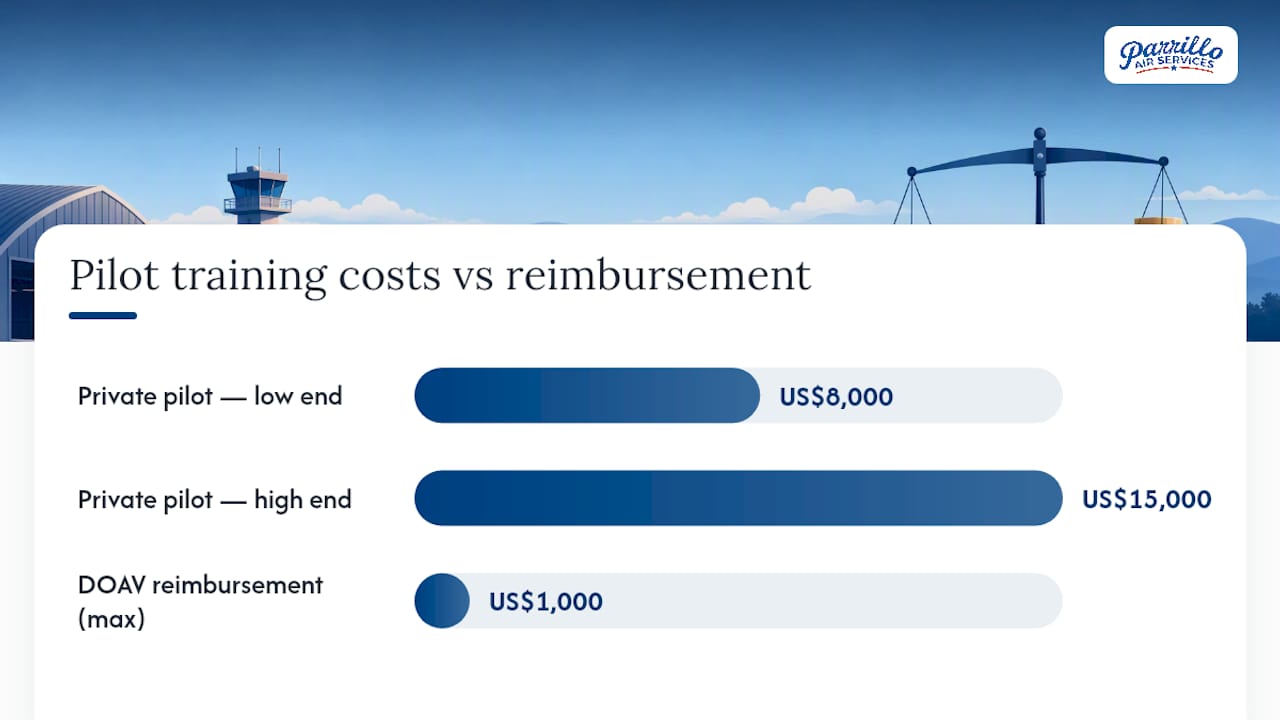
- Virginia residents can apply early for up to $1,000 reimbursement from the state, but incomplete paperwork slows processing and reduces chances of getting funds.
- Costs typically range from $8,000 to $15,000 for a private pilot license, with most students needing 60 to 80 flight hours instead of FAA's minimum 40, increasing the total expenditure.
- Starting with a discovery flight helps assess instruction quality and aircraft condition more effectively than website research, guiding better school choices.
- Scheduling your FAA medical exam early, within the first two weeks of training, saves potential disqualification surprises before investing heavily in lessons.
Most people who want to become a pilot in Virginia start with a Private Pilot License (PPL), then branch toward either a lifelong hobby or a professional cockpit. The route you pick early shapes your timeline, your total spends, and how fast you can start logging paid flight hours.
A PPL lets you fly single-engine aircraft for personal use, carry passengers, and build the foundation for every advanced rating. It is not a career credential on its own, but nobody skips it. From there, most career-track students add an instrument rating, then a commercial certificate, then a flight instructor certificate, which lets them build hours by teaching while they wait for airline minimums.
Virginia offers four distinct on ramps:
None of these routes is wrong. The mistake is picking a college program because it sounds serious, or a local school because it's close, without asking what each one actually gets you toward your specific goal.
The Federal Aviation Administration sets the baseline, and Virginia doesn't add extra licensing hurdles on top of it. You just need to clear three gates: age, English proficiency, and a medical certificate timed correctly.
Age and language rules. Under 14 CFR § 61.103, you must be at least 16 to earn a student pilot certificate and solo, and at least 17 to hold a Private Pilot License. You also need to read, speak, write, and understand English well enough to handle radio calls and written testing.
Here's the order most students actually follow:
Pro Tip: Schedule your medical exam in the first two weeks of training, even before you've flown much. If a health issue is going to disqualify you, you want to know before you've spent money on lessons, not after.
Virginia doesn't require separate state paperwork to fly, but if you're applying for the DOAV reimbursement discussed below, keep proof of Virginia residency on hand from day one.
Expect a private pilot certificate to run roughly $8,000 to $15,000 in Virginia, according to Flying magazine's review of regional flight schools. The FAA minimum is 40 flight hours, but most students need 60 to 80 to reach checkride readiness, and that gap is what pushes costs above the low end of the range.
Commercial and career-track totals run considerably higher, since they require hundreds of additional logged hours plus instrument and commercial-specific training. Budget for the certificate, not just the hourly rate you're quoted on day one.
Funding sources worth pursuing before you write a check for everything yourself:
The DOAV application isn't complicated, but it is document-heavy. You'll need receipts, a Commonwealth W-9, logbook pages showing training dates, and proof of your FAA written exam for certain reimbursement categories. Miss one document and the application stalls, so gather everything as you go instead of scrambling at the end.
Part 61 versus Part 141 is the first fork. Part 61 schools, which most independent operators run, offer flexible scheduling and personalized lesson plans built around your availability. Part 141 programs follow an FAA-approved structured syllabus, often at colleges, and can qualify for reduced minimum hours. If you have a rigid schedule and want structure, Part 141 fits. If you need flexibility around a job or family, Part 61 usually serves you better.
Once you've narrowed it down, ask these questions during your discovery flight or first call:
Red flags: instructors who turn over every few months, vague answers about completion hours, or aircraft that look neglected on the ramp. A strong program will answer your questions specifically, not with marketing language.
If your goal is airline hiring down the road, weigh whether a college aviation program's degree and articulation agreements are worth the added time and cost versus a local school's faster, cheaper path to the same ratings.
Part-time students, flying once or twice a week around a job, typically need 6 to 18 months to reach their Private Pilot License. Full-time students who fly several days a week can finish in 2 to 4 months. The gap comes down almost entirely to consistency, not talent.
The milestone path looks like this:
Flying twice a week rather than once a month keeps skills sharp between lessons, which cuts down on repeated review time and total flight hours. After your PPL, the natural next moves are an instrument rating, then commercial, then a flight instructor certificate if you want to build hours toward airline minimums while getting paid to teach.
Parrillo Air Services runs FAA Part 61 training out of Lynchburg, covering everything from a first discovery flight through private pilot, instrument, commercial, and flight instructor certification. For students weighing local options against a college program or a bigger flight academy, a Part 61 school built around personalized instruction and flexible scheduling solves a real problem: rigid class schedules that don't fit around a job.
What sets the approach apart:
| What you get | Why it matters |
|---|---|
| Discovery flight | Low-cost way to test instruction style before committing |
| Personalized scheduling | Fits training around work or school instead of a fixed cohort |
| Full certificate track | Private, instrument, commercial, and CFI under one roof |
| Liberty University credit transfer | Degree-linked path for students who want both |
Parrillo Air Services also helps students navigate Virginia pilot license requirements and walks them through scholarship paperwork, scheduling logistics, and what comes next once a rating is complete.
Keep your DOAV documents in one folder from day one: receipts, logbook pages, your Commonwealth W-9, and written exam proof once you sit for it. The reimbursement covers up to $1,000, and applicants who submit clean, complete paperwork get processed faster than those scrambling to reconstruct records months later.
The conventional advice tells you to "research your options" before committing to a flight school. That's backwards. The FAA doesn't require a student pilot certificate to start lessons, so the single highest-value move is booking a discovery flight before you've made any other decision. You learn more about instruction quality, aircraft condition, and whether flying suits you in one hour in the cockpit than in a week of comparing websites.
The second overlooked point: cost overruns almost always trace back to inconsistent scheduling, not a bad hourly rate. A student flying twice weekly reliably beats the 40-hour minimum by a smaller margin than one flying every three weeks, because skills don't erode between sessions. If you're serious about becoming a pilot in Virginia, treat your training cadence as the actual budget lever, not the hourly rate you negotiate up front.
Virginia residents also leave real money on the table by not applying for the DOAV reimbursement early. It's not automatic, and the paperwork rewards people who start their documentation folder on lesson one, not after they've already spent the money.
— Gm
Parrillo Air Services is the direct alternative to enrolling in a rigid college aviation program or waiting on an airline-sponsored slot: personalized, one-on-one instruction with scheduling built around your job or school, not a fixed cohort calendar. If you've read this far, you already know the fastest real step is a discovery flight, and that's exactly where Parrillo starts every student.

The school's Part 61 track covers private pilot, instrument, commercial, and flight instructor certification, with a direct credit-transfer arrangement for Liberty University students who want a degree alongside their ratings. Instructors keep enrollment limited so you're not competing for aircraft time, and the fleet is maintained specifically to keep training consistent week to week, the same consistency that keeps total flight hours and cost down.
Book your discovery flight or check current aircraft rental and instruction rates to start mapping your own timeline toward a license.
Start Your TrainingVA education benefits generally cover flight training only when it's part of a degree program at an accredited school, not standalone flight school training. Virginia residents pursuing training outside a degree program should instead look at the DOAV reimbursement of up to $1,000.
No. The FAA sets no maximum age for a private pilot certificate, only minimum ages of 16 for a student certificate and 17 for a PPL. Adult students in their 40s and beyond train successfully every day, often with more disposable income for consistent scheduling than younger students.
Airline-track training costs substantially more than a private pilot certificate, since it requires an instrument rating, commercial certificate, and hundreds of additional flight hours beyond the PPL. Costs vary widely by school and how many hours a student needs at each stage, so getting a specific quote from your chosen flight school is more reliable than a single national figure.
No. You can start flying lessons without one, but you must have a student pilot certificate before you solo. Most students apply through IACRA with their instructor's help once they're a few lessons in.