
The most reliable alternatives for finding a U.S. flight school are the FAA Flight School Locator and AOPA's Flight School Finder. Both pull from verified certification data, so you know every school listed holds an active federal authorization rather than just a paid directory slot.
Here is what each option actually offers:
Cross-referencing at least two of these sources before contacting any school is the move that separates informed candidates from those who waste months at the wrong program.
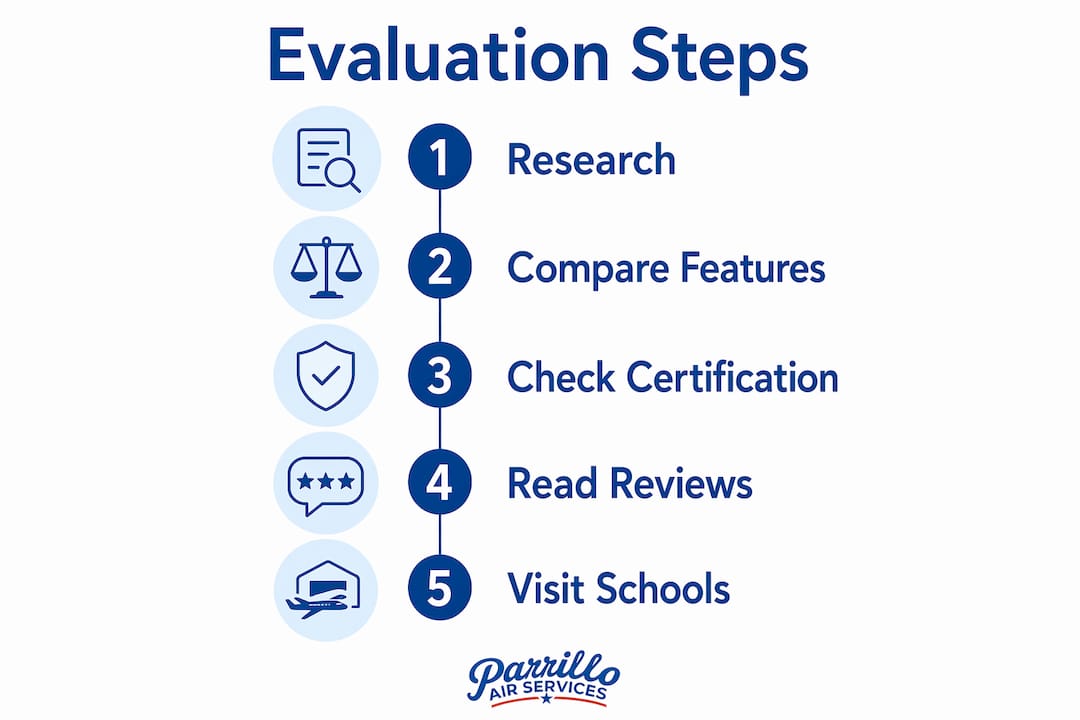
Picking a school from a directory is only step one. What you do with that list determines whether you actually earn your certificate.

FAA certification type matters more than most students realize. Part 141 schools follow a structured, FAA-approved curriculum with defined stage checks, while Part 61 programs offer more scheduling flexibility with the same certification outcome. Neither is universally better. The right choice depends on your schedule, learning style, and career timeline.
Beyond certification type, evaluate these factors before committing:
Pro Tip: Book a discovery flight at every school on your shortlist before signing anything. Thirty minutes in the air with an instructor tells you more about teaching style and school culture than any website ever will.
A structured selection process cuts through the noise and keeps you from making a $15,000 mistake.
For a deeper look at how Part 141 alternatives compare in structure and flexibility, Parrillo Air Services has published a detailed breakdown worth reading before you finalize your list.
Parrillo Air Services, based in Lynchburg, VA, operates under FAA Part 61 certification and offers instruction from private pilot through flight instructor ratings, including instrument and commercial certificates. The school's approach centers on one-on-one instruction, flexible scheduling built around the student's life, and a safety culture that does not treat checkride prep as an afterthought.
"The right school can make the difference between earning your license or dropping out and losing money. Choose wisely." — FlightRepublic on selecting a flight school
What sets Parrillo Air Services apart from a generic directory listing:
For aspiring pilots evaluating their options, Parrillo Air Services illustrates exactly what to look for: verified certification, instructor accountability, and a school that treats your career goal as the actual objective.
The FAA's locator is authoritative but minimal. It confirms certification status and provides basic contact information, with no user reviews, no photo galleries, and no scheduling tools. AOPA's Flight School Finder adds a layer of usability, including user ratings and the ability to filter by training type. FlightRepublic sits closer to AOPA in terms of user experience, with school profile pages that list aircraft, instructors, hours of operation, and owner contact details, as seen on individual school pages within the my.flightrepublic.com subdomain. None of these platforms let you book a lesson directly. They are discovery tools, and the actual enrollment process always happens off-platform.
Pricing transparency across these platforms is inconsistent. FlightRepublic school profiles sometimes list aircraft rental rates with a fuel surcharge note, but full program cost estimates are rarely published. AOPA's directory does not standardize cost display either. The FAA locator includes no pricing at all. The practical reality: you will need to contact each school directly to get a realistic total cost figure. Ask for a written breakdown covering aircraft rental, instructor fees, ground school, and checkride costs. Schools that refuse to provide this in writing are worth removing from your list immediately.
AOPA's Flight School Finder includes user ratings that can surface patterns, such as consistent praise for a specific instructor or repeated complaints about aircraft availability. FlightRepublic profiles include owner and chief flight instructor information, which helps you identify who is accountable. The FAA locator carries no reviews. Treat online ratings as one data point, not a verdict. A school with fewer reviews but a responsive owner and well-documented aircraft maintenance history often outperforms a highly rated school that coasts on old reputation.
The FAA locator covers every certified school in the country, making it the most geographically complete option. AOPA's finder and FlightRepublic both support location-based filtering, letting you search by state, city, or airport identifier. For pilots in less-populated regions, the FAA database is often the only source that surfaces smaller, local Part 61 schools that never bothered with third-party directory listings. If you are in Virginia or the mid-Atlantic region, Parrillo Air Services in Lynchburg is worth adding to any location-filtered search.
The most effective approach to finding a verified U.S. flight school is to cross-reference the FAA Flight School Locator and AOPA's Flight School Finder, then validate every result through direct contact and a discovery flight.
| Point | Details |
|---|---|
| Start with FAA and AOPA | Both directories use verified certification data; FlightRepublic adds usability but is a starting point only. |
| Attrition is a real risk | Student pilot dropout rates are around 80%; choose schools with structured progress tracking and instructor accountability. |
| Pricing requires direct contact | No major directory standardizes full program costs; always request a written breakdown before committing. |
| Discovery flights are non-negotiable | One flight with an instructor reveals teaching style and school culture faster than any profile page. |
| Parrillo Air Services is a strong example | FAA Part 61 certified, personalized instruction, and transparent career pathways from private pilot to airline roles. |
Top 4 Flyfreedom.com Alternatives 2026
Parrillo Air Services
Top 4 Bestaviation.net Alternatives Providers 2026
Parrillo Air Services
Top 3 blueridgeaviation.org Alternatives 2026
Parrillo Air Services
The Best nhflight.com Alternatives for Flight Tracking in 2026
Parrillo Air Services
Parrillo Air Services offers FAA Part 61 instruction in Lynchburg, VA, with personalized, one-on-one training from private pilot through flight instructor ratings.
Get in Touch