If you hold a current pilot certificate, meet the medical and English-proficiency requirements, and can log dual instruction in a twin, you're eligible to add a multi-engine class rating. The single next step is booking dual instruction with a certified flight instructor who holds a multi-engine rating and endorsement authority, then scheduling your practical test once your instructor signs you off. That's it. No separate written exam, no minimum hour requirement carved into federal law. Just training until you're proficient, then a checkride.
Before you call a school, confirm you have these five things in order:
Most applicants log roughly 10 to 15 hours of dual instruction before their instructor signs them off, though the FAA sets no floor. Total cost typically runs $3,000 to $8,000 depending on aircraft rental rates, instructor fees, and simulator use. The practical test itself has two parts: an oral exam covering systems, performance, and emergency procedures, followed by a flight portion where you demonstrate engine-out handling, Vmc recognition, and single-engine approaches.
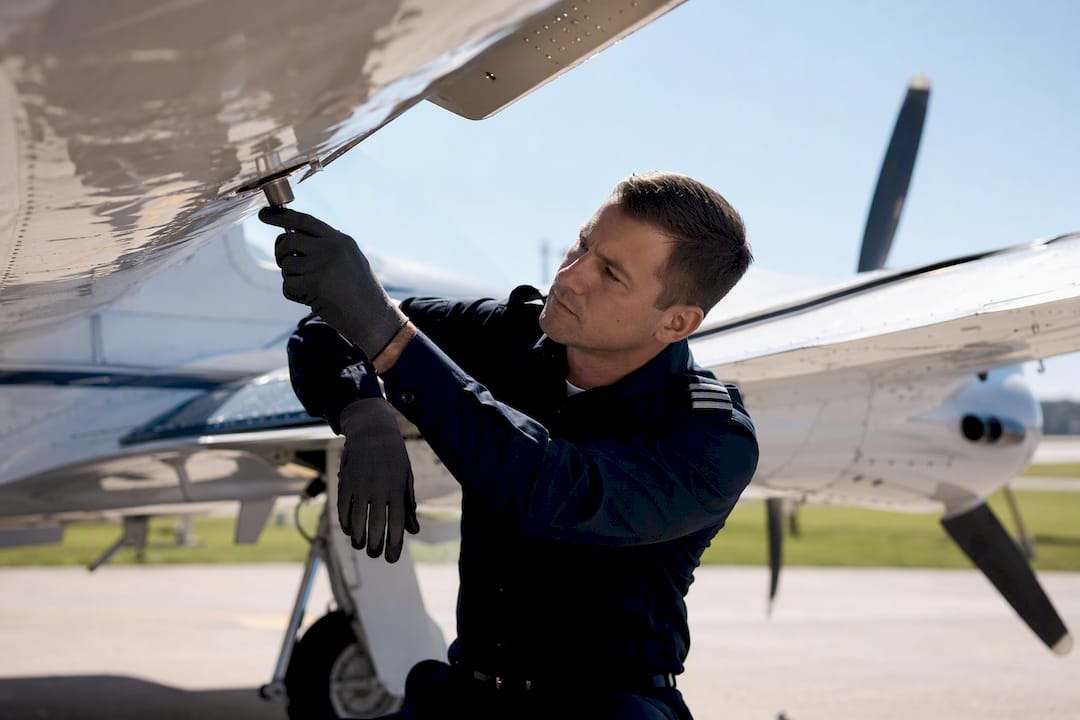
Multi-engine certification succeeds when training targets ACS practical-test tasks directly, with instrument proficiency and simulator practice used to cut both risk and cost.
| Point | Details |
|---|---|
| No minimum hours, no written test | Training is proficiency based; most pilots need 10 to 15 hours and pass through oral and flight evaluation only. |
| Vmc is the core skill | Treat it as a recognize, avoid, recover decision process, not a memorized number on the airspeed indicator. |
| Budget realistically | Expect $3,000 to $8,000 depending on aircraft rate, instructor fees, and how intensively you schedule training. |
| Instrument skills pay off | Not required, but strongly recommended to reduce workload during higher-speed, systems-dense twin operations. |
| Choose your school carefully | Parrillo Air Services structures training around ACS tasks, personalized scheduling, and simulator-supported preparation for the checkride. |
An Airplane Multi-Engine Land rating, usually shortened to AMEL, is a class rating added to an existing pilot certificate. It doesn't replace your certificate or grant new privileges beyond flying twins. It simply authorizes you to act as pilot in command of a multi-engine airplane, and it attaches directly to whatever certificate level you already hold: private, commercial, or airline transport pilot.
The rating matters for different reasons depending on where you are in your flying career. A private pilot might add it out of curiosity or to fly a family airplane with two engines. A commercial candidate almost always needs it, because most charter, corporate, and regional airline positions require multi-engine experience before you're even considered.
Here's who typically pursues an AMEL rating and why:
Pro Tip: Add your multi-engine rating after you've earned your instrument rating, or concurrently if your schedule allows. Twins fly faster, manage more systems, and punish sloppy instrument scan more than trainers do. Coming in with solid IFR fundamentals means your multi-engine hours go toward mastering engine-out procedures instead of catching up on basic instrument skills.
You don't need a new certificate level to add a multi-engine rating. You need to already hold a pilot certificate, meet medical standards, and complete training that satisfies your instructor and the practical test standards. The FAA outlines the specific requirements in 14 CFR 61.63, and the list is shorter than most people expect:
One detail trips up a lot of first-time applicants: there is no FAA-mandated minimum flight hour requirement for the multi-engine add-on, and there is no separate written knowledge test for it either. Your entire evaluation happens through the practical test, oral and flight, graded against the Airman Certification Standards. That means your training is purely proficiency-based. Some pilots are ready in eight hours. Others need twenty. The airplane and your background decide, not a federal clock.
Under 14 CFR 61.63, the multi-engine add-on is evaluated entirely through a practical test rather than a written exam, which puts the weight of preparation on flight proficiency and oral knowledge instead of test-taking strategy.
Part 61 training is flexible. You work with an independent instructor or a Part 61 school, set your own pace, and structure lessons around your schedule and progress. Part 141 programs, by contrast, follow an FAA-approved syllabus with structured ground school hours, stage checks, and standardized end-of-course testing.
If you're training around a full-time job, Part 61's flexibility usually wins. If you're pursuing multi-engine training as part of a structured commercial pilot pathway, and especially if you're coordinating credit transfer through a university aviation program, a 141 structure can keep you on a predictable timeline. Neither path changes what the ACS requires you to demonstrate. It just changes how rigidly your training schedule is enforced.
Your instructor's endorsement is what actually gets you into the test. The examiner, meanwhile, checks that endorsement alongside your logbook, medical, and photo ID before the practical test even begins. Missing paperwork is one of the most common, and most avoidable, reasons candidates get turned away on test day.
Multi-engine flight training blends ground study with flight scenarios built around a handful of core aerodynamic concepts. Before you touch the controls of a twin, your instructor should walk you through Vmc (minimum controllable airspeed with the critical engine inoperative), the concept of the critical engine itself, propeller feathering, and how counter-rotating props change the aerodynamic picture compared to airplanes where both props spin the same direction.
Once ground concepts click, flight training shifts to maneuvers examiners specifically test.
A typical lesson progression, drawn from structured multi-engine syllabi used across flight schools, looks something like this: lesson one covers systems and performance ground school; lesson two introduces normal takeoffs, landings, and airwork in the twin; lessons three and four build Vmc awareness and engine-out procedures at altitude; lessons five and six add single-engine approaches and landings; lesson seven introduces emergency scenario combinations; lesson eight is a stage check or mock oral; and the final one or two lessons polish weak areas before the checkride.
Pro Tip: Run your Vmc demonstrations and engine-out scenarios in an Aviation Training Device or simulator before you fly them for real. ATDs let you fail the "wrong" way safely and repeatedly, so by the time you're doing it in the airplane, muscle memory is already built. Schools with integrated ATD programs consistently report more efficient training progressions because students arrive at each flight lesson already comfortable with the procedure.
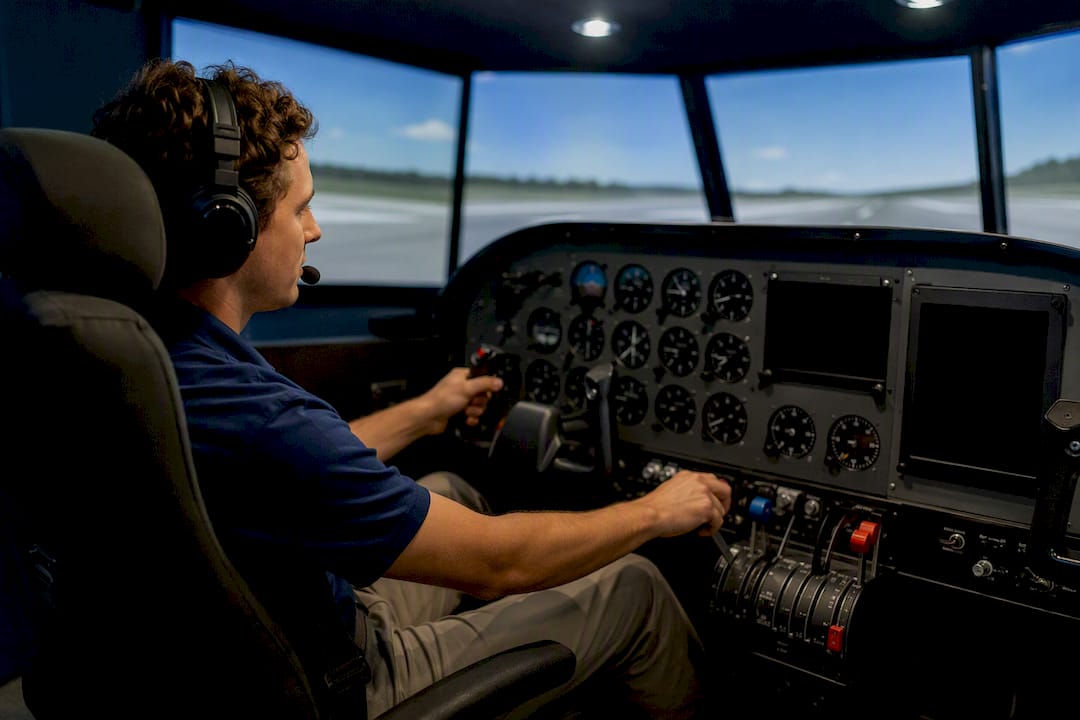
Self-check your readiness by asking whether you can brief a simulated engine failure out loud, correctly, without hesitating. If you can talk through the identify-verify-feather sequence calmly on the ground, you're much closer to flying it calmly in the air.
The airplane you train in needs to match what you'll be tested in, and it needs a paper trail that satisfies both your instructor and the examiner. A light twin used for AMEL training should have a current Pilot's Operating Handbook on board, be within its maintenance inspection intervals, and carry equipment appropriate to the maneuvers you'll demonstrate, including functioning fuel crossfeed and a properly rigged propeller feathering system.
Common trainer twins used across flight schools include piston-powered light twins with counter-rotating propellers, which simplify Vmc handling compared to conventional same-rotation designs. Rental availability and insurance minimums vary significantly by school and by aircraft type, so ask early rather than after you've already started training.
On test day, examiners typically check the same handful of items every time:
Watch for red flags before you commit to a school or aircraft. High insurance minimums that block you from renting solo, or that require an unusually high number of dual hours before solo privileges kick in, can quietly add hundreds or thousands of dollars to your training. Limited dual rate availability, where only one or two instructors are qualified to teach in the twin, can also stretch your timeline far beyond what the syllabus suggests.
Vmc is the minimum speed at which you can maintain directional control of a twin-engine airplane when the critical engine fails and the remaining engine is producing takeoff power. Below Vmc, the operating engine's thrust overpowers the rudder's ability to counteract yaw, and the airplane will roll and yaw toward the dead engine no matter how much rudder you apply. The FAA Airplane Flying Handbook treats this as the single most important aerodynamic concept in multi-engine training, and for good reason. Loss of control following an engine failure at low altitude remains one of the most dangerous scenarios in general aviation.
Examiners want to see that you treat Vmc as a decision problem, not just a number on the airspeed indicator. That means recognizing the yaw and roll signature of an engine failure immediately, keeping the airplane above blue line (Vyse, the best single-engine rate of climb speed), and never letting airspeed decay toward Vmc while you sort out which engine failed.
A clean single-engine emergency response follows a consistent sequence:
For the single-engine approach and landing itself, stabilize early on Vyse, plan for reduced climb performance if a go-around becomes necessary, and make your gear and flap extension decisions deliberately rather than out of habit. Extending flaps too early on one engine can rob you of climb performance you might desperately need seconds later.
Pro Tip: If a single-engine landing attempt starts to go wrong at low altitude and low airspeed, a controlled off-field landing straight ahead is almost always safer than trying to stretch a turn back toward the runway. Energy management, not heroics, is what keeps pilots alive after a real engine failure.
Budget and timeline depend heavily on how intensively you train, which aircraft you rent, and your local instructor and DPE rates. Three realistic scenarios illustrate the range:
These figures assume a light twin wet rental rate, an independent instructor's hourly fee, some simulator or ATD time factored in, and a standard examiner fee for the practical test. Local pricing varies, particularly for aircraft rental, so treat these as planning ranges rather than fixed quotes. Real-world school package estimates commonly land in the $3,000 to $8,000 range once you factor in aircraft time, instruction, and test fees.
Pro Tip: Front-load simulator or ATD hours for Vmc demonstrations, engine-out procedures, and instrument approaches. Every maneuver you can practice safely and cheaply on the ground is one less repetition you need to pay for in the actual twin, and it compounds fast given how much more expensive twin rental time is compared to single-engine trainers.
Don't stop budgeting at the checkride. Multi-engine insurance tends to carry higher premiums than single-engine coverage, particularly for low-time twin pilots, and many policies require a minimum number of hours in type before you can fly solo or carry passengers without an instructor. Factor recurrent training and currency flights into your long-term multi-engine budget, not just your initial certification cost.
Examiners see the same mistakes repeatedly, and most of them are preventable with focused preparation rather than more flight hours. Before you schedule your practical test, confirm you have your logbook endorsements, current medical, photo ID, aircraft documents, and POH organized and easy to hand over. Disorganized paperwork sets a bad tone before you've even started the oral.
Six red flags come up again and again during multi-engine checkrides:
For the oral exam itself, rehearse systems questions, weight and balance calculations, single-engine performance planning, and a handful of emergency scenarios you can talk through step by step. Examiners aren't looking for word-perfect regulatory citations. They're listening for whether you understand why a procedure exists, not just that it exists.
Brief your instructor honestly about which maneuvers still feel shaky. A good instructor would rather spend one more lesson on your weak point than send you to the examiner underprepared. Reviewing a private pilot checkride prep checklist can also help you translate general examiner expectations into your multi-engine test day plan.
No, an instrument rating isn't required to add a multi-engine class rating. But most instructors, and AOPA's own training guidance, recommend having one anyway, and the reasoning holds up under scrutiny.
Twins fly faster than typical single-engine trainers, which compresses your decision-making time during approaches and emergencies. They also carry denser systems: two fuel selectors, two sets of engine instruments, crossfeed procedures, and often more sophisticated avionics. If you're simultaneously learning instrument scan technique and multi-engine emergency procedures, you're stacking two steep learning curves on top of each other. Pilots who arrive with solid IFR fundamentals tend to absorb multi-engine-specific skills faster because they're not relearning basic instrument flying at the same time.
Pro Tip: If your career goal is regional or major airline flying, sequence instrument rating, then multi-engine, then commercial certificate, or train instrument and multi-engine concurrently if your schedule and budget allow. Either path beats saving multi-engine training for last, since twin time under IFR conditions is exactly the kind of experience airline-track pilots need to demonstrate.
Not every flight school running multi-engine training runs it well. The airplane, the instructor's actual multi-engine hours, and the school's insurance structure all affect your cost and timeline more than most students realize before they sign up.
Ask these ten questions before committing to a school:
Score prospective schools on syllabus clarity, instructor multi-engine hours, transparency about total cost, and whether their safety culture feels genuinely built in or just mentioned in a brochure. Red flags include instructors with minimal multi-engine time themselves, no clear POH or systems documentation available to students, and insurance blocks so restrictive that dual-only flying stretches your timeline for months.
Part 141 structure tends to fit best if you're coordinating credit transfer through a university program or want a rigid, checkpoint-driven timeline. Flexible Part 61 training usually fits better if you're balancing a job or other commitments and need a school willing to adjust lesson pacing around your availability.
Most multi-engine guides fixate on hour counts, as if fifteen hours guarantees competence and twenty guarantees mastery. That's backward. The FAA doesn't set a minimum for a reason: proficiency, not clock time, is what the ACS actually measures, and two students at the same hour count can be worlds apart in Vmc awareness.
What's underrated is decision speed. The pilots who struggle on checkrides aren't usually the ones who fly a sloppy single-engine approach. They're the ones who freeze for two extra seconds identifying which engine failed, and that hesitation cascades into everything after it. Build that recognition speed early, ideally in a simulator, before you ever fly it in a real twin under an examiner's eye.
The conventional advice also underweights instrument proficiency. Treating it as optional paperwork rather than a genuine safety multiplier ignores exactly why AOPA and experienced instructors keep recommending it. If you're serious about a flying career, sequence your training with that in mind rather than saving instrument work for later out of convenience.
If you're evaluating where to train, ask hard questions about instructor experience and syllabus structure before you ask about price. Parrillo Air Services builds its multi-engine training around exactly that priority: proficiency-based progression, not a rushed hour count.
Parrillo Air Services is the alternative to a generic hour-building mill for multi-engine training: personalized scheduling built around your actual availability, not a fixed cohort calendar, and instructors who walk you through every ACS task before you ever sit across from an examiner.

The syllabus mirrors what this guide just walked through: ground school on Vmc, critical engine dynamics, and systems, followed by staged flight lessons covering engine-out procedures, single-engine approaches, and asymmetric handling, with simulator integration built in to sharpen your emergency recognition before you fly those scenarios for real. Instructors at Parrillo Air Services bring hands-on multi-engine experience to every lesson, and flexible scheduling means weather delays or work conflicts don't derail your training timeline the way they can at larger, less personal schools. Parrillo Air Services also supports Liberty University credit transfer, so if you're on a structured collegiate aviation track, your multi-engine training can count toward that pathway. Safety culture isn't a slogan here. It shows up in how instructors brief every engine-out scenario before it's flown, not after something goes wrong.
If you're ready to move from reading about Vmc to actually mastering it, reach out through the Parrillo Air Services training programs page to schedule a discovery session and talk through your multi-engine timeline with an instructor directly.
Is a multi-engine rating hard to get?
It's demanding but achievable. Most of the difficulty comes from learning Vmc awareness and engine-out decision-making quickly, rather than from complex regulations. Pilots who arrive with solid instrument fundamentals and a clear syllabus typically move through it efficiently.
How long does multi-engine training take?
Most pilots complete training in 10 to 20 hours over a few weeks to a few months, depending on scheduling intensity and how much simulator time supplements actual flight hours.
Do I need an instrument rating for a multi-engine add-on?
No, it's not required. It's strongly recommended because twins fly faster and manage denser systems, which increases workload during training and on the checkride.
What's tested on the multi-engine practical exam?
The oral portion covers systems, performance planning, and emergency procedures. The flight portion tests engine-out handling, Vmc demonstration and recovery, single-engine approaches, and standard maneuvers like stalls and steep turns.
How much does a multi-engine rating cost?
Total costs commonly range from $3,000 to $8,000, depending on aircraft rental rates, instructor fees, simulator use, and local examiner fees.
Does the multi-engine rating require a written knowledge test?
No. Under 14 CFR 61.63, the add-on is evaluated entirely through the practical test, oral and flight, with no separate FAA written exam.
Bookmark these before you start training. Each one covers a different piece of the certification process, and together they back up nearly everything in this guide.