Flight training for beginners is defined as the structured process of earning an FAA pilot certificate, starting with ground school and progressing through solo flight to a final checkride. To start flight training as a beginner, you need to meet basic eligibility requirements, choose a flight school, complete required flight hours, and pass FAA knowledge and practical tests. The Private Pilot License (PPL) is the standard industry term for the certificate most beginners pursue first. Parrillo Air Services, based in Lynchburg, VA, offers FAA Part 61 instruction that takes students from their first discovery flight all the way to professional certifications. This guide walks you through every step, so you know exactly what to expect before you ever leave the ground.
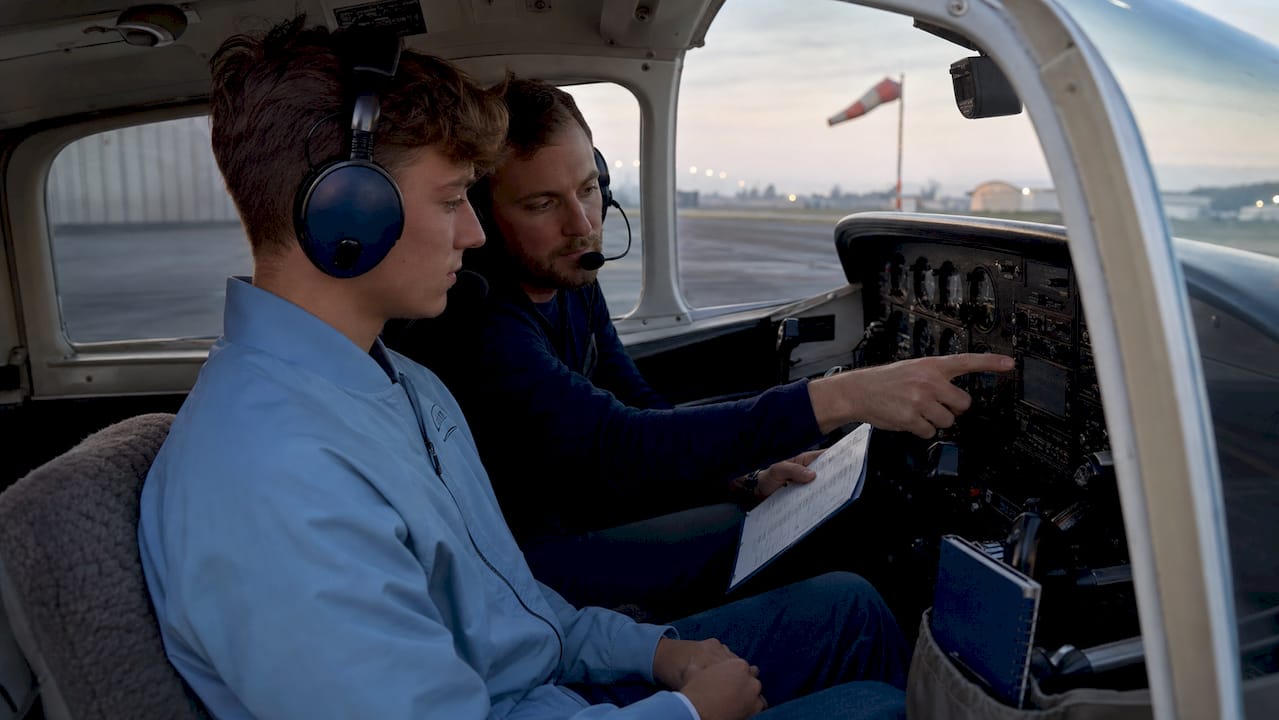
The FAA sets clear, non-negotiable requirements before you can fly solo or earn a certificate. Meeting them early saves time and prevents costly surprises later.
To earn a Private Pilot Certificate, you must:
The student pilot certificate is your legal authorization to fly with an instructor and, eventually, solo. You apply for it through IACRA, the FAA's online registry, and it costs nothing. The Aviation Medical Examiner is a specially designated physician who evaluates your fitness to fly. BasicMed is an alternative medical pathway available later, but for your first certificate, the standard AME exam is the required route.
Not every beginner needs a full Private Pilot Certificate right away. Sport and Recreational Pilot certificates offer alternative paths with lower flight hour minimums and less stringent medical requirements. That said, the Private Pilot Certificate opens the most doors, including night flying, flying passengers, and building hours toward commercial ratings.
Choosing a flight school is the single most consequential decision you make as a new pilot. The school's structure, your instructor's teaching style, and the condition of the aircraft all directly affect how fast and how well you learn.
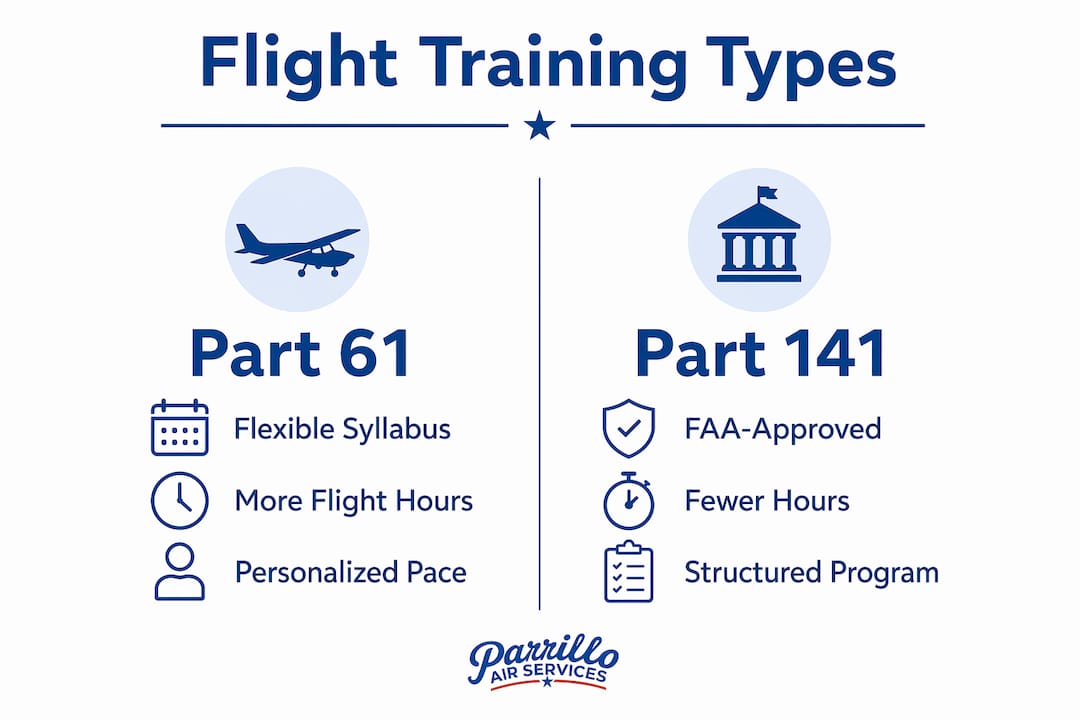
FAA Part 61 and Part 141 represent two distinct regulatory frameworks for flight training. Part 141 schools follow an FAA-approved, standardized syllabus and can qualify students for a Private Pilot Certificate in as few as 35 flight hours. Part 61 schools operate with more flexibility, allowing instructors to tailor lessons to each student's pace. Part 141 suits career-focused students who want a structured, accelerated path. Part 61 suits hobbyists, career changers, and anyone who needs a flexible schedule.
Parrillo Air Services operates under FAA Part 61, which means your training adapts to your goals and availability rather than a rigid institutional calendar. That flexibility is a real advantage for working adults and students balancing other commitments.
Before you commit to any program, visit in person and ask direct questions:
Instructor compatibility matters as much as the school's reputation. Students who connect well with their instructor learn faster and enjoy the process more. If your first instructor is not a good fit, switching is normal and acceptable.
Flight training follows a logical progression. Each phase builds on the last, and skipping steps is not an option under FAA standards.
| Milestone | FAA Minimum (Part 61) | Typical Student Average |
|---|---|---|
| Private Pilot Certificate | 40 hours total | 60–75 hours |
| Solo flight | Varies by student | 15–25 hours dual |
| Cross-country (solo) | 10 hours solo | 10–15 hours solo |
| Instrument flight training | 3 hours | 3–5 hours |
The FAA minimum of 40 hours under Part 61 is rarely achieved in practice. Most students log 60–75 hours before they are checkride-ready. That gap exists because proficiency, not hours, is the real standard.
Training duration depends almost entirely on factors you control, not on the difficulty of flying itself.
A part-time student flying once or twice a week typically earns a Private Pilot Certificate in 6–12 months. A full-time student in an accelerated program can finish in 1–2 months. The difference is not aptitude. It is frequency and consistency.
The factors that slow most beginners down include:
Weather, scheduling, and budgeting are the primary bottlenecks in training, not the complexity of flying itself. Planning your finances before you start, setting a weekly flying schedule, and completing ground school early all compress your timeline significantly. A look at the flight training time commitment for 2026 shows that students who fly consistently finish months ahead of those who fly sporadically.
Beginner pilot training requires meeting FAA eligibility standards, choosing the right school structure, flying consistently, and completing both a written exam and a practical checkride to earn a Private Pilot Certificate.
| Point | Details |
|---|---|
| Meet eligibility first | You need a student pilot certificate, third-class medical, and English proficiency before flying solo. |
| Part 61 vs. Part 141 | Part 141 is faster and more structured; Part 61 offers flexibility for non-career students. |
| Expect 60–75 hours | Most students exceed the FAA's 40-hour minimum and log 60–75 hours before the checkride. |
| Consistency shortens timelines | Flying three or more times per week cuts months off a typical 6–12 month training schedule. |
| Get your medical early | Career pilots should see an AME for a first-class medical before investing in training hours. |
Most people who want to learn to fly spend months researching before they book a single lesson. I understand the impulse. Aviation has real costs, real regulations, and a learning curve that looks steep from the outside. But the research phase has a ceiling. At some point, the only way to know if flying is right for you is to actually fly.
The discovery flight is the most underrated tool in aviation training. It is not a sales pitch. It is a real lesson where you handle the controls, feel the aircraft respond, and get an honest read on whether this is something you want to pursue. I have seen people walk away from a discovery flight certain they want a career in aviation. I have also seen people realize it is not for them, and that clarity is worth every dollar of the introductory lesson.
The other thing I would push back on is the idea that you need to have everything figured out before you start. You do not need to know whether you want a Sport Pilot certificate or a full Private Pilot Certificate on day one. What you need is a good instructor, a realistic budget, and a commitment to fly consistently. The path clarifies itself as you go.
One mistake I see repeatedly is students who delay getting their medical certificate. If you have any health history that might affect FAA medical standards, find out before you log 30 hours. The first-class medical exam is the right move for anyone who wants to fly professionally. Get it done first, then train with confidence.
The instructor relationship is the variable most beginners underestimate. A technically skilled instructor who communicates poorly will slow your progress. A patient, clear communicator who gives you honest feedback will accelerate it. Do not stay with an instructor out of loyalty if the fit is wrong. Switching is not a failure. It is good judgment.
— Gm
Parrillo Air Services offers flight training programs for beginners at every stage, from introductory discovery flights to Private Pilot, Instrument, Commercial, and Flight Instructor ratings. Training operates under FAA Part 61, which means your schedule and pace adapt to your life, not the other way around.

Instructors at Parrillo Air Services bring real-world experience and a direct teaching style that gets students to checkride-ready faster. Whether your goal is recreational flying or a career path toward regional and major airline roles, the program is built around your specific ambitions. Reach out to learn more about getting started and what the first steps look like for your situation.
You can begin flight lessons at any age, but you must be at least 16 to fly solo and 17 to earn a Private Pilot Certificate under FAA rules.
No. You can take lessons with an instructor before obtaining a medical certificate, but you must hold a valid third-class medical before flying solo.
Part 141 schools follow a structured FAA-approved syllabus and require fewer minimum hours; Part 61 schools offer more flexibility and suit students with variable schedules.
Total costs vary by location, aircraft type, and hours flown. A detailed look at training cost factors can help you build a realistic budget before you start.
A discovery flight is an introductory lesson where you fly with an instructor, handle the controls, and experience aviation firsthand before committing to a full training program.
First Flight Lesson Expectations: What Beginners Need to Know
Beginners Guide
Flight Training Programs | Part 61 & 141 Guide | Parrillo Air Services
Flight Training
What is an introductory flight lesson? Your first step to flying
Beginners Guide
How to Get Your FAA Student Pilot Certificate Fast | Parrillo Air Services
Flight Training