A first flight lesson is an introductory flight experience where you learn essential aircraft controls, safety procedures, and complete your initial flying maneuvers under instructor supervision. Most beginners arrive expecting something between a roller coaster and a commercial flight. The reality is calmer, more structured, and far more hands-on than either. Setting accurate first flight lesson expectations before you show up makes the difference between feeling overwhelmed and feeling ready to come back for lesson two.
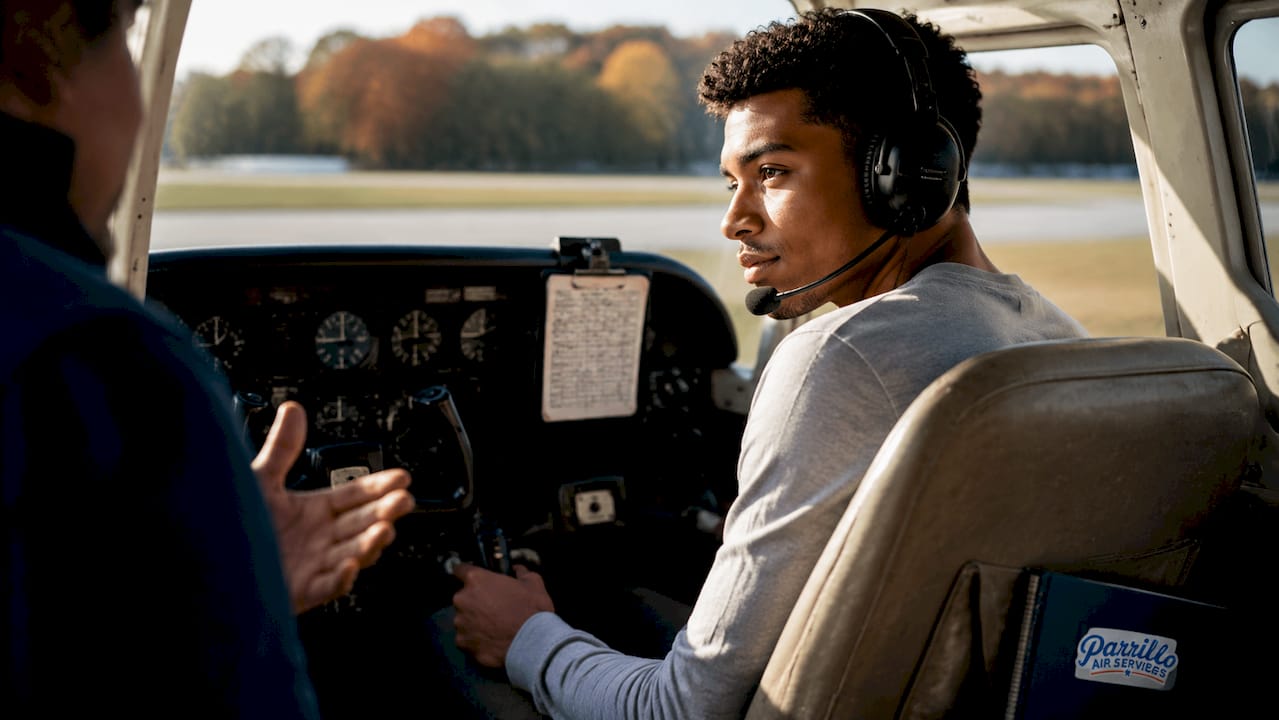
Your first lesson is called an introductory flight in FAA Part 61 training programs. It is not a joyride and not a test. The goal is familiarization: you get comfortable with the aircraft, the cockpit environment, and the basic feel of the controls. Common training aircraft include the Cessna 172 and the Piper PA-28 Cherokee, both of which are forgiving, stable platforms specifically chosen for beginner instruction. You will not be expected to master anything. You will be expected to pay attention, ask questions, and stay engaged.
The lesson starts on the ground, not in the air. Your instructor walks you through a systematic pre-flight inspection from nose to tail, checking control surfaces, fuel levels, tires, and engine components. This is not a formality. Pre-flight inspection is a core pilot skill you will repeat before every single flight for the rest of your aviation career.
After the walkaround, you sit in the cockpit for an orientation. Your instructor introduces the primary controls:
First lessons also cover key safety procedures including seat belt use, emergency protocols, and how to communicate inside the cockpit. Instructors cover this before engine start so you are not processing new information while also learning to taxi.
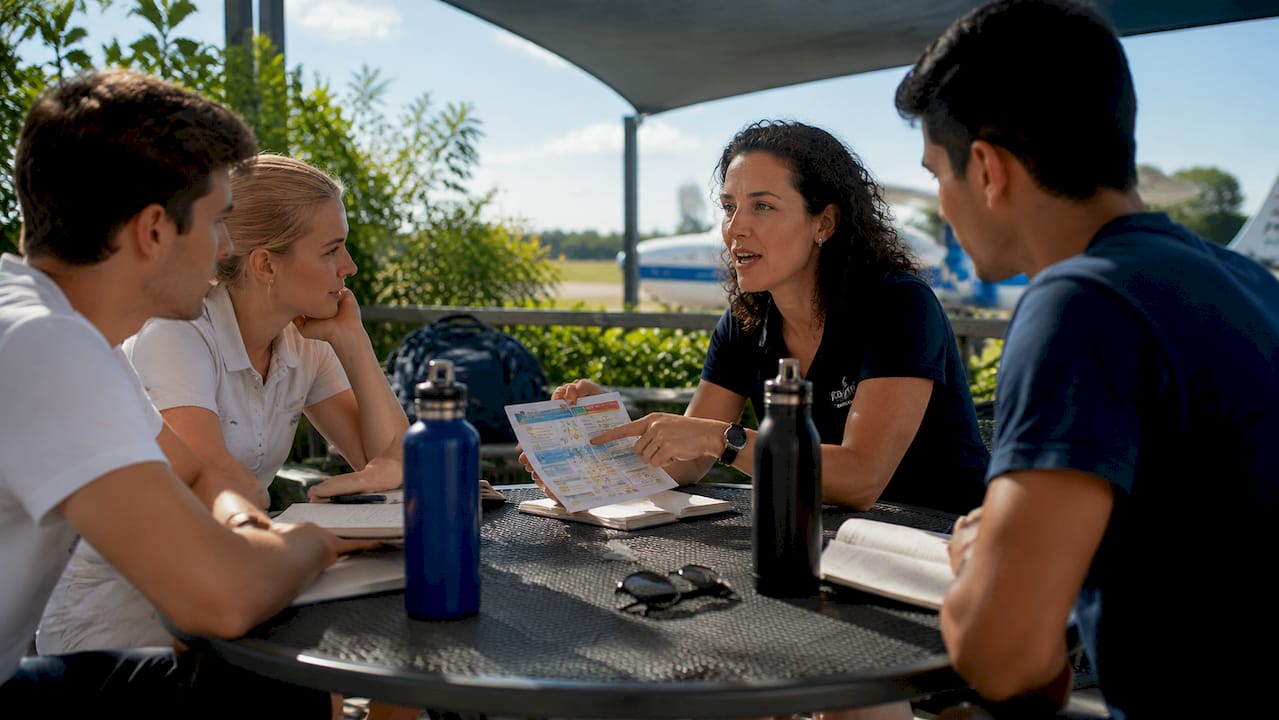
Flight training lessons typically last 45–90 minutes, and not all of that time is airborne. A realistic breakdown for a first lesson looks like this:
| Phase | Typical Duration |
|---|---|
| Ground briefing and cockpit orientation | 20–30 minutes |
| Taxi and pre-takeoff checks | 10–15 minutes |
| Actual flight time | 30–45 minutes |
| Post-flight debrief | 10–15 minutes |
The post-flight debrief is not optional. This is where your instructor reviews what went well, what needs work, and what you will focus on next time. Skipping the debrief is like leaving a workout before the cooldown. The learning consolidates in that conversation.
Most beginners brace for a dramatic lurch at takeoff. The actual experience is different. Takeoff feels like the ground dropping away beneath you rather than a sudden thrust upward. Small training aircraft accelerate smoothly down the runway and lift off at relatively low speeds. The sensation is gentler than most people expect, which is one of the first things that reduces anxiety.
"The takeoff sensation is smoother than most beginners expect. It feels like the earth simply falls away, not like a launch."
— Experienced flight instructors consistently report this as the moment student anxiety drops most sharply.
Your instructor handles the takeoff while narrating every input. The instructor explains each control movement as it happens so you understand what is producing each result. You are watching, listening, and building a mental model before you ever touch the controls yourself.
Once you reach a safe altitude, your instructor invites you to take the controls. This is the moment most beginners have been waiting for, and it is also the moment most beginners realize flying requires more coordination than it looks. The basic maneuvers covered in a first lesson include:
Each maneuver teaches you something specific. Straight and level flight trains your scan, the habit of checking instruments regularly rather than fixating on one. Gentle turns introduce the relationship between bank angle and the rudder. Climbs and descents show you how power and pitch work together. None of these are difficult in isolation. Doing them simultaneously while monitoring instruments is where the real learning begins.
Coordinating multiple controls at once is the hardest part of early flight training. Most beginners focus too hard on one instrument and let the others drift. Others tense up and apply too much pressure to the controls. Both are completely normal.
Mental skills like focus, anticipation, and calmness are as important as physical control skills in beginner flight training. The instructor provides real-time feedback throughout the flight, not just at the end. That immediate correction loop is what accelerates learning faster than any other method.
Showing up prepared makes the lesson more productive. Here is what to bring and what to expect regarding documentation:
Leave large bags and unnecessary items in your car. Cockpits in training aircraft are small. The Cessna 172 cockpit, for example, is about as wide as a compact car's front seat.
Your first logged flight hour is the official start of your training record. Private pilot certification typically requires 40–60+ total flight hours under FAA Part 61 rules. That number varies by student, but the first lesson is where the clock starts.
| Training milestone | Typical hours required |
|---|---|
| First solo flight | 15–20 hours |
| Private pilot checkride eligibility | 40+ hours |
| Instrument rating | 50+ additional hours |
| Commercial pilot certificate | 250+ total hours |
Flying two to three times per week produces significantly better skill retention than flying once a week. Skills learned in the air fade faster than most students expect. Consistent scheduling is not just a preference. It is a training strategy. For students with long-term goals like an airline pilot career pathway, the habits built in the first few lessons set the tone for everything that follows.
Ground training runs parallel to flight training throughout the process. You study aerodynamics, weather, navigation, and FAA regulations outside the cockpit. The two tracks reinforce each other. What you read about in ground school shows up directly in what you practice in the air.
Your first flight lesson builds the foundational skills, habits, and mental model that every future hour of training depends on.
| Point | Details |
|---|---|
| Ground briefing comes first | Pre-flight inspection and cockpit orientation happen before you ever leave the ground. |
| Takeoff is smoother than expected | Most beginners find the sensation calmer than anticipated, which reduces anxiety quickly. |
| Basic maneuvers are the focus | Level flight, gentle turns, climbs, and descents are the core skills of lesson one. |
| Bring your logbook | Your first logged hour is the official start of your private pilot training record. |
| Consistency accelerates progress | Flying two to three times per week builds muscle memory faster than infrequent lessons. |
The most common mistake I see beginners make is treating nervousness as a problem to solve before the lesson. Nerves are not a sign that you are not ready. They are a sign that you care about doing it right. The instructors who get the best results from first-time students are the ones who name that feeling early and redirect it toward curiosity.
The single most useful thing you can do before your first lesson is communicate openly with your instructor. Tell them what you are anxious about. Tell them what you are excited about. That conversation shapes the entire lesson. An instructor who knows you are worried about takeoff will spend more time on that moment. One who knows you are excited about turns will use that energy to keep you engaged.
After the flight, sit with the debrief instead of rushing out. The 10 minutes you spend reviewing what happened are worth more than the first 20 minutes of your next lesson. Write down one thing that surprised you and one thing you want to do better. That reflection habit, built from lesson one, is what separates students who progress quickly from those who plateau. Aviation careers reward dedication at every level, and that dedication starts with how seriously you take the very first hour.
— Gm

Parrillo Air Services offers FAA Part 61 flight training in Lynchburg, VA, with personalized instruction designed for students at every level. Whether you are booking your first introductory flight or planning a full path to a private pilot certificate, the school's experienced instructors guide you through each stage with structured, flexible scheduling.
Parrillo Air Services builds training programs around your schedule and goals, from discovery flights to commercial and flight instructor ratings. If you are ready to move from questions to the cockpit, explore the flight training programs and find the right starting point for your aviation goals.
Your first lesson combines a pre-flight inspection, cockpit orientation, and basic in-air maneuvers under instructor supervision. The instructor handles takeoff while you observe, then hands you the controls at a safe altitude.
Flight lessons typically run 45–90 minutes, including ground briefing, flight time, and a post-flight debrief. Actual airborne time is usually 30–45 minutes for a first lesson.
A government-issued photo ID is required. A student pilot certificate is not needed for the very first lesson but becomes necessary before you can log solo flight hours.
Most flight schools use the Cessna 172 or Piper PA-28 Cherokee for introductory lessons. Both are stable, forgiving aircraft built for primary training.
Private pilot certification requires a minimum of 40 flight hours under FAA rules, though most students complete it in 60 or more hours depending on lesson frequency and individual progress.
What is an introductory flight lesson? Your first step to flying
Beginners Guide
Minimum Flight Hours for Private Pilot: What to Expect
Flight Training
Top Benefits of Discovery Flights for Aspiring Pilots | Parrillo Air Services
Discovery Flight
What Is a Discovery Flight? A Beginner's Guide
Beginners Guide