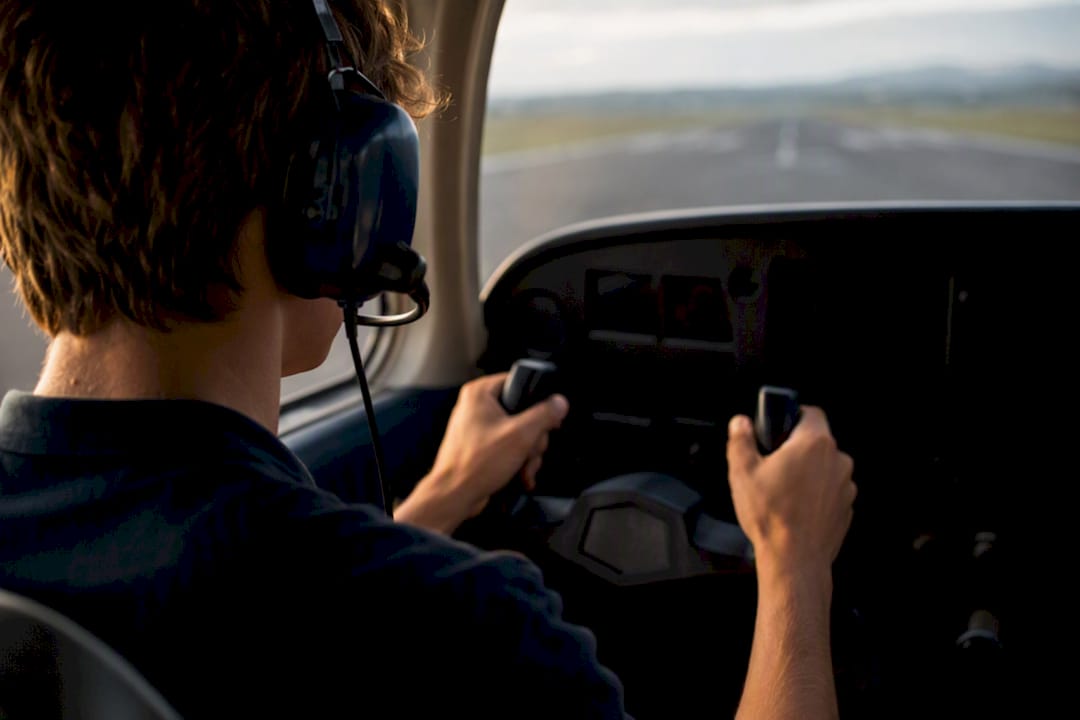
To solo, you must meet FAA age and English-language eligibility, pass an instructor-administered presolo knowledge check, and complete and log the required presolo maneuvers for your specific make and model. You also need any required medical or student certificate in hand, plus a logbook endorsement from your instructor that's current within 90 days. Beyond the paperwork, your instructor makes the final call on readiness.
TL;DR:
- Students must log specific maneuvers, such as takeoffs, landings, stalls, and emergency procedures, in the aircraft they'll solo in, with instructors expecting several consecutive clean landings before endorsing.
- The instructor's solo endorsement must specify the aircraft make and model, be signed and dated, and remain valid for 90 days before requiring re-evaluation for continued solo privileges.
- Solo cross-country flights are limited to 25 nautical miles unless retested and endorsed for routes up to 50 miles, with proper route planning and current weather information.
- A student pilot certificate is only issued after passing the FAA Form 8710 application, with a permanent certificate required in hand before flying solo, not a temporary one.
- Medical requirements vary: airplane and rotorcraft students typically need at least a third-class medical, whereas glider, balloon, and some sport pilot students can often solo with a valid driver's license depending on their privileges.
Table of Contents
- Student Pilot Solo Requirements: Eligibility and Paperwork
- What's on the Presolo Knowledge Test?
- Which Maneuvers Must You Log Before Your First Solo?
- Endorsements and the 90-Day Currency Rule
- Solo Cross-Country Rules: The 25 NM and 50 NM Limits
- What Can't You Do While Flying Solo?
- What Readiness Actually Looks Like Beyond the Checklist
- How Parrillo Air Services Structures Your Path to Solo
- Ready to Start Toward Your Own Solo Flight?
- Sources
- FAQ
Student Pilot Solo Requirements: Eligibility and Paperwork
Before you touch any of the training requirements, you need to clear the basic eligibility bar. Under 14 CFR § 61.83, you must be at least 16 to hold a student pilot certificate for airplanes (14 for gliders and balloons), and you must be able to read, speak, write, and understand English.
Getting the certificate itself runs through FAA Form 8710, usually filed electronically through IACRA with help from your instructor, a designated pilot examiner, or your local Flight Standards District Office. You'll need government-issued photo ID at that appointment. Our guide to getting your student pilot certificate walks through the timing, but the key detail people miss: a temporary certificate won't cut it for solo privileges. Advisory Circular 61-65F makes clear the permanent plastic certificate must be physically in your possession before you fly alone.
Medical requirements depend on the aircraft category:
- Airplane and rotorcraft students generally need at least a third-class medical certificate (or BasicMed once you've held one before).
- Glider, balloon, and some sport pilot students can often solo using a valid driver's license instead of an FAA medical, depending on the specific privileges sought.
- Night operations and certain other privileges for sport pilots carry their own restrictions regardless of medical status.
Our student pilot certificate guide breaks down which category applies to your training path.
What's on the Presolo Knowledge Test?
Before your instructor signs you off to fly solo, you have to pass a knowledge test they administer themselves, not a computerized exam at a testing center. 14 CFR § 61.87 spells out three required subject areas: applicable sections of Parts 61 and 91, airspace and traffic pattern procedures for the specific airport where you'll solo, and the flight characteristics and operating limitations for your aircraft's make and model.
Here's the part instructors sometimes skip explaining: the regulation requires them to review every incorrect answer with you before endorsing you to solo. It's not a pass/fail formality. It's a built-in second check on your understanding.
A practical study checklist before you sit down for this test:
- Local airspace boundaries, radio frequencies, and traffic pattern altitude at your home airport
- VFR cloud clearance and visibility minimums for the airspace you'll fly in
- Your aircraft's V-speeds, fuel capacity, and weight and balance limits
- Emergency procedures: engine failure, radio failure, and lost communications
Which Maneuvers Must You Log Before Your First Solo?
For single-engine airplanes, § 61.87(d) lists the specific maneuvers and procedures in which you need training and must log before solo:
- Preflight inspection and cockpit management, including engine operation
- Taxiing or surface operations, including runups
- Takeoffs and landings, including normal and crosswind variations
- Straight-and-level flight, turns in both directions, climbs, and climbing turns
- Airport traffic patterns, collision avoidance, and wind-shear precautions
- Descents with and without turns, using high and low drag configurations
- Flight at slow airspeeds, including stall recognition and recovery
- Ground reference maneuvers
- Emergency procedures, including simulated engine malfunctions
- Approaches to landing area with simulated engine failure
- Slips to a landing
- Go-arounds
That training has to happen in the same make and model you intend to solo, or one similar enough that the skills transfer directly. A student trained exclusively in a Cessna 172 doesn't automatically clear to solo a Piper Cherokee.
What the regulation doesn't spell out, and what most instructors apply on their own judgment, is a consistency standard. Many instructors want to see several consecutive landings that are clean and unassisted before they'll sign anything. They are also watching for a specific transition point: the moment you start running your own radio calls and checklists without a prompt from the right seat. That shift from "coached" to "self-directed" often matters more to an instructor than any single maneuver.
Endorsements and the 90-Day Currency Rule
Your instructor's solo endorsement isn't a generic sign-off. It has to specify the make and model you're cleared to fly, carry the instructor's signature and certificate number, and physically live in your logbook, not in a separate file or an app screenshot alone.
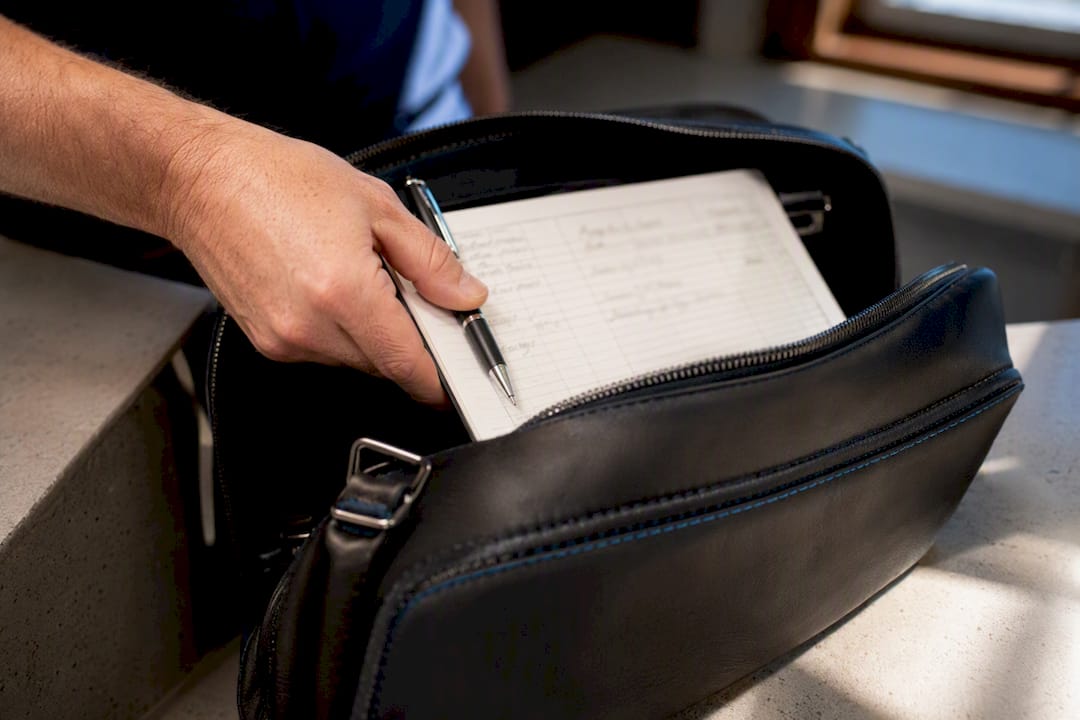
That endorsement is only good for 90 calendar days. Once it lapses, you don't get to just pick up where you left off. Your instructor has to re-evaluate your skills and issue a fresh endorsement before your next solo flight, even if you flew flawlessly the week before it expired. This trips up more students than any other rule in this article, especially anyone who takes a break for weather, work, or a semester off.
Instructors can also write specific limitations directly into the endorsement, like a maximum crosswind component or a minimum visibility figure, and those become binding for you while solo. Keep a running checklist so nothing catches you off guard:
- Confirm the endorsement date and do the math on your 90-day window before you schedule solo time.
- Check that the make and model listed matches the aircraft you're flying that day.
- Read any stated limitations (wind, visibility, airport) every single time, not just once.
Our breakdown of what endorsements actually mean covers common instructor language you'll see on these entries.
Solo Cross-Country Rules: The 25 NM and 50 NM Limits
14 CFR § 61.93 governs solo cross-country flying, and it works in layers. After specific training and a dedicated instructor endorsement, you can fly solo cross-country to airports more than 25 nautical miles from your home base. If you're going to be repeating the same route to the same airport, your instructor can endorse you for flights up to 50 nautical miles, provided they've reviewed that specific route with you.
Before signing any cross-country endorsement, instructors typically walk through:
- The planned route, checkpoints, and alternate airports
- Current and forecast weather along the entire route, not just at departure
- Fuel planning with realistic reserves, not minimums
- Confirmation the flight stays within VFR conditions the whole way
Show up with a completed flight plan, weather briefing printout, and fuel calculations already done, not asked for. It speeds up the endorsement conversation and shows you're actually ready. Our guide on solo cross-country endorsement requirements has a full planning template.
What Can't You Do While Flying Solo?
The limitations here are non-negotiable, and they exist independent of anything your instructor writes into your endorsement:
- No passengers, ever, under any circumstance.
- No flights for compensation, hire, or in furtherance of a business.
- You must stay within VFR weather minimums for the airspace you're in.
- Class B, C, and D airspace and towered airports require specific instructor endorsements under § 61.94 and § 61.95 before you can operate there solo.
- Sport pilot students face additional restrictions, including no night solo operations without added training and endorsement.
Layered on top of all this: your instructor's own written limitations, like a personal crosswind cap, carry the same legal weight as the federal rules.
What Readiness Actually Looks Like Beyond the Checklist
Regulations set the floor, not the finish line. Your instructor's real gate is consistency: can you fly the pattern, talk on the radio, and handle a simulated emergency without a coach in the right seat bailing you out?
Practice these deliberately before you expect a solo sign-off: run every radio call yourself, work through a simulated diversion, and rehearse an engine-out scenario until it's automatic. AOPA's guidance on solo readiness notes that students who handle checklists and radio work independently early on transition to solo faster, simply because their instructor stops managing basic tasks and starts evaluating judgment instead.
— Gm
How Parrillo Air Services Structures Your Path to Solo
Flight training schools build their Part 61 syllabus around a sequence of knowledge checks, logged maneuvers, and endorsement timing to keep progress consistent and paced according to each student's actual development rather than a fixed calendar.
Ready to Start Toward Your Own Solo Flight?
Reading the regulations tells you what's required. Getting there safely and on schedule takes an instructor who tracks your knowledge test, your logged maneuvers, and your 90-day endorsement window without you having to manage the paperwork yourself.

Some FAA Part 61 training programs are built around milestones such as presolo knowledge review, logged maneuvers in your specific aircraft, and endorsement scheduling to manage the 90-day window effectively. Instruction is often personalized and flexible to accommodate work or school commitments, and some schools may offer credit transfer options. For those considering flight training, a discovery flight can be a low-pressure way to explore your options. Get the details on Parrillo Air Services' flight training programs and take the first real step toward your solo endorsement.