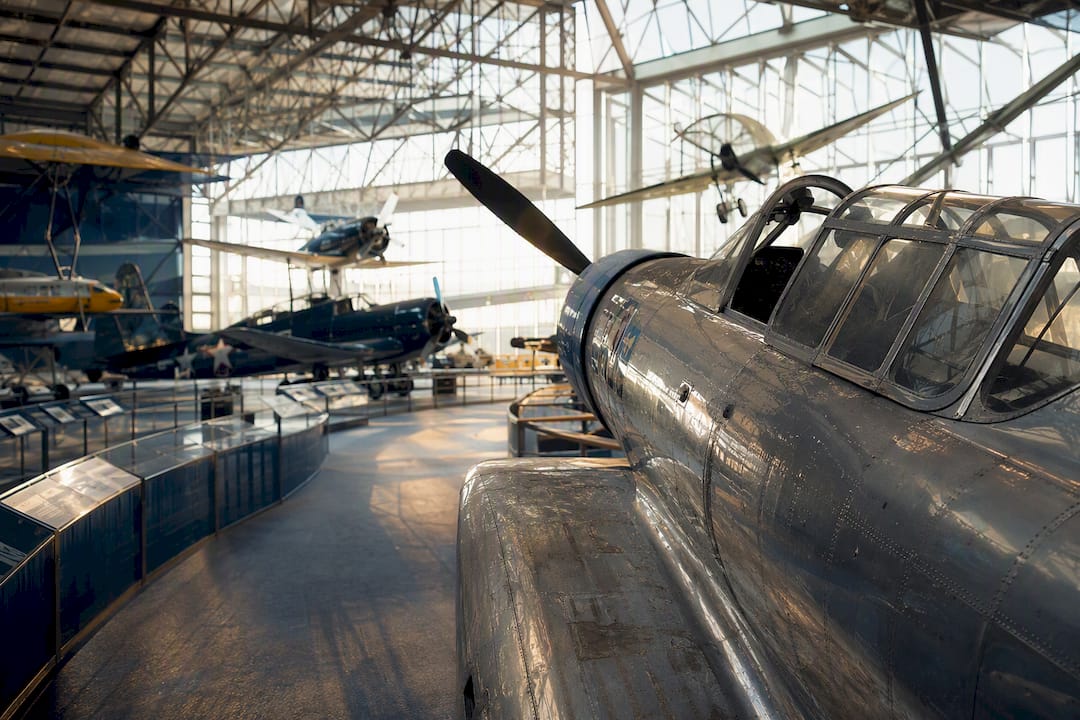
The best aviation museum destinations in the United States span military hardware, space hardware, and the scrappy homebuilt scene, so no single stop covers everything. Your shortlist: the Smithsonian National Air and Space Museum (Mall location plus the Udvar-Hazy Center) for sheer breadth, the National Museum of the U.S. Air Force for the largest military aviation collection in the country, the National Naval Aviation Museum for free carrier-deck history, Pearl Harbor Aviation Museum for hangars still scarred from 1941, the EAA Aviation Museum for homebuilt and experimental aircraft, the California Science Center for space shuttle Endeavour, Space Center Houston for a full-scale shuttle replica riding piggyback on a jumbo jet, and The Museum of Flight in Seattle for one of the largest independent aviation collections in the country.
Read on for hours, access quirks, and which campus actually has the plane you're driving there to see.
Choosing the right aviation museum destination depends on whether you want breadth, military scale, space hardware, or homebuilt aircraft culture, and pairing that visit with a discovery flight turns curiosity into a real career step.
| Point | Details |
|---|---|
| Match the museum to your interest | Pick the Smithsonian for breadth, the Air Force museum for scale, or EAA for homebuilt aircraft culture. |
| Confirm the campus | Two-location museums like the Smithsonian split small artifacts from hangar-sized aircraft. |
| Check base-access rules early | Pensacola and Wright-Patterson require ID and advance planning since they sit on active military installations. |
| Use reciprocity programs | ASTC passport and museum memberships can cut or eliminate admission costs at participating sites. |
| Turn inspiration into action | Parrillo Air Services offers discovery flights and FAA Part 61 training for visitors ready to move beyond the exhibit hall. |
Picking where to go first usually comes down to what you want to stand next to: a Concorde, a lunar module, or a plane still wearing its original WWII paint. Here's what each destination actually delivers.
This is the most visited aviation museum in the country, drawing more than 8 million annual visitors across its two sites. The downtown Mall building, now reopened after a multi-year renovation, holds the compact, historically loaded artifacts: the Wright Flyer, the Spirit of St. Louis, Apollo command modules. The real hangar experience is 25 miles away at the Steven F. Udvar-Hazy Center near Dulles Airport, where a space shuttle orbiter and an SR-71 Blackbird sit under one roof alongside a Concorde. If you only have time for one site, decide first whether you want the intimate downtown gallery, or the aircraft-carrier-sized hangar in Virginia. Admission is free at both, though timed passes are often required at the Mall location.
Located at Wright-Patterson Air Force Base outside Dayton, Ohio, this is the largest military aviation museum on Earth, with more than 350 aerospace vehicles and missiles spread across roughly 19 acres of indoor exhibit space. Four hangars trace flight from the Wright brothers through stealth bombers, and a fourth building houses the presidential aircraft collection, including the plane that carried JFK's body back from Dallas. Admission is free, and because the museum sits on an active base but outside restricted areas, no military ID is required for the public galleries.
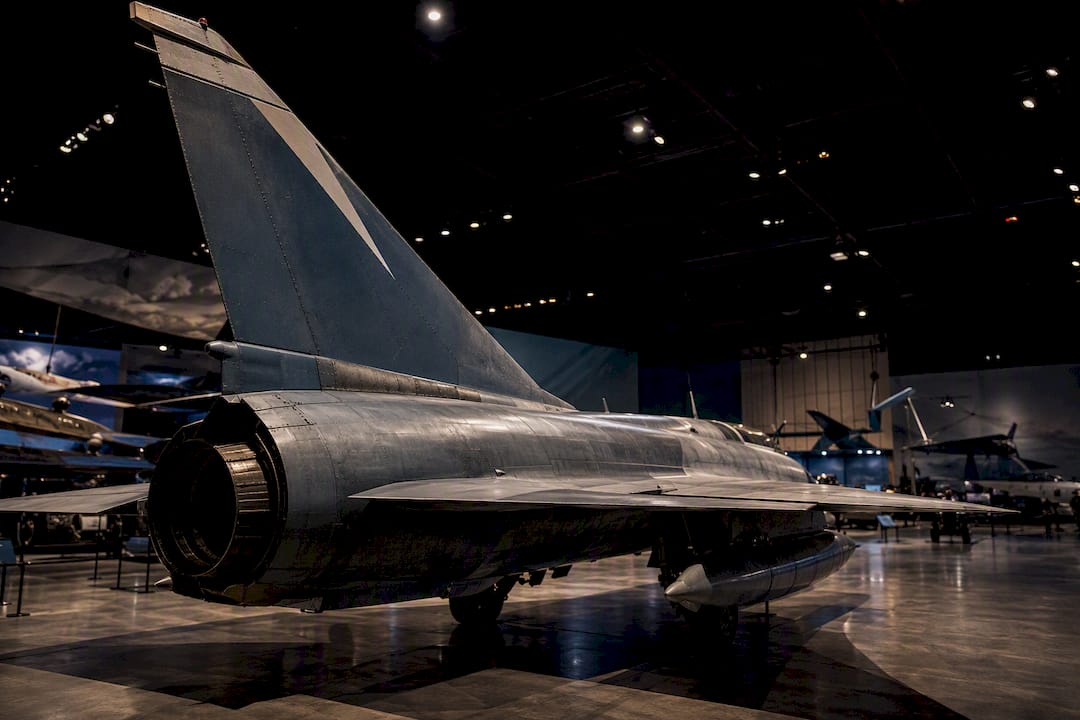
Set aboard Naval Air Station Pensacola in Florida, this collection tells the story of carrier aviation from biplanes to modern jets, and it does it without charging admission. Because the museum sits on an active naval station, visitors should bring a government-issued photo ID for base entry and check the official site for any access restrictions before driving out. The Blue Angels train nearby, so a visit timed right can include a practice flyover for free.
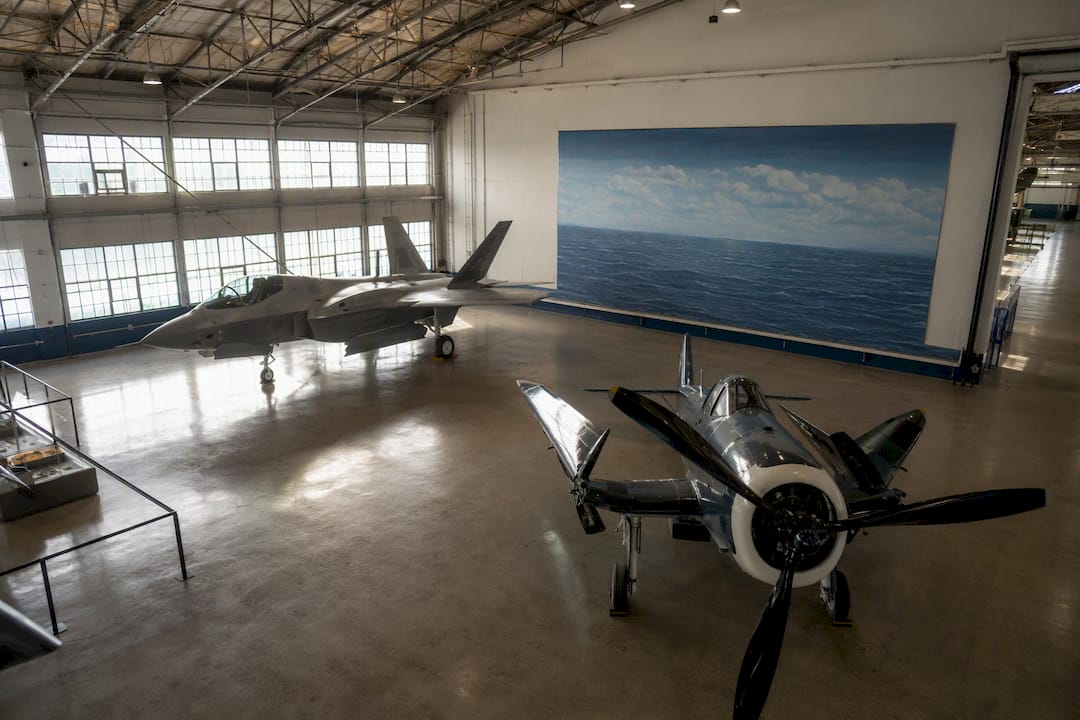
Two original hangars on Ford Island, Hangar 37 and Hangar 79, still show bullet holes and cracked glass from December 7, 1941. This is one of the more visceral aviation history attractions in the country because the building itself is the artifact. Visitors reach Ford Island only by shuttle from the Pearl Harbor Visitor Center, so budget extra time for that transfer, and consider the Top of the Tower add-on tour if you want to climb the restored control tower.
Oshkosh, Wisconsin is ground zero for homebuilt and experimental aviation, and the museum's permanent collection reflects that culture year-round, not just during the massive AirVenture fly-in each summer. Expect kit planes, air racers, and aircraft you won't find anywhere else because someone built them in a garage. Museum members and travelers holding an ASTC Travel Passport can often get in free through reciprocal agreements, worth checking before you buy a ticket.
Pro Tip: Call ahead or check a museum's own reciprocity page before assuming your local science center membership gets you in free. Reciprocal programs like the ASTC passport exclude certain "premier" institutions, and the Smithsonian sites don't participate at all since they're already free.
Los Angeles is the permanent home of space shuttle Endeavour, displayed in a purpose-built gallery alongside interactive engineering exhibits aimed squarely at kids and curious adults. This is one of the more family-friendly aviation destinations on the list, with hands-on stations that explain orbital mechanics and heat-shield design in plain terms.
Independence Plaza puts a full-scale shuttle replica named Independence on top of NASA 905, the actual jumbo jet NASA used to ferry orbiters cross-country. Visitors can walk through both the replica shuttle and the carrier aircraft, which makes the engineering of shuttle transport tangible in a way photos never quite manage.
Near Boeing Field, this is one of the largest independent aviation collections in the country and a regular fixture on national roundups of can't-miss aviation museums. The Great Gallery holds a Concorde and an Air Force One predecessor among dozens of other airframes, and its private, non-Smithsonian status means it moves fast on acquiring retired aircraft that larger institutions sometimes pass on.
A little homework prevents a wasted afternoon, especially at museums split across two campuses or tucked onto a military base.
Wind tunnels, flight simulators, and the "how things fly" style exhibits found at the Smithsonian and similar institutions do more than entertain. They build an intuitive feel for lift, drag, and control response, the same concepts you'll drill on again during ground school and early flight lessons.
Museums increasingly lean into STEM programming and career pathways alongside their historical displays, and that framing tends to clarify what a job in aviation actually looks like day to day, as seen in exhibits like those at the Polish Aviation Museum.
Pro Tip: If a museum visit leaves you wondering "could I actually fly one of these," a discovery flight answers that question faster and cheaper than any amount of research.
Most major aviation museums go well past ramps and elevators when it comes to accommodating disabled visitors, though the specifics vary enough that it's worth checking before you travel. Wheelchairs are typically available on loan at no charge, often on a first-come basis, and several institutions, including the Smithsonian sites, offer sensory-friendly hours or quiet spaces for visitors with sensory sensitivities.
Audio description tours and tactile exhibits show up more often at the larger institutions. The National Air and Space Museum has offered docent-led tours designed for blind and low-vision visitors, and some hangar-style museums allow limited touching of specific artifacts as part of guided programs, a meaningful difference from the look-but-don't-touch rule that governs most of the floor.
Service animals are permitted at every major aviation museum covered here, and captioning or assistive listening devices are commonly available for film presentations and planetarium shows. Where a museum sits on an active military base, like Pensacola or Wright-Patterson, accessibility services generally mirror the base's own visitor accommodations, so it's worth calling ahead rather than assuming the same policies apply as at a civilian site.
Parking close to entrances is usually reserved and clearly marked, but at sprawling sites like Udvar-Hazy or the Air Force museum's four connected hangars, the walking distance between exhibits can still be significant even with mobility assistance. Requesting a wheelchair or scooter at the door, rather than trying to bring your own through security screening, tends to save time at the larger, more heavily trafficked locations.
Pair the National Museum of the U.S. Air Force with a half-day at a smaller regional aviation exhibit nearby, and you get contrast: one massive hangar complex, one intimate gallery. Budget four hours minimum for a museum the size of the Air Force museum or Udvar-Hazy, two hours for smaller sites. Pack comfortable shoes and a charged camera. Aircraft hangars are enormous, and you'll walk more than you expect.
Standing under a wing at a museum is one thing. Sitting behind the controls is another, and Parrillo Air Services exists specifically to close that gap for people who leave an exhibit hall wanting more than a photo. Unlike a museum visit, which ends when you walk out the door, a discovery flight puts you in the airplane the same day, with a certified instructor explaining exactly what you're feeling on the controls.

Parrillo Air Services runs FAA Part 61 training out of Lynchburg, Virginia, covering everything from an introductory discovery flight through private pilot, instrument, commercial, and flight instructor certificates, with scheduling flexible enough to work around a day job or a full course load. If a museum's STEM exhibits got you thinking seriously about a cockpit career, the next move is straightforward: get more information about flight training programs and book a discovery flight to see what training actually feels like.
What is the single best aviation museum destination in the United
States?
It depends on what you want to see. The Smithsonian National Air and
Space Museum offers the widest scope, while the National Museum of the
U.S. Air Force has the largest military collection with over 350
aircraft and missiles.
Are most aviation museums free to visit?
Several are, including the Smithsonian sites, the National Museum of the
U.S. Air Force, and the National Naval Aviation Museum. Others, like
Space Center Houston and the California Science Center's shuttle
exhibit, charge admission.
Do I need a reservation to visit the Smithsonian Air and Space
Museum?
Timed passes are commonly required at the downtown Mall location,
especially during busy travel seasons, though the Udvar-Hazy Center
generally has more flexible walk-up access. Check the museum's official
site before your trip.
Can I visit aviation museums located on military bases without
special clearance?
Yes, in most cases, but you'll need a government-issued photo ID and
should confirm current base-entry procedures beforehand, since bases
like NAS Pensacola and Wright-Patterson Air Force Base occasionally
adjust access for security reasons.
How do museum exhibits connect to becoming a pilot?
Interactive exhibits on lift, drag, and aerodynamics build the same
intuition you'll refine in ground school and flight lessons. A discovery
flight through a program like Parrillo Air Services' Part 61 training is
the natural next step after that curiosity takes hold.