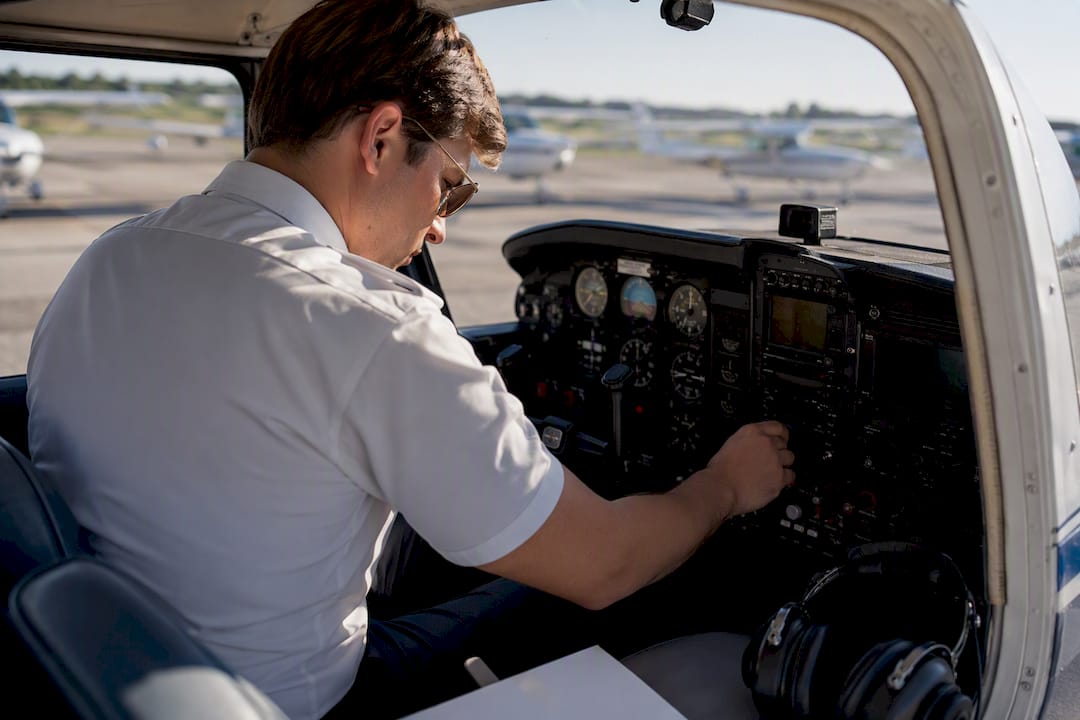
A local FAA Part 61 program can absolutely carry a motivated student from zero experience through private, instrument, commercial, and CFI certificates. The FAA minimum for a private pilot certificate is 40 hours, but most Part 61 students actually finish closer to 72 hours, so budget your time accordingly. If you're serious about a pilot career, the next move is simple: book a discovery flight and see how you handle the controls before committing to a full program.
A career-focused FAA Part 61 program works best for students who fly consistently, budget for roughly 72 hours instead of the 40-hour minimum, and choose a school with transparent pricing and instructor availability.
| Point | Details |
|---|---|
| Budget real hours, not minimums | Plan for roughly 72 total hours toward private pilot, not the FAA's 40-hour floor. |
| Confirm instructor caseload | Ask how many active students your CFI is managing before you enroll. |
| Get pricing in writing | Request a full training agreement covering aircraft, instructor, and exam fees before paying a deposit. |
| Verify Part 141 claims independently | Use the FAA's flight school database rather than taking marketing claims at face value. |
| Start with Parrillo Air Services | Book a discovery flight to test the controls before committing to the full private-through-CFI path. |
A career-track Part 61 program is built in stages, each ending in a certificate or rating that stacks toward the next one. Most schools structure it this way:
Here's where expectations and regulation diverge. 14 CFR § 61.109 sets the private pilot minimum at 40 hours, including 20 hours of dual instruction and 10 hours solo. Almost nobody hits that number exactly.
The FAA's 40-hour floor is a legal minimum, not a realistic target. Gleim Aviation's training data puts the real-world Part 61 average closer to 72 hours, nearly double the regulatory minimum, because students need repetition to master landings, radio work, and emergency procedures before a checkride examiner will sign off.
Simulator time helps close that gap. Flight training devices can count toward your hour requirements, though the credit is capped unless you're training through a Part 142-approved course, which allows larger simulator credit allowances and can trim total hours for approved private pilot courses. Your instructor should also hold the correct ratings and be current on the limitations spelled out in 61.195, particularly around instrument instruction. Ask about this directly, because understanding what Part 61 actually requires up front saves you from surprises mid-program.
Timeline depends almost entirely on how often you fly, not how talented you are. A student flying twice a week part-time typically needs 12 to 24 months to reach private pilot, then another year or more to stack instrument and commercial ratings on top. Someone training full-time, four or five days a week, can realistically compress the entire private-through-commercial sequence into 9 to 14 months.
Cost breaks down into several buckets: aircraft rental (charged wet, meaning fuel included, per flight hour), instructor fees, ground school materials, your FAA medical certificate, exam and checkride fees, a headset, and study materials. None of these are optional line items, so ask for all of them up front.
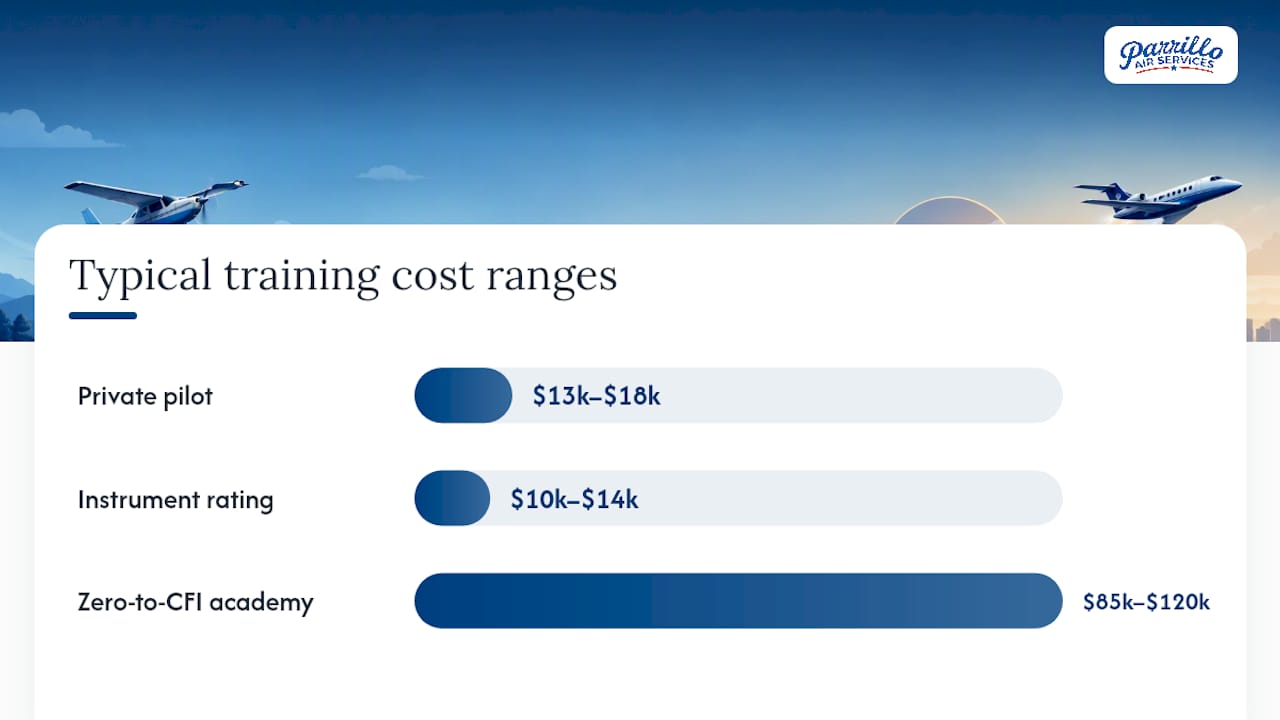
Industry cost data gives you a reasonable planning range. A private pilot certificate under Part 61 commonly runs $13,000 to $18,000, with an instrument rating adding another $10,000 to $14,000 on top. Full zero-to-CFI academy packages, typically structured under Part 141, can run $85,000 to $120,000, though Part 61 students who pay as they go and fly consistently often spend less over the same certificates by avoiding academy overhead.
If you're not a U.S. citizen, factor in TSA's Alien Flight Student Program clearance, which is rating-specific and typically takes four to six weeks per submission, plus a fee. Build that into your timeline before you schedule your first lesson.
Pro Tip: Ask any school for a written package price and a clear cancellation or refund policy before you pay a deposit. Verbal estimates almost always run lower than what you'll actually spend once you factor in extra hours, retests, or aircraft downtime.
Not every Part 61 operation is run the same way, and the difference shows up fast once you're a few lessons in. Work through this before you sign anything:
Red flags are usually easy to spot once you know to look for them: no written syllabus, vague or shifting pricing, instructors who can't produce current FAA certificates on request, or a maintenance program nobody can explain clearly.
If a career path matters to you specifically, dig deeper. Ask whether the school offers mentoring past your CFI checkride, whether it has any credit-transfer partnerships (some schools coordinate with universities like Liberty University), and what its graduates are actually doing two years out. You can also verify any Part 141 certification claims directly through the FAA's flight school database rather than taking a sales pitch at face value. A solid checklist for evaluating Part 61 programs will cover most of this ground for you.
The first 30 days are mostly administrative, plus your earliest flight lessons. Expect this sequence:
By 90 days, most students flying consistently have soloed, started cross-country flight planning, and had an introduction to instrument flying basics. These aren't hard deadlines. Weather, aircraft availability, and how often you fly all shift the timeline, but they're realistic markers if you're training two to three times a week.
For enrollment itself, you'll need a government-issued ID, your medical certificate, and a signed training agreement outlining costs and terms. Simulator sessions, where available, typically get scheduled around your regular flight lessons rather than as a separate track.
Pro Tip: Spend 15 minutes a night reviewing your logbook and re-reading the next lesson's material. It sounds small, but it's the single easiest way to avoid repeating expensive flight hours. Also, don't panic if you over-control the airplane early on. Flight controls are far more sensitive than a car's steering wheel, and instructors expect new students to overcorrect until muscle memory catches up.
Parrillo Air Services runs a full Part 61 progression under one roof: discovery flights, private pilot, instrument rating, commercial certificate, and CFI training, with personalized instruction built around your schedule rather than a rigid academy calendar. That flexibility matters if you're working while you train, which describes most adult career-changers.
Here's what to verify and expect when you reach out:
The FAA minimum of 40 hours for private pilot sets the legal floor, but as Gleim's training data shows, real Part 61 students average closer to 72. Parrillo builds its scheduling and pricing conversations around that reality instead of a marketing number. If you're ready to see where you stand, the next step is a discovery flight or a request for a written training agreement.
Accessibility comes down to two things: how close the airport is to where you live or work, and how much runway and airspace access it offers for training maneuvers. A flight school based near a regional airport with lower traffic volume than a major hub tends to give students more usable flight time per lesson, since you spend less of the hour waiting in a sequence behind commercial traffic.
Proximity also affects your commute reality. If you're training two or three times a week around a job, a 20-minute drive to the airport is sustainable. An hour each way usually isn't, and that gap is one of the quieter reasons students stall out mid-program. Ask any school directly about typical taxi and departure wait times during peak hours, since that eats into billed flight time without teaching you anything.
Airspace variety matters too. A location near enough to Class B or C airspace to practice radio work and controlled-airport procedures, without being buried in it every lesson, gives commercial-track students a real advantage when it's time to add instrument and cross-country requirements. Ask whether the school's home airport supports the kind of varied airspace exposure your target certificate requires, particularly if you're aiming for instrument or commercial ratings rather than stopping at private pilot.
Flight training is expensive enough that financing questions come up in nearly every enrollment conversation. Part 61 programs generally sit outside federal Title IV student aid, since that funding typically requires enrollment in a Part 141 structured curriculum at an eligible institution.
That doesn't mean you're limited to paying cash. Several private lenders now specialize in aviation financing, treating flight training similarly to a trade-school loan, with fixed monthly payments over several years. Some flight schools also offer in-house payment plans, letting you pay by the block of hours rather than a full lump sum up front. This structure also gives you an early warning system: if a school won't discuss financing flexibility or pushes hard for full payment upfront, treat that as a caution flag.
Scholarships exist through aviation nonprofits and industry associations, though they're competitive and usually require an application cycle rather than a same-week decision. Veterans should specifically ask about GI Bill eligibility, which generally requires Part 141 certification at the school, so confirm this before assuming your benefits will apply to a Part 61 program. Whatever financing path you choose, request the full cost breakdown in writing before signing, so you're comparing real numbers instead of a rough estimate.
Class size in the traditional sense doesn't really apply to flight training. Ground school might involve a handful of students in a room together, but flight instruction is almost entirely one-on-one, which is precisely the point of Part 61's structure. Your CFI flies with you, not a group.
The number that actually matters is how many students a single instructor is juggling at once. A CFI managing four or five students can usually schedule you consistently and remember exactly where you left off. An instructor stretched across twelve or more students often means longer gaps between your lessons, which slows skill retention and can quietly inflate your total hours and cost.
Ask directly: how many active students does your assigned instructor currently have, and how far out are lessons typically booked? A school that answers this specifically, rather than vaguely, is one that's tracking its own capacity. That's a good sign for consistency once you're a few months into training.
Most flight training content treats the FAA's 40-hour minimum as a planning number. It isn't. It's a legal floor that almost no career-track student actually hits, and treating it as a budget target is how people end up shocked by their final invoice. The real planning number is closer to 72 hours, and any school that quotes you a package based on 40 is either optimistic or not being straight with you.
The other overlooked piece is instructor caseload. Everyone asks about aircraft and pricing, almost nobody asks how many other students their CFI is juggling. That number predicts your scheduling consistency better than almost anything else in the sales conversation.
If you're serious about the airline pathway, prioritize consistency over speed. A student flying twice a week with the same instructor for a year will usually outpace someone flying erratically at three different schools chasing the lowest hourly rate. Consistency compounds. Rate-shopping doesn't.
Big flight academies sell you a fixed curriculum and a fixed price tag, often north of $85,000 before you've even confirmed you like flying. Parrillo Air Services takes the opposite approach: personalized Part 61 instruction that adapts to your schedule and your pace, so you're not paying academy overhead for a training style that doesn't fit your life.

Parrillo Air Services covers the full career sequence, discovery flight, private pilot, instrument rating, commercial certificate, and CFI, with instructors who work around your job instead of demanding you work around theirs. If you're weighing Liberty University credit transfer, ask about scheduling coordination for that path directly. And if simulator time interests you, Parrillo's hands-on simulator apps give you extra practice between lessons without burning aircraft hours.
The best way to find out if this fits you is to fly. Book a discovery flight or request program details today and get a real answer instead of a guess.
Book a discovery flight and test the controls before committing to a full program.
Book a Discovery Flight