If an airplane has an engine rated at more than 200 horsepower, you need a high-performance endorsement to act as pilot in command. The rule comes straight from 14 CFR § 61.31(f), and it requires logged ground and flight training plus a one-time logbook sign-off from an authorized instructor. The only way around it: documented pilot-in-command time logged before August 4, 1997.
TL;DR:
- Pilots need a high-performance endorsement if operating an airplane with an engine exceeding 200 horsepower on a single engine, with some exceptions for older logged flights.
- The training covers specific knowledge of performance charts, systems, emergency procedures, and flying techniques for heavier, more powerful aircraft.
- The endorsement must be recorded with detailed logbook entries including regulation citation, instructor signature, and aircraft specifics, with no official hour minimum.
- Recurring proficiency is essential because skills fade faster than the endorsement's permanence, requiring regular practice of system management and emergency procedures.
- Managing multiple controls and higher speeds typically causes the most difficulty during high-performance training, not basic flying skills.
The 200-horsepower line is exact, and it's easy to misjudge. An engine rated at precisely 200 hp does not trigger the endorsement. Only "more than 200 horsepower" does. That distinction trips up plenty of pilots who assume anything with a big cowling qualifies.
On twins, the rule applies per engine, not to combined output. A light twin with two 180-hp engines stays outside the high-performance category even though its total output tops 200 hp, because each engine individually sits under the threshold.
Never guess based on the airplane's name or reputation. Check the type certificate data sheet, the pilot's operating handbook, or the engine model plate itself. Airplanes commonly discussed in high-performance training conversations include:
Verify the actual engine rating on each one before you assume. Manufacturers have shipped multiple engine variants under the same model name over the decades.
The federal text is short, but every word carries weight. Section 61.31(f) boils down to two operative requirements: logged ground and flight training from an authorized instructor, and a one-time logbook endorsement confirming you've met the standard.
No person may act as pilot in command of a high-performance airplane (an airplane with an engine of more than 200 horsepower) unless that person has received and logged ground and flight training from an authorized instructor in a high-performance airplane and received a one-time endorsement in the pilot's logbook.
Two exceptions matter here. First, the grandfather clause: if you logged pilot-in-command time in a high-performance airplane before August 4, 1997, you're exempt from the training and endorsement requirement. Second, pilots who complete certain documented competency checks under Part 135 satisfy the requirement without a separate endorsement.
Don't rely on a blog post or forum thread for the exact wording. Pull the current regulatory text from eCFR or govinfo.gov, and save a copy. Regulations get renumbered and amended, and screenshots from five years ago aren't proof of anything during a checkride or an insurance audit.
The FAA sets no minimum hour requirement for this endorsement. That surprises a lot of student pilots who expect a fixed number like the 40 hours for a private certificate. Instead, your instructor signs you off once you demonstrate proficiency, and that can happen faster for a commercial pilot with 500 hours than for a private pilot fresh off a checkride.
Ground training typically works through:
Flight training moves through high-power takeoffs and climbs, power-on stalls at a heavier gross weight, steep turns, short and soft-field technique, simulated engine failures, and go-arounds with the airplane configured for landing. A representative simulator or flight training device can cover some of this groundwork, but your instructor will still want stick time in the actual airplane before signing you off, and any simulator hours should be documented separately.
Pro Tip: Before your first lesson, read the emergency procedures section of the POH cold. Instructors move faster with students who already know the gear-up landing checklist instead of hearing it for the first time in the airplane.
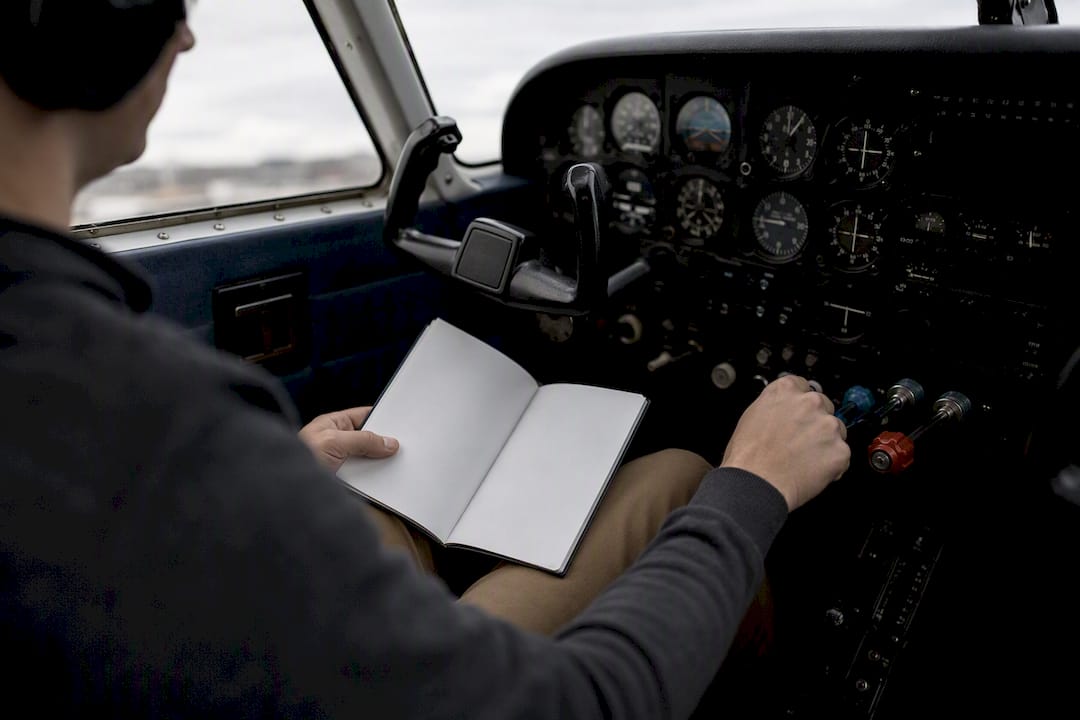
Most pilots move through this training in a handful of flight hours, though ground time varies more depending on how comfortable you already are with constant-speed props and retractable gear.
The endorsement itself is nothing more than a written entry in your logbook, but it has to include specific elements or it won't hold up to scrutiny. FAA Advisory Circular AC 61-65F lays out recommended phrasing that instructors use nationwide, and a typical entry references the regulation directly, something like: "I certify that [Name], [Certificate Number], has received the required training of § 61.31(f) in a [Make/Model]. I have determined that this person is proficient to act as pilot in command of a high-performance airplane."
A complete entry needs:
Keep more than the logbook entry itself. Hold onto training syllabi, your instructor's contact information, and any simulator session records as backup documentation. If you ever run into a logbook with a missing or vague entry, don't panic. Most flight schools can arrange either a short retraining flight or, if the original instructor is reachable, a signed affidavit confirming the original training took place.
Since the FAA sets no hour minimum, your total cost depends almost entirely on how quickly you demonstrate proficiency and which airplane you train in. Most pilots complete the flight portion within a range of flight hours, with ground instruction layered in separately.
Cost drivers include the higher rental rate on high-performance airplanes compared to a standard trainer, instructor time, fuel burn (a bigger engine drinks more per hour), and insurance considerations if you're building toward renting the airplane solo afterward.
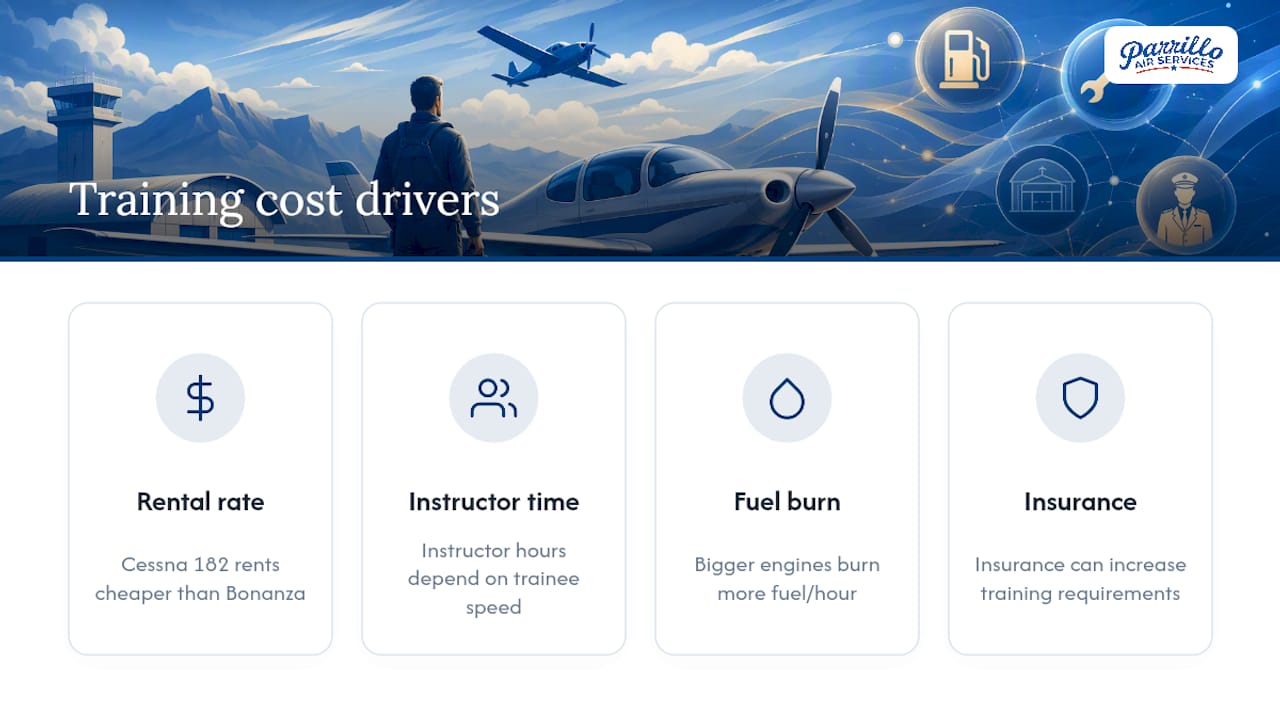
Treat these figures as a planning range, not a quote. Rates vary by region and by airplane. A Cessna 182 typically rents cheaper than a Beechcraft Bonanza, and insurance requirements can add hours to your training if you're aiming to fly solo shortly after your sign-off. Always confirm current rates with your flight school before budgeting.
Once it's in your logbook, the high-performance endorsement is permanent. It never expires, and you never retake a checkride to keep it valid. But permanence on paper and actual proficiency in the airplane are two different things, and the gap between them grows fast if you're not flying a high-performance airplane regularly.
Constant-speed prop management, cowl flap operation, and higher approach speeds are skills that fade with disuse faster than basic stick-and-rudder work. Experienced instructors recommend scheduling periodic proficiency flights even though nothing legally requires it, particularly if months pass between flights in a high-performance airplane.
A few habits worth building into your routine:
Pro Tip: If you haven't flown a high-performance airplane in six months or more, schedule a one-hour refresher with an instructor before you take passengers. It's cheaper than an insurance claim and faster than relearning gear-up landing procedures the hard way.
Parrillo Air Services builds recurrent high-performance sessions into its ongoing training relationships specifically because the regulation's permanence doesn't match how skills actually decay.
The regulation itself doesn't specify a minimum certificate level to begin high-performance training. In practice, though, nearly every flight school requires you to hold at least a private pilot certificate before starting, because the training assumes you already have solid stick-and-rudder fundamentals and can handle a heavier, faster airplane without splitting your attention between basic control and new systems.
Most pilots pursue the endorsement at one of two points: right after earning their private certificate, if they're moving into a personal high-performance airplane, or during commercial pilot training, since commercial-track airplanes frequently exceed 200 horsepower. If you're working toward a commercial certificate in a Cessna 182 or similar airplane, you'll typically pick up the high-performance endorsement as a natural byproduct of that training rather than as a separate add-on.
Total flight time matters less than specific experience. A pilot with 300 hours in a Cessna 172 might need more transition time than a pilot with 80 hours who's been flying a Piper Arrow throughout their private training. Instructors weigh your comfort with constant-speed propellers, your understanding of manifold pressure management, and your ability to handle a faster traffic pattern more heavily than raw hour totals.
If you're a student pilot who hasn't yet earned a certificate, focus on your private pilot training first. High-performance training layers on top of certificate-level skills. It doesn't replace them, and trying to rush both simultaneously usually means slower progress on both fronts.
These two credentials get confused constantly, and the confusion is understandable since both often apply to bigger, faster airplanes. But they solve entirely different regulatory problems.
A high-performance endorsement is about engine power on a single airframe category, triggered any time an engine exceeds 200 horsepower, whether that airplane has one engine or two. A multi-engine rating, by contrast, is a full certificate rating, not an endorsement, and it's required any time you act as pilot in command of an airplane with more than one engine, regardless of horsepower.
That means the two requirements can stack, overlap, or apply independently depending on the airplane:
A single-engine Bonanza with a 300-hp engine requires only the high-performance endorsement. A light twin with two 180-hp engines requires only the multi-engine rating, since neither engine crosses 200 hp individually. A twin with two 250-hp engines requires both: the multi-engine rating to fly a twin at all, and the high-performance endorsement because each engine exceeds the threshold.
The training itself differs in scope too. Multi-engine training centers on asymmetric thrust, engine-out procedures unique to twins, and Vmc awareness. High-performance training centers on managing a more powerful single engine, its propeller, and its systems. Pilots moving from a Cessna 172 into a Baron often need to knock out both requirements around the same time, and a good flight school sequences that training so the lessons reinforce each other instead of competing for the same flight hours.
The most common struggle isn't physical flying skill. It's managing more information at once. A high-performance airplane demands constant monitoring of manifold pressure, propeller RPM, mixture setting, and often cowl flap position, on top of the airspeed and altitude awareness pilots already have from basic training. Students used to a fixed-pitch, fixed-mixture trainer often feel overloaded during their first few high-performance lessons simply because there are more controls demanding attention simultaneously.
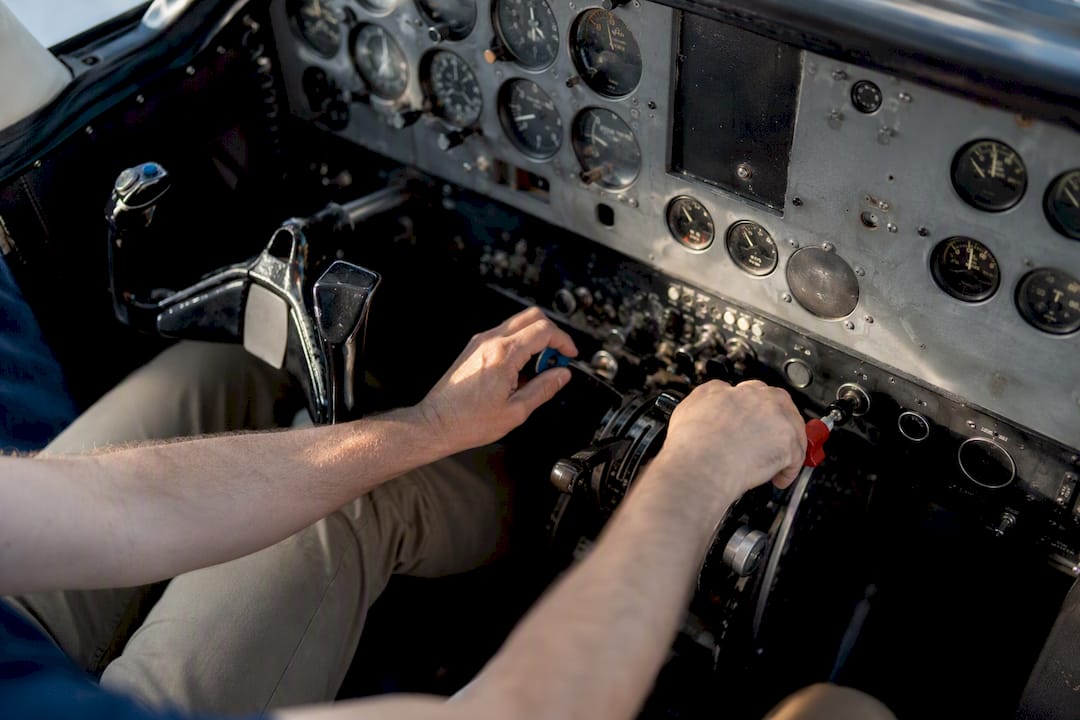
Landing technique is the second major hurdle. Higher approach speeds and heavier control forces mean the sight picture and timing that worked in a Cessna 172 don't transfer directly. Pilots frequently balloon their first few landings by flaring too early, a habit carried over from a lighter airplane that decelerates faster.
Retractable gear, where applicable, introduces its own failure mode: the gear-up landing. Every high-performance instructor has a gear-up story, and the lesson behind it is always the same. Checklist discipline has to become automatic before solo flight, not something you're still thinking through during a busy pattern.
Cost pressure adds a practical challenge too. Higher rental rates mean students sometimes rush training to save money, which works against building the systems-management habits that actually keep high-performance flying safe. The pilots who transition smoothest tend to be the ones who accept a few extra ground sessions instead of pushing straight into the airplane.
The conventional advice treats this endorsement like a checkbox: log a few hours, get the signature, move on. That framing undersells what's actually happening in the airplane. You're not just adding horsepower. You're adding cognitive load, in the form of prop and mixture management, and adding consequence, in the form of higher approach speeds and less forgiving landing margins.
Where most guidance falls short is the assumption that once the ink dries on the logbook entry, you're done. Permanent doesn't mean proficient forever, and the pilots who get into trouble in high-performance airplanes are rarely the ones who never earned the endorsement. They're the ones who earned it years ago and haven't flown the airplane since.
If there's one thing to prioritize first, it's this: treat the training as skill-building, not paperwork. Ask your instructor to push you on scenario-based emergencies, not just the maneuvers a checkride would require. The regulation asks for a signature. Good training asks for something more durable than that.
— Gm
Parrillo Air Services pairs you with a dedicated instructor for the entire high-performance process, so you're not stuck waiting on aircraft availability at a school juggling a dozen students against one airplane. Our Part 61 ground and flight instruction covers everything from POH systems review to simulator-based emergency drills, and we build recurrent proficiency sessions into your training relationship instead of treating the endorsement as a one-time transaction.

A typical package starts with focused ground sessions on constant-speed props, mixture management, and weight and balance at higher gross weights, then moves into flight lessons built around your existing comfort level, whether you're a fresh private pilot or a commercial candidate already comfortable in the air. You leave with a properly documented logbook endorsement and, just as important, the habits to fly the airplane safely six months from now. Ready to see how this fits your certificate goals? Get details on our flight training programs and schedule a session with an instructor who'll actually assess where you stand before building your syllabus.